
Unbiased headlines. Facts, not spin.
Every story is an unbiased news briefing written from 110+ sources across the spectrum — sources linked so you can verify it yourself.
 tech
Notable (5/10)
June 1, 2026 at 12:29 PM
tech
Notable (5/10)
June 1, 2026 at 12:29 PM
China Is Using AI to Predict and Crush Dissent Before It Starts — and the West Is Barely Paying Attention
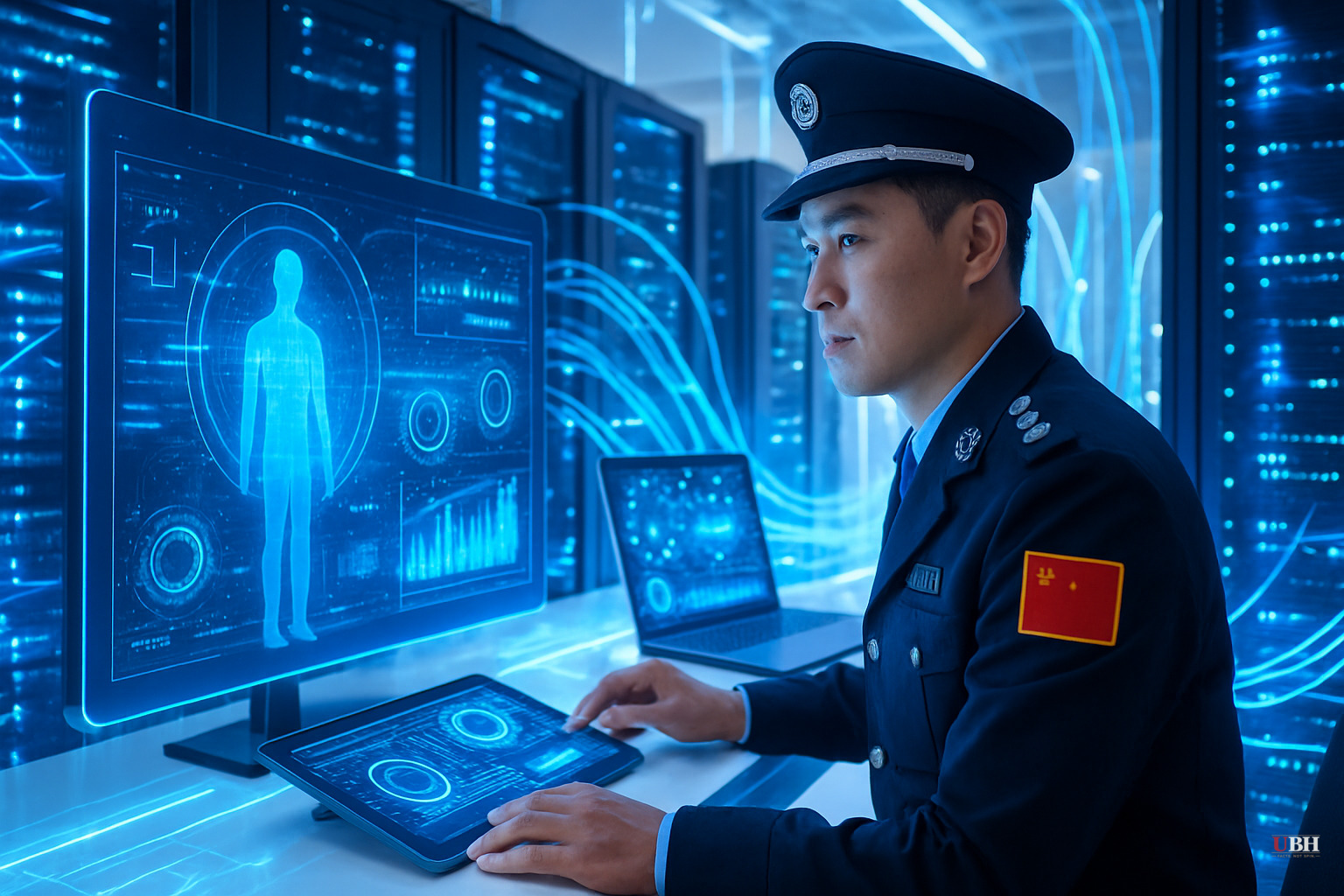
The System Is Already Live
China's government is deploying AI-powered surveillance tools that predict public demonstrations before they occur, automate censorship at scale, and monitor the psychological states of prisoners, according to a December 2025 report by the Australian Strategic Policy Institute (ASPI). The report's co-author, Nathan Attrill — a senior China analyst at ASPI — put it bluntly: "AI has become the backbone of a far more pervasive and predictive form of authoritarian control."
How It Works on the Ground
The China Media Project broke down the technical mechanics in February 2026. The Fujian Police Academy — operating directly under the Fujian provincial government — filed a patent for an AI system that ingests data from street cameras, sound sensors, and official reports to flag "potential mass incidents" before they materialize. In Chinese bureaucratic language, "mass incidents" means protests, strikes, riots, and demonstrations.
The system doesn't just watch. It learns. If it misses an incident, it reviews the footage and recordings to improve itself next time.
Huawei — yes, the same Huawei that Western governments have been fighting over 5G infrastructure access — filed a patent allowing a neural network to pinpoint the exact location of photographs taken and uploaded by so-called "grid workers," according to China Media Project. These are paid community-level informants who monitor assigned neighborhood blocks and report in real time through a dedicated app.
Neighborhood informants. AI analysis. Facial recognition cameras. All feeding one central system.
The Scale Is Staggering
China has invested hundreds of billions of dollars into AI-related businesses, according to CNN's reporting from December 2025. The infrastructure already exists — cameras on virtually every urban street corner, the "Great Firewall" filtering internet content, a network of human informants from the grid worker program. AI doesn't build this system from scratch. It makes the existing system exponentially more efficient.
Attrill told CNN: "AI lets the CCP monitor more people, more closely, with less effort." The bottleneck for authoritarian surveillance used to be human labor. AI eliminates that bottleneck.
A 2024 survey by global research group IPSOS found that Chinese respondents were more optimistic about AI than respondents in any of the other 32 countries surveyed. The public embrace of the technology has made citizen resistance to surveillance normalization practically nonexistent.
Xi's Strategy Is Not a Secret
President Xi Jinping has been telegraphing this for years. The Atlantic documented in detail how Xi laid out a grand AI strategy — in speeches he delivered with the same urgency JFK used to launch the moon program — explicitly calling for AI supremacy by 2030 and "precog algorithms" to identify potential dissenters in real time.
In November 2025, Xi told top CCP officials that AI "presents challenges to cyberspace governance while offering new avenues of support," according to Chinese state media cited by CNN. Translation: the Party sees AI as both a threat to manage and a tool to wield.
In 2024, Premier Li Qiang's Government Work Report explicitly named AI as a tool to "modernize social governance" — the Communist Party's euphemism for suppressing unrest, according to China Media Project.
What Mainstream Coverage Is Missing
CNN's coverage focuses heavily on the human rights dimension — which is real and important — but underplays the strategic and military implications for the United States and its allies. This isn't just about oppressed Chinese citizens. China is actively exporting this surveillance architecture to other authoritarian governments. ASPI's report explicitly flags China's growing role as a global exporter of surveillance technology. The system is spreading, not contained.
Meanwhile, conservative outlets have spent enormous energy on TikTok bans and Huawei restrictions without drawing the straight line from those fights to this broader AI surveillance arms race. The chip export restrictions the U.S. has imposed on China are relevant — the NYT noted that at least one Chinese company struggled to develop its predictive surveillance technology while those restrictions were in place. The restrictions are working, at least partially. That story deserves more attention than it's getting.
The Institute of Automation at the Chinese Academy of Sciences — a basic research facility near Beijing's Third Ring Road, visited by The Atlantic in 2019 — has spun its AI innovations directly to Chinese tech giants, AI startups, and the People's Liberation Army. The civilian and military pipelines are the same pipeline. Western companies and universities doing research partnerships with Chinese institutions need to understand that.
What This Means for Regular People
If you're an American, you might think this isn't your problem. It is.
Every Huawei component in global telecom infrastructure is a potential node in this system. Every Chinese-developed AI platform exported to a foreign government carries the same surveillance DNA. Every American chip sold to China before export restrictions tightened potentially trained the models running this system right now.
And here at home — the lesson China is teaching authoritarian governments worldwide is that AI-powered surveillance works. It's efficient. It's scalable. It's cheap.
That's a blueprint. The question becomes who else adopts it.
China built the most efficient repression machine in human history. The West helped build the components. Now we're watching it run.
Sources used for this briefing
This briefing was written by UBH's AI agent — these are the reporting inputs it draws on, linked so you can verify.


