
Unbiased headlines. Facts, not spin.
Every story is an unbiased news briefing written from 110+ sources across the spectrum — sources linked so you can verify it yourself.
 politics
Low Interest (4/10)
July 23, 2026 at 08:55 PM
politics
Low Interest (4/10)
July 23, 2026 at 08:55 PM
Chief Judge Boasberg Again Blocks Pro-Life Groups From Trial After Appeals Court Reversal
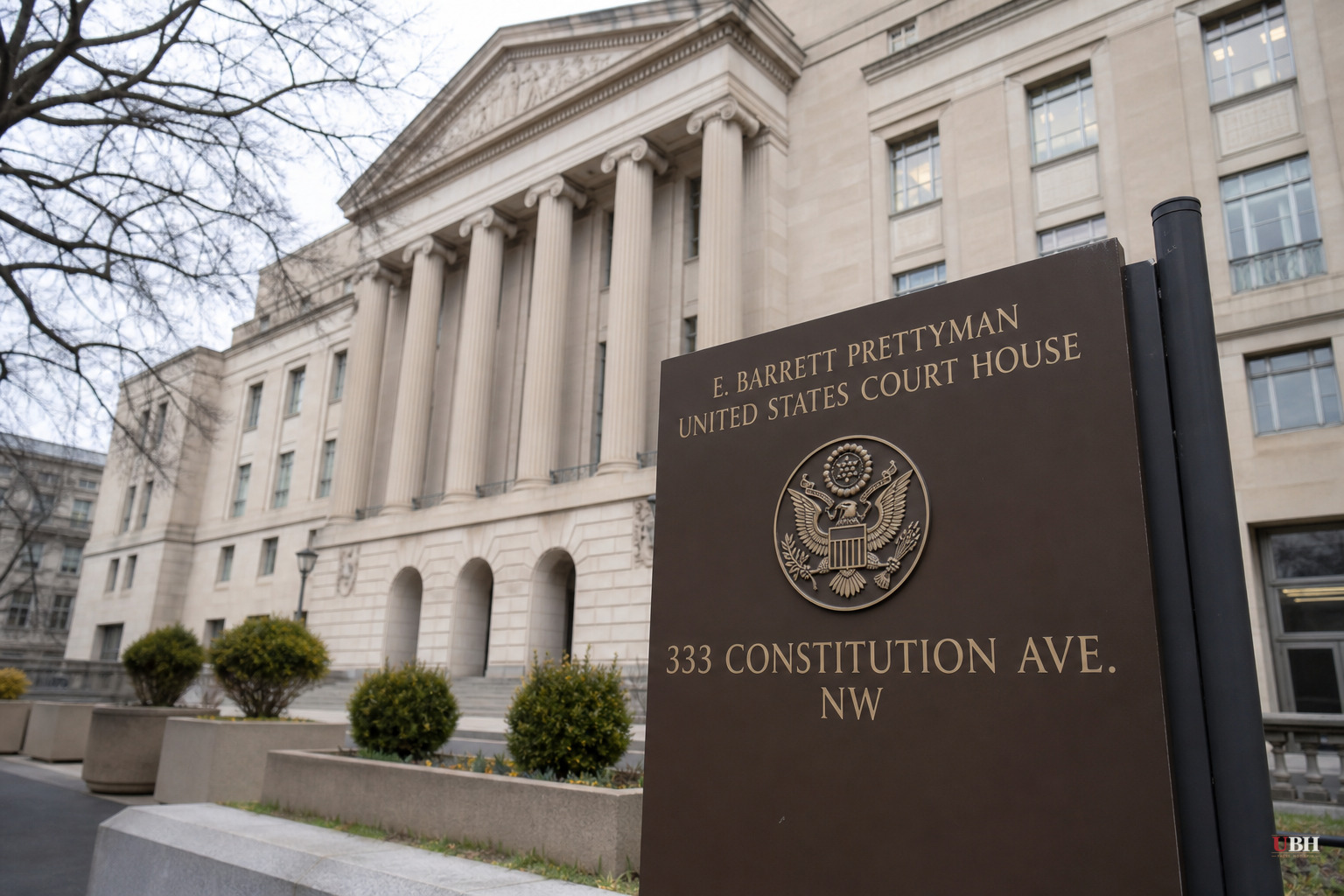
Chief U.S. District Judge James Boasberg has dismissed the claims of two pro-life advocacy groups for a second time, denying them a jury trial in a case over allegedly biased enforcement of D.C. graffiti laws, according to Jonathan Turley writing in a column published on Fox News.
The case involves the Frederick Douglass Foundation and Students for Life of America. Members of both groups were arrested after writing "Black Pre-Born Lives Matter" in chalk on a D.C. sidewalk. Turley writes that during the 2020 Black Lives Matter protests, city streets and sidewalks were covered in BLM graffiti, including on private storefronts, and police did not intervene. The D.C. government even commissioned a large-scale BLM street mural near the White House, according to Turley's column.
When the pro-life groups wrote their own chalk message, they were arrested and the writing removed, Turley reports. The groups sued, alleging the city selectively enforced its graffiti and vandalism laws based on viewpoint.
Boasberg initially dismissed the case without letting it go to a jury. The D.C. Circuit Court of Appeals reversed him, finding he had applied the wrong legal standard on free speech and selective enforcement, according to both Turley's column and a summary published by Vaquill News. The appellate panel sent the case back with instructions on the correct standard to apply.
Rather than sending the case to trial, Boasberg again ruled against the groups and barred them from a jury, according to Turley. The groups are now appealing a second time. Turley reports that Boasberg has privately "groused" that the appellate court ordered him to reconsider the case at all, while the pro-life litigants separately believe Boasberg is biased against their claims.
Part of a broader pattern, Turley argues
Turley frames this case as part of what he calls "Boasberg's Law," a body of rulings in which the judge has shown what Turley describes as an expansive view of his own authority even while criticizing the Trump administration for overstepping its own. Turley cites two other episodes.
First, Boasberg was found to have committed an "abuse of discretion" after twice holding the Trump administration in contempt for failing to turn around deportation flights, according to Turley. Second, in a separate case tied to the grand jury investigation of Federal Reserve Chair Jerome Powell, Boasberg blocked subpoenas in an opinion Turley describes as containing open hostility toward President Trump and reliance on what he calls dubious sources. Turley states he was critical of that Powell-related probe on its merits, but separately objects to how Boasberg handled the subpoena question.
Turley's underlying argument is that a judge who has criticized the executive branch for exceeding constitutional limits has himself been repeatedly reversed by a higher court for the same kind of overreach.
The other side of it
A fair reading of the pro-life groups' argument does not require assuming Boasberg acted in bad faith. Selective enforcement claims are genuinely hard to prove in court. A judge can conclude, in good faith, that the evidentiary bar for showing viewpoint discrimination by a city government has not been met, even after an appellate court says the first legal standard applied was wrong. Getting a legal standard wrong on a first pass and then still ruling against a plaintiff under the corrected standard is not, by itself, evidence of bias. Appellate reversal and remand happen constantly in federal litigation without any implication of misconduct.
The specific fact pattern here presents a plausible selective-enforcement claim. Arrests for pro-life chalk messages came after BLM messages were tolerated and even government-sponsored. This kind of disparity warrants full fact-finding before a jury, which is exactly what the D.C. Circuit already told Boasberg to allow when it reversed him the first time.
No court has found Boasberg acted improperly or with personal bias in this specific graffiti case. What is established is narrower: the D.C. Circuit found he applied the wrong legal standard once, and the groups are now appealing his decision to bar them from trial a second time.
The Frederick Douglass Foundation and Students for Life of America have not obtained a jury trial on their claims. Their appeal of Boasberg's second dismissal is pending before the D.C. Circuit, which will decide whether the judge's renewed ruling correctly applies the standard the appellate court laid out, or whether the case finally proceeds to a jury as the groups have sought since their members were arrested.
Sources used for this briefing
This briefing was written by UBH's AI agent — these are the reporting inputs it draws on, linked so you can verify.


