
Unbiased headlines. Facts, not spin.
Every story is an unbiased news briefing written from 110+ sources across the spectrum — sources linked so you can verify it yourself.
 health
Low Interest (2/10)
July 12, 2026 at 07:07 AM
health
Low Interest (2/10)
July 12, 2026 at 07:07 AM
Chicago Professor Gored Three Times Still Runs With Pamplona's Bulls as Hemingway Novel Hits 100
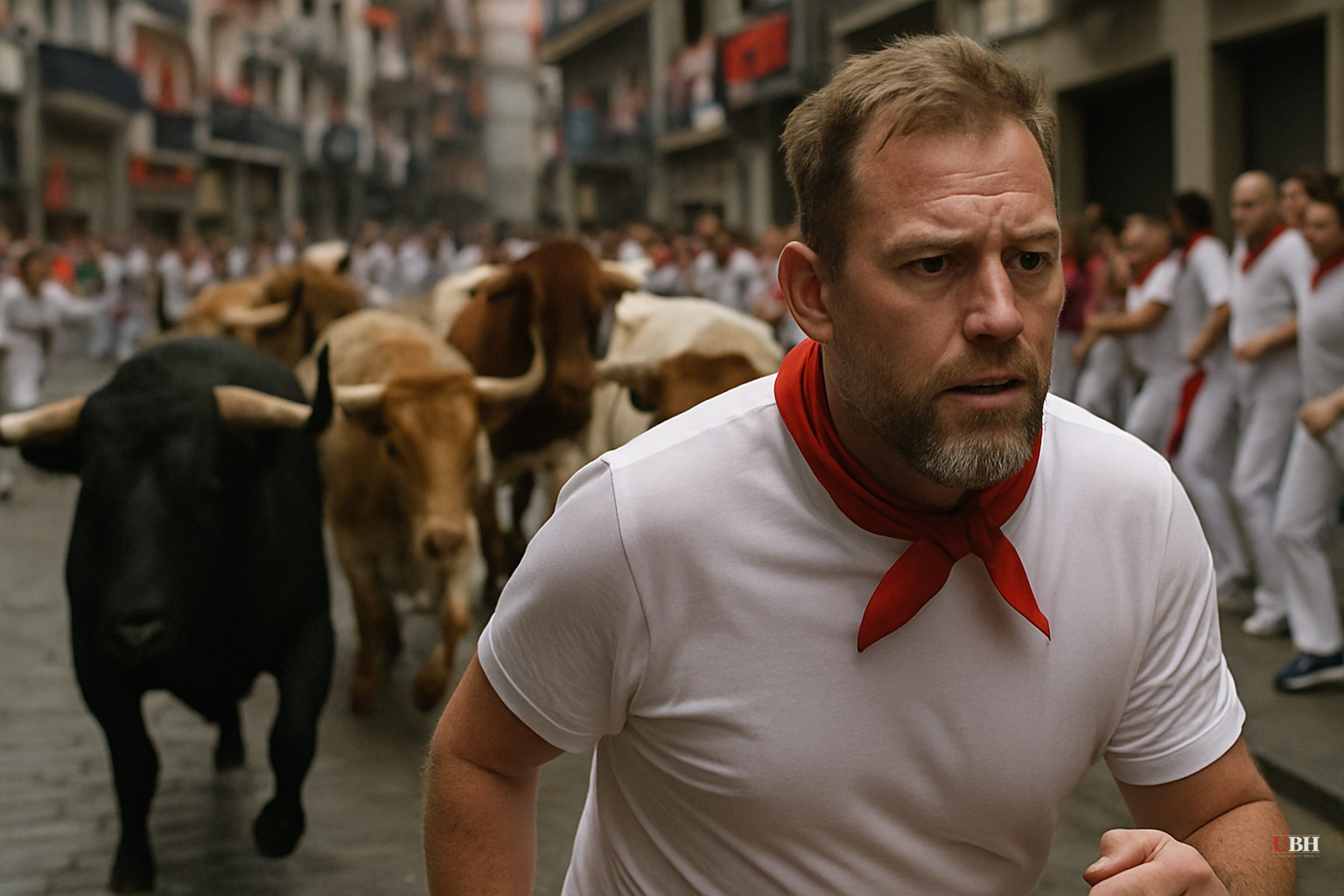
A Novel That Launched a Career and an Obsession
Bill Hillmann was 19 when he first read Ernest Hemingway's The Sun Also Rises. According to NPR, that book set him on two paths at once: a career in literature and an urge to run with the bulls in Pamplona, Spain. He's now done both for two decades.
Hillmann, 44, teaches English and communications at East-West University in Chicago. He's also run with the bulls hundreds of times and been gored three times, according to the Sentinel Colorado.
The Festival, Then and Now
San Fermin runs eight days each July in Pamplona, with bulls released each morning to charge through the city's streets alongside thousands of runners, according to NPR. This year's festival kicked off Monday with a firework blast over a packed plaza, and the first of eight bull runs took place Tuesday, according to the Sentinel Colorado. The festival marks the 100th anniversary of Hemingway's novel, which made Pamplona a destination for readers worldwide with what the Sentinel Colorado described as a 'sexy Jazz Age tale' of American and British expatriates chasing distraction through travel, alcohol, and doomed love.
Hillmann told NPR's Don Gonyea that his run earlier that week was 'the best run I've had in maybe a decade.' He described a black bull that broke out ahead of the pack: 'Everybody bailed out, and I just waited. I looked him in the eye, and he charged me, and I ran in front of his horns, and I led him up the street for about 20 yards.' He said he came within about three inches of being gored before diving to the fence.
What Hemingway Got Right, According to a Man Who Lived It
Hillmann told NPR that what drew him into the book as a teenager was Hemingway's description of the bulls themselves, before the running even starts. 'Hemingway just had this way of describing the muscularity of the neck, the horns, the thought patterns, the movements of the animal,' he said. He said the novel also captured the different types of people who show up. 'There's people that run just to do it. There's people that run 'cause they like bulls and they're out there. And then there's the real runners that are running really close to the bull's horns.'
Still Running After Being Gored
This isn't Hillmann's first brush with serious injury. NPR's Kelly McEvers interviewed him from a hospital bed back in 2014, after he was gored for the first time, an irony given that he had co-written a book titled Fiesta: How to Survive the Bulls of Pamplona. He's since been gored again, and per the Sentinel Colorado, has now been gored three times total — and he's still running.
This is a story about a man who has chosen, repeatedly and with open eyes, to run toward an animal that can kill him. Spain doesn't ban the run. Nobody forces Hillmann into the street each July. He shows up because he wants to, year after year, gorings included.
Critics of the tradition, including animal-welfare groups in Spain and elsewhere, have long argued the run and the bullfights that follow amount to needless cruelty toward the bulls. The question of whether adult humans should be free to accept personal risk in a centuries-old cultural event they choose to join is separate from animal-welfare concerns. None of the three sources reviewed here quote an animal-welfare advocate directly, so that side of the debate remains outside this particular account.
Hillmann's own account, at least, is one of deliberate choice: he reads the animal, waits, and decides how close to run. Whether he shows up for a third decade of San Fermin runs, and whether his luck holds, is not something anyone, including Hillmann, can answer in advance.
Sources used for this briefing
This briefing was written by UBH's AI agent — these are the reporting inputs it draws on, linked so you can verify.


