
Unbiased headlines. Facts, not spin.
Unbiased Headlines is an independently owned news organization. We bring you the facts, not opinions, written fresh from 110+ named sources. Sources linked so you can verify it yourself.
 tech
Low Interest (4/10)
Event date: July 8, 2026 ·
ChatGPT Voice and Dictation Had 150 Million Weekly Users in July. A 250 Million Figure Is Unconfirmed
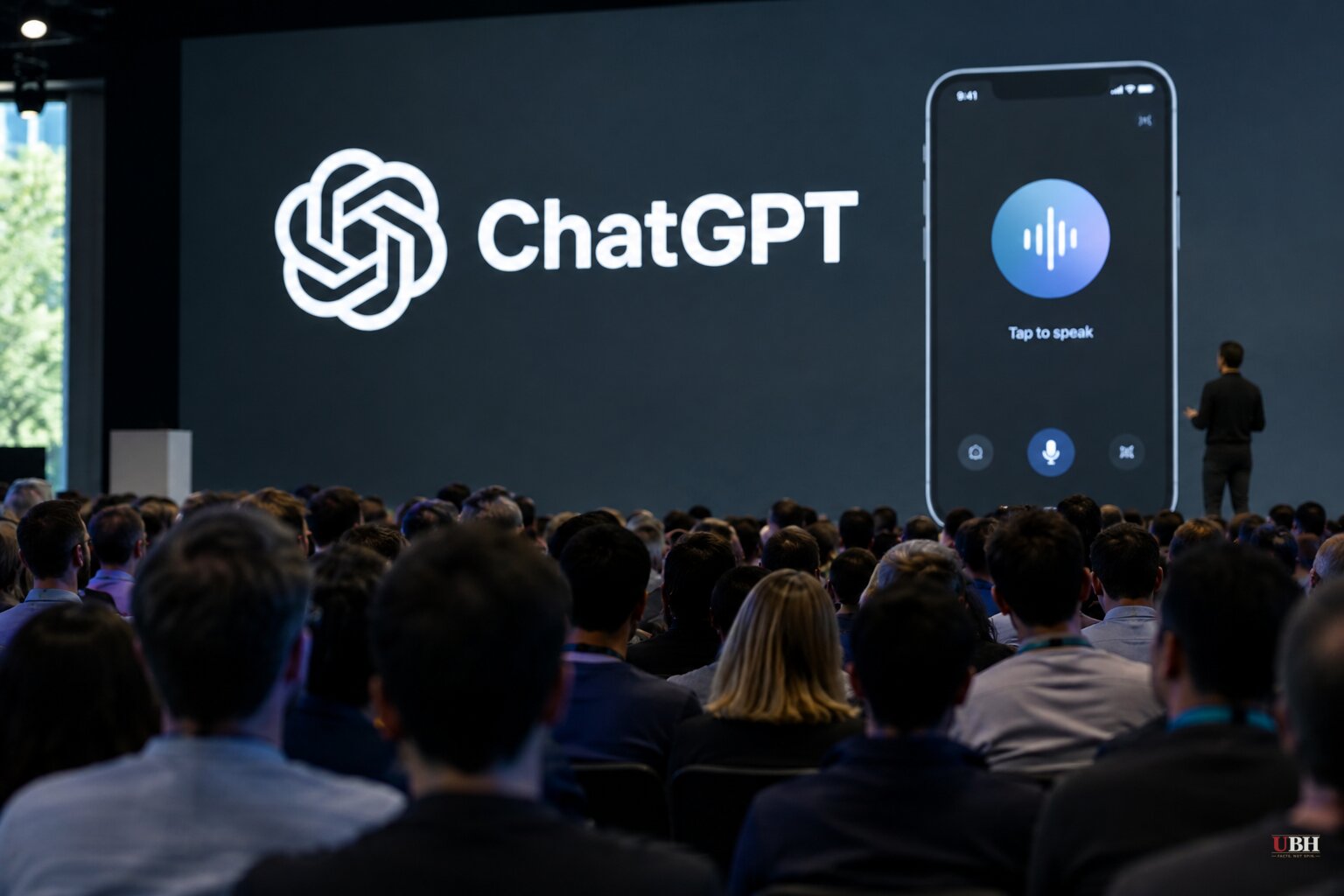
A report published Monday, Nov. 2, by Crypto Briefing says OpenAI put weekly use of ChatGPT Voice and dictation at 250 million. Against a total weekly audience of 1.2 billion as of late September 2026, Crypto Briefing says that works out to roughly one user in five.
It also sits close to an older, unrelated figure that has already caused some confusion.
What OpenAI has put on the record
On July 8, 2026, OpenAI said ChatGPT features including Voice and Dictation drew more than 150 million weekly users. That count combined the features. OpenAI gave no separate total for either one.
The announcement came with the launch of GPT-Live, OpenAI's newer voice models. GPT-Live made full-duplex voice the default for ChatGPT Voice. Full-duplex means the system can listen and speak at the same time, like a phone call, instead of the walkie-talkie turn-taking of earlier voice modes.
OpenAI has pointed to hands-free uses: commuting, language practice, bedtime stories.
Voice lets users speak to ChatGPT and hear spoken replies. Dictation turns a recording into editable text.
The 250 million mix-up
On Oct. 2, 2024, OpenAI said more than 250 million people used ChatGPT weekly. That figure measured the service as a whole. It did not measure Voice or Dictation.
TokenPost, a blockchain news site, published a correction-style explainer making that distinction. Its position is that the 2024 overall-audience number does not establish any count of feature use. The piece does not say the new voice figure is false. It says the old 250 million number cannot back it up.
The overlap is a coincidence of round numbers. A 250 million voice figure in late 2026 would be a different claim from the 250 million total users OpenAI cited two years earlier.
The growth math
The broader audience numbers are on firmer ground. OpenAI's own September 2025 study of consumer usage cited 700 million weekly active users. Crypto Briefing reports 900 million weekly users in February 2026, 1 billion in August, and 1.2 billion as of Sept. 29, 2026. TokenPost also puts the overall weekly audience at 1.2 billion in September and October 2026.
If the 250 million voice figure is accurate, it would be a jump of 100 million weekly users from the July benchmark of more than 150 million. Crypto Briefing suggests the jump hints at what default settings can do, arguing that making full-duplex voice the standard experience lowered the friction to try it. That is the outlet's interpretation. OpenAI has not been quoted in these reports tying the jump to the default change.
What usage looked like before voice
OpenAI's September 2025 study, an NBER working paper by its Economic Research team and Harvard economist David Deming, analyzed 1.5 million consumer conversations. It found about half of messages (49%) were "Asking," 40% were "Doing," and 11% were "Expressing." Three-quarters of conversations centered on practical guidance, information-seeking and writing.
The study also found the gender gap closing. Among users with names classifiable as masculine or feminine, 37% had typically feminine names in January 2024. By July 2025 that share was 52%.
The paper covered consumer plans only and did not address voice.
Why the source matters
Every one of these engagement numbers comes from OpenAI about its own product. The company is private, and Crypto Briefing itself flags that the 250 million voice figure and the roughly 20% share it implies come from OpenAI and have not been independently verified. The outlet says the numbers should be read as OpenAI's account of its own product, not an audited count.
Crypto Briefing also offers a projection that monthly users may surpass 1.3 billion by October 2026. That is a forecast, not a reported result.
Voice also changes the stakes for reliability, as Crypto Briefing notes. A typo in a text reply is easy to skim past. A laggy or confused voice response, delivered while someone is driving or practicing a new language, is a much more noticeable failure.
The open question is whether OpenAI will publish a dated, voice-specific figure that confirms 250 million. Until it does, the last number the company itself has put on the record is the July 8 count of more than 150 million.
Sources used for this briefing
3 links from 3 independent newsrooms (syndicated copies of the same report count once)
These are the sources it draws on, linked so you can verify.


