
Unbiased headlines. Facts, not spin.
Unbiased Headlines is an independently owned news organization. We bring you the facts, not opinions, written fresh from 110+ named sources. Sources linked so you can verify it yourself.
 tech
Major Story (7/10)
Apple Beats Estimates in Ternus' First Report as CEO, but Margin Forecast Comes Up Short and Shares Slide After Hours
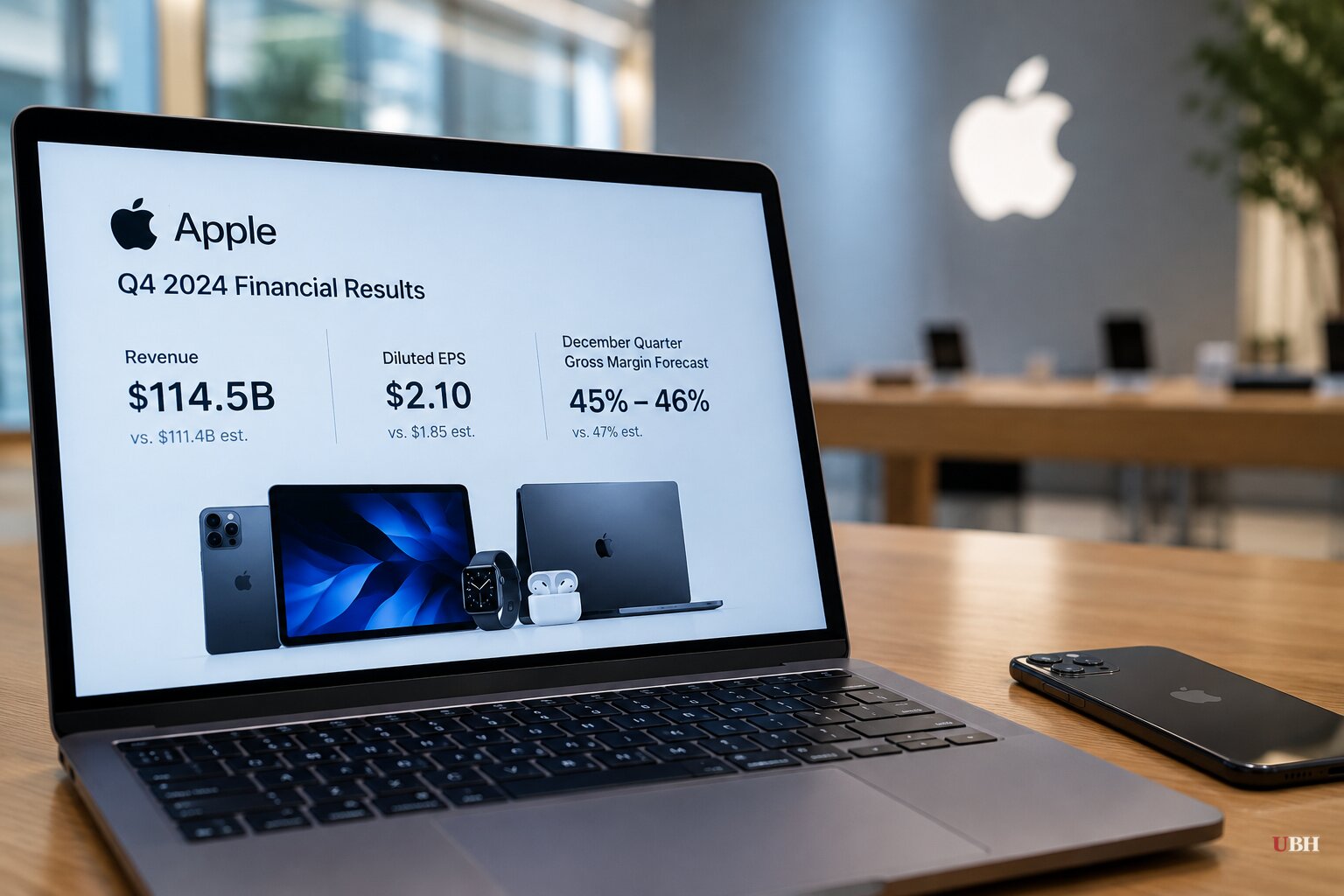
Since John Ternus succeeded Tim Cook as Apple CEO on Sept. 1, the question has been whether the company can keep growing while memory-chip costs climb. Apple's answer on Monday, Nov. 2, was mixed: a clean beat on the quarter just ended and a margin forecast for the next one that landed below what analysts wanted.
The quarter: a beat, helped by a one-off
Apple reported fiscal fourth-quarter revenue of $114.5 billion, up 12% from $102.5 billion a year earlier. Analysts had expected roughly $113.4 billion to $113.5 billion. Earnings per share were $2.10 against an estimate of about $2.00, and $1.85 a year ago.
Part of that beat was not operating performance. Apple said one-time tariff refunds added 5 cents to earnings per share. They also lifted gross margin by about one percentage point, to 47.9%.
CFO Kevan Parekh told analysts that with the refunds removed from both the June and September quarters, gross margin would have fallen about one point from the prior quarter. He said higher memory costs were the main driver.
Where the money came from
iPhone revenue hit a September-quarter record of $57.58 billion, up 17%, against an estimate of $56.48 billion. That figure included only about eight days of iPhone 18 Pro sales. The folded-screen iPhone Duo did not reach stores until after the quarter closed.
Mac revenue rose 24% to $10.79 billion, more than $1 billion above the roughly $9.69 billion estimate. Services came in at $31.57 billion, in line with forecasts.
The weak spots were iPad at $6.23 billion versus an estimate of $6.83 billion, and wearables, which fell about 8% to $8.3 billion. Greater China revenue grew 21% to $17.54 billion but missed the $18.75 billion estimate by more than $1 billion.
Apple has leaned on price to protect profit. It raised iPhone prices by $100 in June after flagging memory and component pressure. Ternus told CNBC the company raised prices "reluctantly."
The forecast is what moved the stock
For the December quarter, Apple guided revenue growth of 7% to 10%, above the 6.1% LSEG average estimate. Services growth is expected at 8% to 9%, which signals slower growth in that unit.
Gross margin is the problem. Parekh guided 45% to 46%, below the 46.3% analyst average and below the 47.9% just reported. Operating expenses are forecast at $20.4 billion to $20.8 billion, slightly above the $20.37 billion analysts had modeled.
Apple closed regular trading Monday at $338.32, down 1.83%. Early extended-hours reports showed shares roughly flat or up about 0.2% after the release. As of 6:15 p.m. ET, the extended-hours quote was $328.50, down 2.9% from the close. That is an indication in thin after-hours trading, not a regular-session price. Options traders had priced in a move of about 3.5%, according to Pepperstone.
Memory is the constraint
Apple said its memory costs were higher this quarter than in the June quarter. COO Sabih Khan said Apple has raised its purchase obligations by $33 billion from the June quarter to the September quarter to secure memory supply. He said Apple expects supply constraints on Mac and iPad in the December quarter because demand ran above its plans.
Khan also said it is hard to predict when iPhone Duo supply and demand will balance. He tied constraints on iPhone, Mac and iPad to the availability of advanced processing nodes.
The wider memory market is not easing. SK Hynix has forecast a shortage lasting until 2030, as AI data centers absorb supply.
China: pleased, or a pattern?
Apple said it was pleased with Greater China, pointing to strong iPhone and Mac sales and double-digit Mac growth in the region. Ternus said the company's growth came despite supply constraints and currency headwinds, and called it Apple's "best fiscal year ever."
Investing.com senior analyst Jesse Cohen read the same numbers differently. "Greater China came in about $1 billion below forecast; that's not a rounding error, it's a worrying pattern," he wrote in a note. He added that wearables, home and accessories also missed, "so the story isn't just China, it's that Apple's businesses beyond the iPhone aren't pulling their weight."
What comes next
Apple stock is up about 24% to 25% this year. Nasdaq data show analysts expecting $2.88 per share for the December quarter. Whether the extended-hours drop holds will be visible when regular trading resumes Tuesday, Nov. 3. The larger test is whether Apple's price increases can keep gross margin inside its 45% to 46% range while memory costs rise and Mac and iPad supply stays tight.
Sources used for this briefing
8 links from 8 independent newsrooms (syndicated copies of the same report count once)
These are the sources it draws on, linked so you can verify.


