
Unbiased headlines. Facts, not spin.
Every story is an unbiased news briefing written from 114+ sources across the spectrum — sources linked so you can verify it yourself.
 finance
Major Story (7/10)
October 9, 2026 at 10:56 PM
finance
Major Story (7/10)
October 9, 2026 at 10:56 PM
CFTC Proposes Classifying Sports, Politics and Weather Event Contracts as Swaps
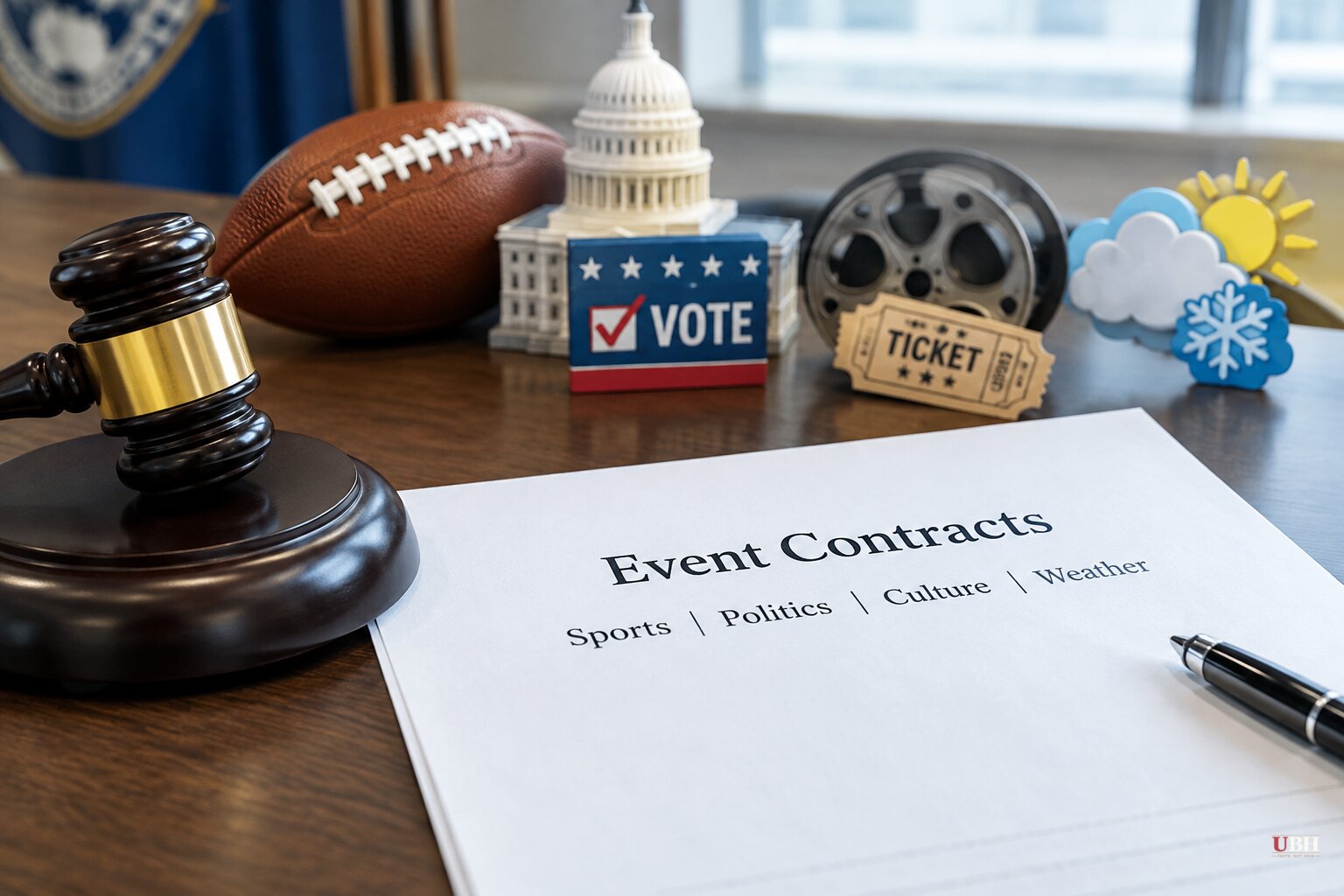
The Commodity Futures Trading Commission proposed a rule Friday, Oct. 9, that would expressly place certain event contracts inside the legal definition of a "swap." The covered contracts are based on sporting, political, cultural and weather events. The agency said it is opening the proposal for public comment, and comments are due within 30 days.
The CFTC said event contracts are financial instruments commonly known to trade as swaps and that the proposal clears up ambiguity over how they are classified.
"These products are commodity derivatives squarely within the CFTC's regulatory remit under the Commodity Exchange Act and are within the agency's exclusive jurisdiction," Chairman Michael Selig said.
This is a notice of proposed rulemaking. It has not been adopted as a final rule, and it does not by itself resolve any pending court case.
The second rule: what is carved out
The agency also issued an interim final rule, titled "Further Definition of 'Swap' to Exclude Casino-Style Gambling Products" (RIN 3038-AF81). It amends 17 CFR Part 1 and takes effect immediately upon publication in the Federal Register. Written comments are due within 30 days of that publication.
"Casino-style gambling products are not derivatives," Selig said. He described the rule as clarifying "the limits of its regulatory remit" over products historically regulated by the states.
The rule text sets two tests, and a product must pass both to be excluded.
- Provider Test: The transaction must be offered by a person licensed or authorized to run gambling or accept wagers under state law or under tribal law pursuant to the Indian Gaming Regulatory Act. That person must be acting within the license, and the transaction must be regulated as gaming under state or tribal law.
- Product Test: The transaction must not trade on a board of trade, an organized exchange, a swap execution facility, or any other market where trades are executed multilaterally or negotiated individually.
The rule names three excluded categories: sports wagers taken by licensed sportsbooks, casino games such as table games and slot machines, and other licensed games of chance such as bingo, pool wagering, lotteries and raffles. The text says the exclusion is non-exclusive and that other gambling-style transactions, such as a casual bet between friends, may also fall outside the swap definition.
The rule says the Securities and Exchange Commission joins in adopting it under section 712(d)(1) of the Dodd-Frank Act, and that the CFTC consulted the Federal Reserve Board.
Why the definition matters in court
The fight is over who regulates prediction markets: the CFTC or state gambling authorities. Kalshi and Polymarket US have defended federal oversight against state challenges. Explicitly labeling these contracts as swaps would reinforce the CFTC's jurisdictional argument, though it would not settle the disputes automatically.
Those disputes are not settled. A Daily Wire opinion piece reports that a federal judge in Illinois ruled for Kalshi, Coinbase and the CFTC, blocking the state from applying its sports-gambling rules to sports event contracts. The same piece says a Wisconsin case that went the other way awaits a ruling at the Seventh Circuit, with about half a dozen more cases pending.
The same piece says the CFTC has filed nine lawsuits against states since April to defend its jurisdiction. It also says the agency won an order in April freezing criminal charges that Arizona's attorney general brought against Kalshi in March, alleging an illegal gambling business operating without a license. Selig has called state criminal action against federally regulated entities a "dangerous precedent."
The CFTC is also the agency drawing the line, and that line expands its own authority over a fast-growing market.
The NFL pushes back
The league sees it differently. In an amicus brief filed Thursday, Oct. 8, the NFL argued that prediction markets fall under the sports gambling umbrella and should be regulated by states.
"Billions of dollars will be bet on NFL games through prediction markets each season, and any delay from the Court will result in increasing consumer harm and risk to game integrity," the league wrote.
The league also said the CFTC has failed to address contracts it flagged months ago. It sent operators a letter before the season objecting to markets on coaching and officiating decisions and injuries, which it says could be swayed by insider information. In its brief, the NFL said Kalshi continues to list such contracts, calling the CFTC's silence "deeply concerning" and a source of "significant risks for the NFL's players, coaches, and officials."
The CFTC disputes the league's account of the relationship. "Since day 1, the CFTC has engaged with the NFL regarding the agency's rulemaking agenda and policy priorities," CFTC public affairs director Brooke Nethercott said. "It's unfortunate the NFL declined to sign an MOU with the CFTC which would've provided the league the ability to better discuss, cooperate, and exchange information with us."
A CFTC source, who was not named, said senior NFL staff told senior CFTC staff just weeks ago that the league was on the verge of commercial partnerships with several prediction market operators. The NFL has deals with official online sportsbooks but has no partnership with a prediction market.
What comes next
The 30-day comment window on the swap proposal will test how the sports leagues, state regulators, exchanges and gaming operators respond to the agency's definition. The Seventh Circuit's handling of the Wisconsin case, and the other pending state suits, will show whether courts treat an agency definition as controlling. The NFL brief shows that at least one major league wants the courts to move before the CFTC finishes its rulemaking.
Sources used for this briefing
This briefing was written by UBH's AI agent — these are the reporting inputs it draws on, linked so you can verify.


