
Unbiased headlines. Facts, not spin.
Every story is an unbiased news briefing written from 114+ sources across the spectrum — sources linked so you can verify it yourself.
 finance
Major Story (7/10)
Event date: October 6, 2026
finance
Major Story (7/10)
Event date: October 6, 2026
Brazil's Bovespa Hits Record High After Flávio Bolsonaro Edges Lula 47% to 45% in First Round
Brazil's pollsters and traders got the first round wrong. Both paid for it on Monday, Oct. 5, in very different ways.
Sen. Flávio Bolsonaro of the Liberal Party won 47% of the vote on Oct. 4. President Luiz Inácio Lula da Silva took about 45%. Polls had forecast Lula winning the first round by roughly three points. Datafolha's final survey before the vote put Lula at 45% and Bolsonaro at 42%.
Neither cleared a majority, so the two go to a runoff on Oct. 25.
A record day on the exchange
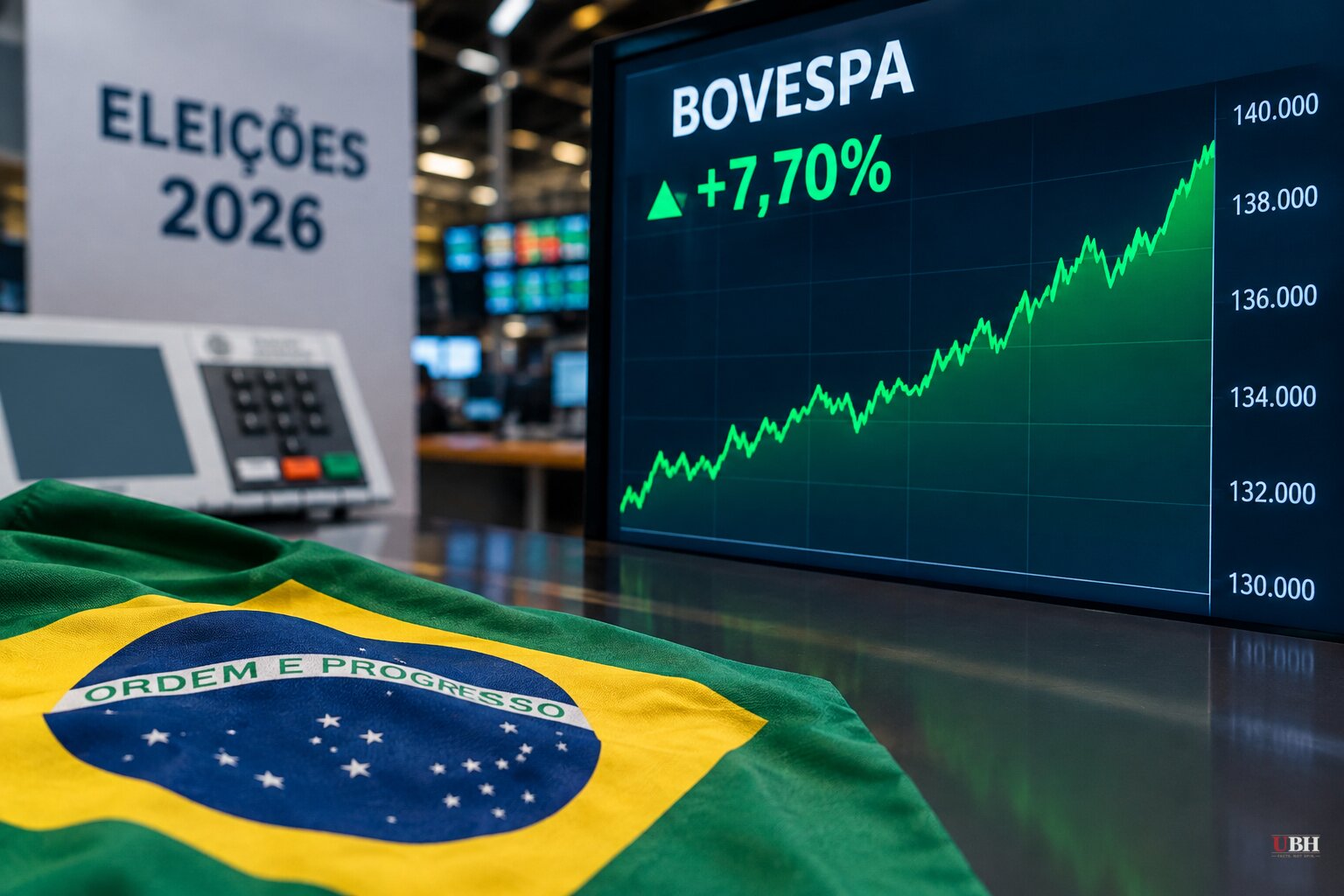
The Bovespa index closed at 206,911.89 points on Oct. 5, a record. The 7.7% gain was its largest single-day jump since March 24, 2020, in the first weeks of the Covid-19 panic.
The moves were broad:
- Magazine Luiza, Cosan and the exchange operator B3 each rose more than 20%.
- Bradesco gained more than 13%. Petrobras rose just over 8%.
- In New York, brokerage XP rose 33% and Nu Holdings 13%. StoneCo and PagBank each gained more than 20%.
- The real strengthened 4.1% to about 5 per dollar.
- The cost of insuring Brazilian government debt through credit default swaps fell 20 basis points.
J.P. Morgan upgraded Brazilian equities to "overweight" on Oct. 5. It cited a more favorable political backdrop after the election.
Pradeep Kumar of PGIM, who has traded Brazilian assets for two decades, told Bloomberg he had never seen a market open like Monday's.
Why the market moved
The rally was not only about the presidential race. Bolsonaro's allies also did well in the concurrent congressional and state contests. The Wall Street Journal reported that the Bolsonaro family took several seats: Michelle Bolsonaro, the former president's wife, won a Senate seat, as did his son Carlos. Another son, Jair Renan, and Jair Bolsonaro's brother Renato won seats in the lower house.
Analysts say a friendlier legislature would make it easier for Flávio Bolsonaro, if elected, to push through tighter public spending, privatizations and tax cuts.
Investors had been leaning toward him for weeks. Valor International data show that between Aug. 15 and Oct. 1, the Ibovespa climbed 12.1% while the S&P 500 fell 1.53%. Brazil's 10-year yield fell 58 basis points over the same stretch, while the U.S. 10-year yield rose 55 basis points.
Before the vote, market participants broadly expected Lula to finish 2 to 4 points ahead. Goldman Sachs emerging-markets trading co-head Osmin Rivera warned clients that any surprise in either direction could trigger a significant reaction. Bolsonaro finishing ahead of the incumbent was exactly that surprise.
Lula's response and the runoff
Lula, 80, has argued for a different direction. On election day he said Brazil "will not go forward by making arms sales easier," a jab at Bolsonaro's long-standing pledge on gun access. He said he needs "to do double what we have done" if re-elected. He was seeking his first outright first-round win in seven runs for the presidency.
Reuters reported on Oct. 5 that Lula is considering naming Vice President Geraldo Alckmin as his finance minister if he wins. The aim, according to Reuters, would be to bolster fiscal credibility and appeal to centrist voters. The Lula campaign has not publicly confirmed the idea.
Bolsonaro's message was blunt. "Brazil wants change," he said on election night, calling it the "end of the era" of Lula's Workers' Party. President Donald Trump, an ally, called the first-place finish a "very, very big victory" and predicted a close runoff.
Crime is a driver for some voters. Rosane Wink, a 67-year-old retired engineer, told the Associated Press she backs Bolsonaro's promise to classify criminal groups as terrorist organizations. A robber held a gun to her stomach last month, she said.
Bolsonaro's campaign has also had to deal with the patron-saint flap. After an Aug. 23 video in which he said he would "declare that Brazil belongs to the Lord Jesus Christ," some Catholics feared he would strip Our Lady of Aparecida of her status. Bolsonaro denied it.
What the markets are pricing
A first-round result is not a final one. Valor reported that investors had already moved heavily on Bolsonaro's rising odds, and many were keeping hedges in place. Those hedges point to how much of the gain depends on the Oct. 25 outcome.
A 2-point gap with about 8% of voters outside both camps leaves the runoff open. The open question is whether Lula, with a possible finance-minister change and the incumbent's advantages, can win over enough centrists in the next 16 days to reverse the first-round order.
Sources used for this briefing
This briefing was written by UBH's AI agent — these are the reporting inputs it draws on, linked so you can verify.


