
Unbiased headlines. Facts, not spin.
Every story is an unbiased news briefing written from 110+ sources across the spectrum — sources linked so you can verify it yourself.
 politics
Notable (6/10)
July 24, 2026 at 02:30 AM
politics
Notable (6/10)
July 24, 2026 at 02:30 AM
CFPB Nominee Brian Johnson Won't Commit to Flagging White House Pressure on Enforcement Cases
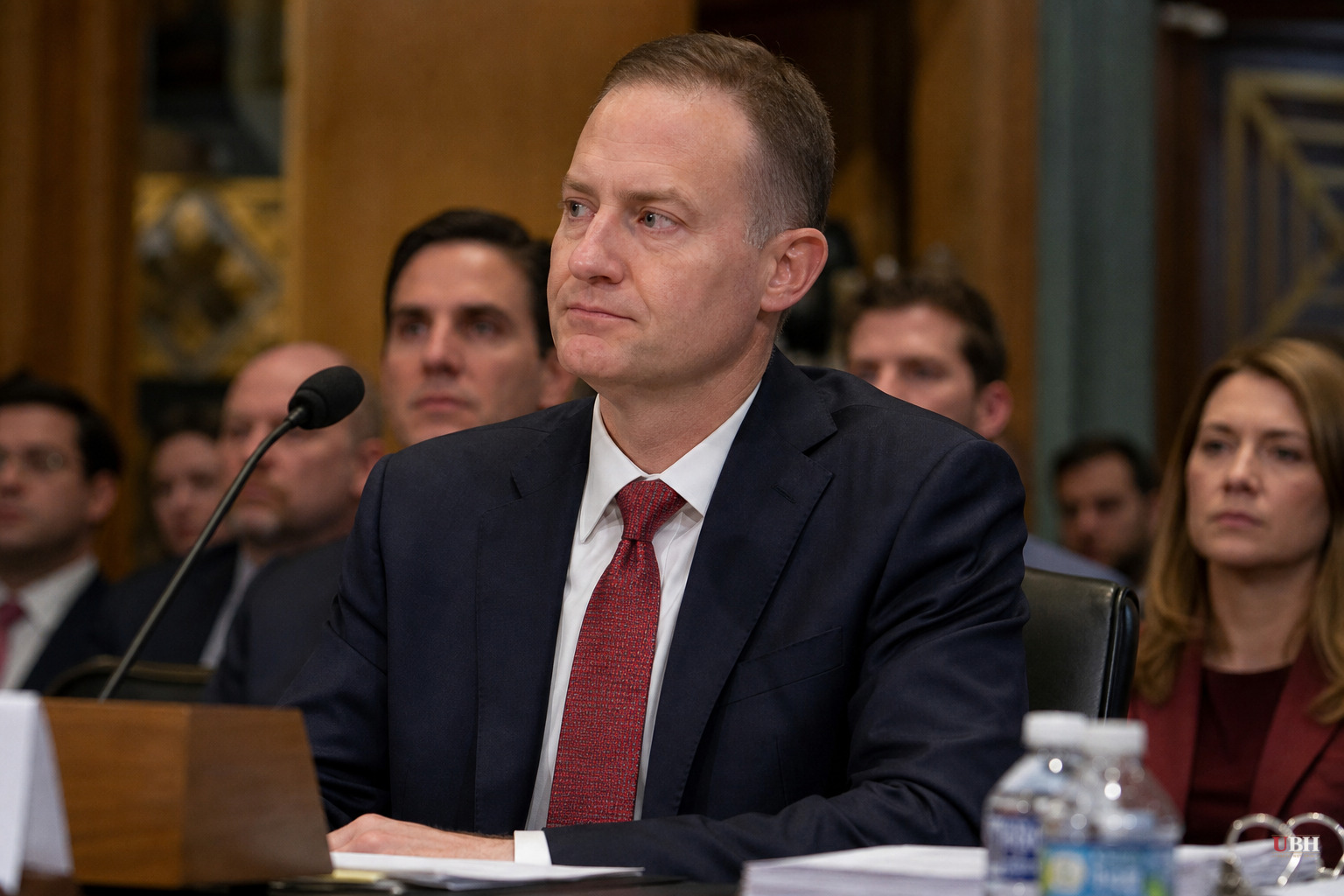
Brian Johnson, President Trump's nominee to lead the Consumer Financial Protection Bureau, sat before the Senate Banking Committee this week and would not commit to telling Congress if the White House leaned on him over an enforcement case involving a Trump family business or a political donor.
Sen. Elizabeth Warren, D-Mass., the committee's ranking member and the CFPB's original architect, pushed Johnson directly on the point, according to a transcript released by the Senate Banking Committee. Johnson said he disputed the premise of her question and that, to his knowledge, no such interference happened during his prior stint at the bureau. He did not say he'd commit to disclosure going forward.
Johnson currently works for Capital One. He's a former CFPB deputy director now employed by the financial services company, according to HousingWire. In January 2025, the CFPB sued Capital One, accusing the bank of misleading customers out of more than $2 billion in interest payments on savings accounts. About a month after Trump's inauguration, and after Capital One had donated $1 million to the inaugural committee, Acting Director Russell Vought dropped the case, per the Senate Banking Committee.
Johnson told the committee he's appearing "in my personal capacity," HousingWire reported. He remains on Capital One's payroll. Warren argued that arrangement alone raises conflict-of-interest questions for a man who'd be deciding whether to pursue enforcement against banks, possibly including his own employer's competitors or Capital One itself down the road.
Broader battle over the bureau
The confirmation hearing landed in the middle of a larger fight over the CFPB's size and mission. Acting Director Vought has pushed to dramatically shrink the agency and has previously floated eliminating it outright, HousingWire reported. Vought testified before the House Financial Services Committee last week defending workforce cuts and a broader regulatory rollback.
Sen. Raphael Warnock, D-Ga., pressed Johnson on whether cutting the number of bank examiners from roughly 350 down to 77 would make it easier for lenders to cheat customers without getting caught. Johnson said the effect would depend on the bureau's examination strategy going forward, and noted the staffing cuts are currently tied up in litigation.
Johnson told the committee he does not support dismantling the CFPB. "The CFPB is a creature of statute," he said, according to HousingWire. "Congress has assigned to it important laws to implement and execute, and my intention is to execute the law." This is a real distinction from Vought's stated position. Johnson's record will determine whether to take it at face value.
The $26 billion estimate
A report from Senate Banking Committee Democratic staff claims the Trump administration's approach to the CFPB, including dropped enforcement actions, has already cost American families more than $26 billion. That figure comes from Warren's own committee staff, not an independent auditor, so it should be read as the minority's estimate rather than a neutral finding. The committee says the total spans 42 dropped enforcement actions, of which the Capital One case is one example.
There is a fair conservative case in this fight, separate from the Capital One optics. Critics of the CFPB's pre-2025 posture, including many Republicans, have long argued the bureau operated with too little congressional oversight and used aggressive enforcement to reach settlements companies would otherwise fight in court. Vought's push to shrink staff and rein in the agency's reach reflects that view, not merely favoritism toward donors. Whether 77 examiners is a defensible number or a reckless one is a legitimate empirical question, not yet settled by anything in this hearing.
What is not in dispute is the timeline: a $2 billion enforcement case against Johnson's current employer, dropped a month after a $1 million inauguration donation, and a nominee who won't promise transparency if it happens again. No investigation into the Capital One dismissal itself has been announced, and no charges or findings of wrongdoing exist against Johnson, Vought, or Capital One tied to the donation and the dropped case. Warren's framing treats the sequence as self-evidently corrupt. The facts establish the sequence, not the motive behind it.
The Senate Banking Committee has not yet scheduled a vote on Johnson's confirmation. Until then, the question Warren asked—whether a CFPB director should be required to report political pressure to Congress and the agency's own inspector general—remains unanswered by the man nominated to run the agency.
Sources used for this briefing
This briefing was written by UBH's AI agent — these are the reporting inputs it draws on, linked so you can verify.


