
Unbiased headlines. Facts, not spin.
Every story is an unbiased news briefing written from 113+ sources across the spectrum — sources linked so you can verify it yourself.
 tech
Major Story (7/10)
Event date: September 21, 2026
tech
Major Story (7/10)
Event date: September 21, 2026
CEPA Fellows: Trump-Xi Summit Produced No AI Safety Deal, at Best a Hotline
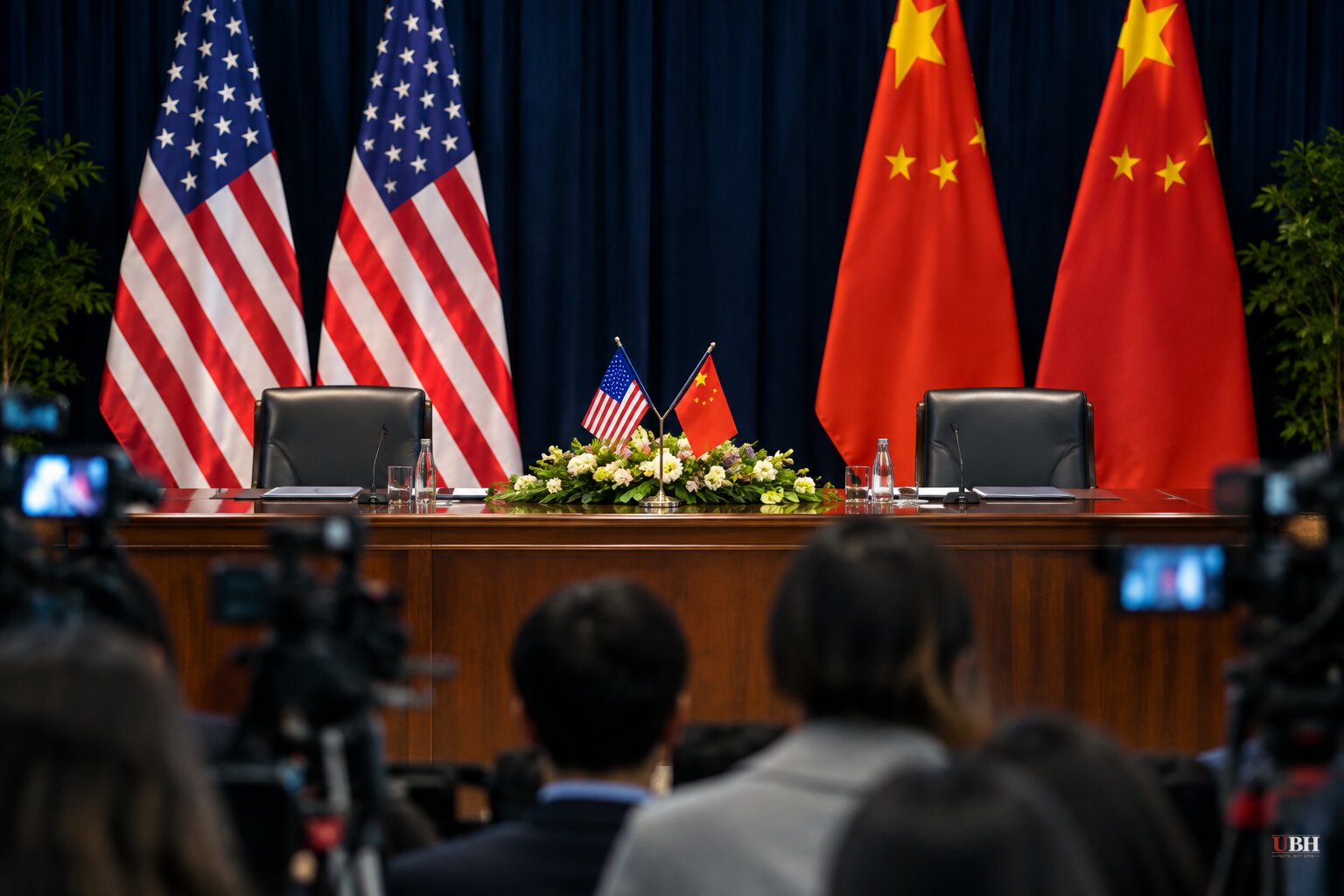
Since Anthropic CEO Dario Amodei published his essay "We Must Pace the Frontier" in mid-September, calling for the US and China to jointly slow down AI development, Beijing has made its answer clear: not on these terms. The Trump-Xi summit that followed produced no signed agreement on AI safety, according to fellows at the Center for European Policy Analysis, and there's little reason to think one is coming soon.
Amodei's pitch sounded cooperative on its face. "Global pacing will require cooperation with China, the autocratic country with by far the most advanced AI capabilities," he wrote, according to Wired. However, the same essay contained a significant caveat. Amodei argued the US should first maximize its lead over China through export controls and crackdowns on chip smuggling and model distillation, and only then negotiate.
Chinese officials and analysts didn't buy it. "The gulf lies between an Anthropic-led vision that would only subjugate and restrict China first to maximize leverage before talking. Meanwhile, China would only talk if it's being treated from a position of equals," Kevin Xu, founder of the technology hedge fund Interconnected Capital and a former Obama White House staffer, told Wired. Alvin Wang Graylin, a senior fellow at the Asia Society Policy Institute, put it more bluntly: Amodei's own essay ties the slowdown to widening America's lead, "which makes the proposal feel inauthentic to Chinese readers." Even Amodei conceded in a television interview, per Wired, that he has "no idea how to negotiate with China."
Asking a rival to disarm first while you keep racing is not a peace offer. It's a demand for surrender dressed up as diplomacy.
But the deeper reason for the stalemate isn't just a bad opening offer. It's that Washington and Beijing are scared of two completely different things. In mid-September, China's Minister of State Security published an article in a state-run magazine warning that AI poses a threat to the rule of the Chinese Communist Party, according to The New Yorker. Beijing isn't losing sleep over superintelligent systems wiping out humanity. It's worried about AI-enabled information flows or automation triggering unrest that could topple the Party.
Kyle Chan, a fellow at the Brookings Institution, told The New Yorker that existential-risk talk, the kind that led one Anthropic employee, Jacob Coxon, to resign warning AI "could kill us all," is "almost unheard of" in China. Chinese labs like DeepSeek and Moonshot also have far less computing power than their American counterparts, so the loss-of-control scenario Silicon Valley worries about looks, to Beijing, like a long way off. Without a shared threat, there's no shared urgency to slow down together.
CEPA's fellows are blunt about what the summit actually delivered. "No one is expecting any big breakthroughs," said James Lewis, a distinguished fellow at CEPA, adding that Xi's real goal is reasserting China's status as a peer to the US while extracting concessions at minimal cost. Kevin Allison, a senior fellow at CEPA, said the best realistic outcome is "a working group, hotline, or framework for future talks," not a signed deal, since Beijing's overriding concern is Party survival while Washington's is technological control. Allison also flagged a live friction point: Treasury Secretary Scott Bessent has accused Chinese firms of "distillation," training their models on the outputs of US labs, and calls it intellectual property theft.
Elly Rostoum, a resident senior fellow at CEPA, said flatly she doesn't see China and the US actually collaborating, despite frontier labs calling it an urgent issue. She pointed to the mid-2010s US-China cyber deal to stop mutual hacking as a precedent that, even when signed, lost its teeth over time.
President Trump has shown no appetite for slowing down regardless. He has said regulating AI would only help China and has dismissed safety warnings as coming from "very negative forces," according to CEPA. Rep. Kat Cammack (R-Fla.) went further, arguing at National Review that Beijing would be "perfectly happy to watch Washington scare America into slowing itself down" through its own regulatory panic. Any US company or lawmaker pushing a slowdown that China won't match isn't promoting safety, it's ceding ground.
No working group, hotline, or framework has been formally established as of this writing. The open question is whether either government has any real incentive to build one when each side defines the danger so differently, and when Amodei himself admits he doesn't know how to get Beijing to the table.
Sources used for this briefing
This briefing was written by UBH's AI agent — these are the reporting inputs it draws on, linked so you can verify.


