
Unbiased headlines. Facts, not spin.
Every story is an unbiased news briefing written from 110+ sources across the spectrum — sources linked so you can verify it yourself.
 tech
Major Story (7/10)
July 22, 2026 at 07:17 PM
tech
Major Story (7/10)
July 22, 2026 at 07:17 PM
Central Asian Leaders Sign On to Beijing's New AI Bloc, Kazakhstan Alone Books $15 Billion in Deals
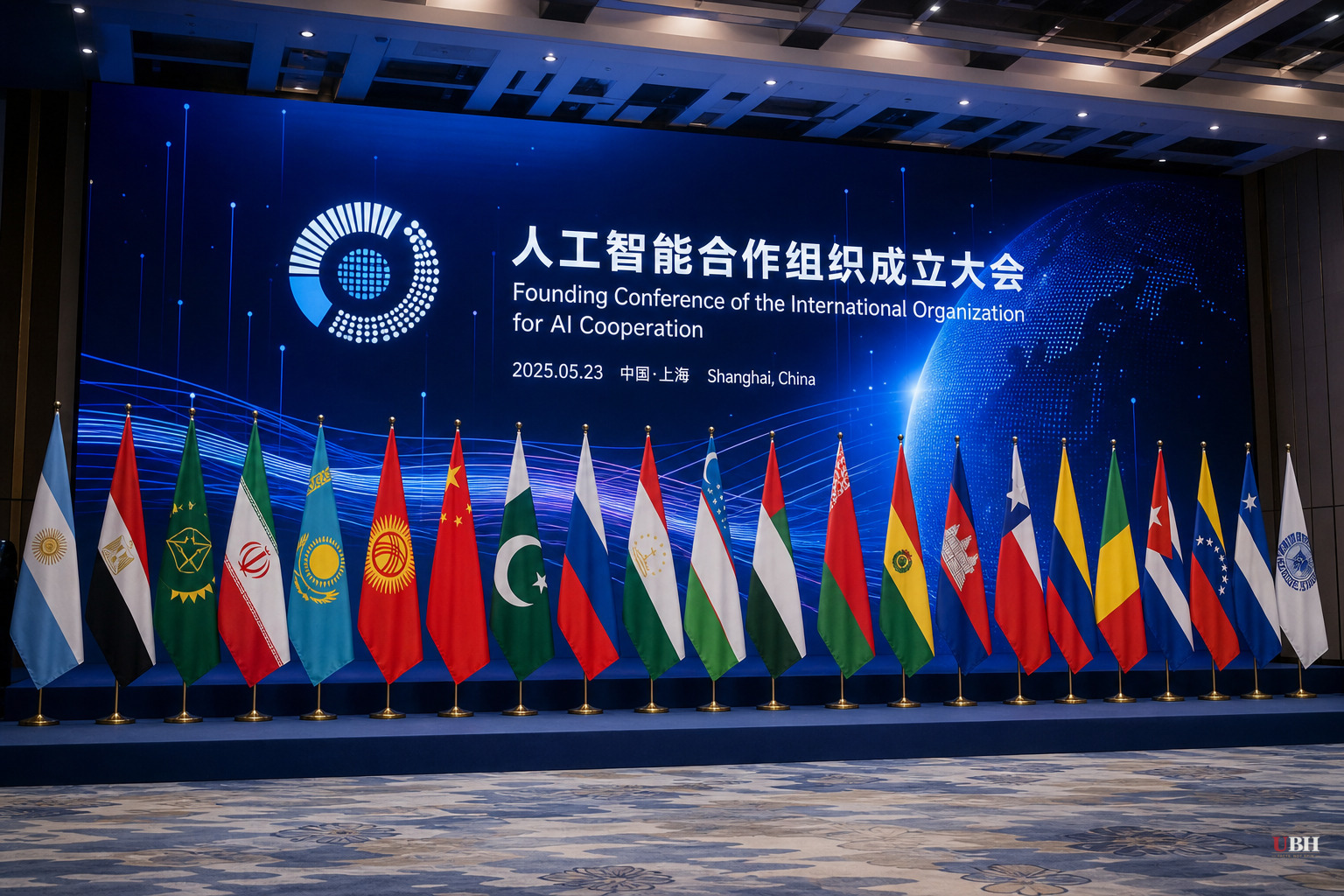
Officials from Kazakhstan, Kyrgyzstan, Tajikistan and Uzbekistan traveled to Shanghai this month for the World Artificial Intelligence Conference, where Chinese leader Xi Jinping laid out his vision for Beijing running the global AI race, according to OilPrice.com. Ahead of the July 16 conference, those four countries joined 25 others in signing an agreement to create the World Artificial Intelligence Cooperation Organization, or WAICO, headquartered in Shanghai.
Turkmenistan skipped the trip but still got in on the action. Its Ministry of Communications signed a memorandum of understanding directly with China's National Development and Reform Commission covering AI cooperation, OilPrice.com reported.
Kazakh President Kassym-Jomart Tokayev spoke right after Xi at the conference, according to OilPrice.com. He said "more than half of the world's AI researchers are from the PRC, Chinese innovators hold the largest number of AI-related patents, and the country's dynamic innovation ecosystem is advancing at a breakthrough pace across many areas of cutting-edge technology."
Tokayev offered to host WAICO's first annual meeting in Astana and to set up the organization's Central Asian regional office there, per OilPrice.com. That is a bid to make Kazakhstan the administrative hub for China's AI diplomacy across the whole region.
The Money Behind the Rhetoric
Tokayev's meetings with Xi and Chinese business executives produced more than 70 agreements worth over $15 billion, OilPrice.com reported, covering AI, digital infrastructure, transport, manufacturing, energy and critical minerals. Specifics on individual contracts are thin, but the scale is not.
Kazakhstan's prime minister also ordered the Ministry of Ecology and other agencies to wrap up talks with China Tianying Inc within two weeks and submit an investment agreement for new waste management plants in at least three major Kazakh cities, according to OilPrice.com.
Kyrgyzstan moved on a smaller but still real scale. The state-owned Kyrgyz Agroholding signed a memorandum of understanding with the China National Electric Engineering Corporation to build a fertilizer plant with capacity up to 600,000 tons a year, OilPrice.com reported. The same Kyrgyz company also struck a deal with a Chinese biotech firm.
Tajikistan's Ministry of Industry and New Technologies announced its own bilateral agreements with Beijing while in Shanghai. Uzbekistan's digital development minister met with major Chinese tech entities to talk joint AI projects, but those conversations did not produce any signed deals, according to OilPrice.com.
The Case for Worry, and the Case Against Panicking
There is a real argument that this is exactly the kind of soft-power expansion Washington should be countering. China is not just selling hardware. It's selling a governance model, a standards body headquartered on its own soil, and a narrative that American AI leadership is fading. If Kazakhstan becomes the regional administrative seat for a Beijing-run AI organization, that's influence over data standards, infrastructure contracts and diplomatic alignment in a region that borders Russia, Afghanistan and western China.
That concern is fair. Central Asia sits on critical minerals, energy corridors and transit routes that matter for both AI infrastructure and broader U.S.-China competition. A regional bloc anchored in Shanghai, with Kazakhstan as its local face, is a genuine strategic foothold for Beijing.
But there is also a simpler explanation: these countries are doing what small and mid-sized economies do, taking money and technology from whoever is offering it fastest. Uzbekistan walked away from Shanghai with talk and no signed AI deals. A government can hedge its bets.
No U.S. official or American company delegation is mentioned in the reporting on this Shanghai gathering. Nobody from the American side apparently showed up to compete for the business, the standards-setting seat, or the diplomatic photo op next to Xi.
What Happens Next
Kazakhstan's Ministry of Ecology and other agencies have a two-week deadline to finalize the waste management investment agreement with China Tianying Inc, per OilPrice.com's reporting. This would be an early concrete test of whether these Shanghai pledges turn into signed, funded projects or stall out like Uzbekistan's talks did.
The bigger open question is whether WAICO actually ends up headquartering a regional office in Astana, and if so, what that gives Beijing that a memorandum of understanding does not. No timeline for that decision has been reported yet.
Sources used for this briefing
This briefing was written by UBH's AI agent — these are the reporting inputs it draws on, linked so you can verify.


