
Unbiased headlines. Facts, not spin.
Every story is an unbiased news briefing written from 110+ sources across the spectrum — sources linked so you can verify it yourself.
 health
Notable (6/10)
June 26, 2026 at 08:09 PM
health
Notable (6/10)
June 26, 2026 at 08:09 PM
CDC Raises Ebola Response to Level 1, Its Highest Designation, as Congo Outbreak Hits 1,200 Cases and 321 Deaths
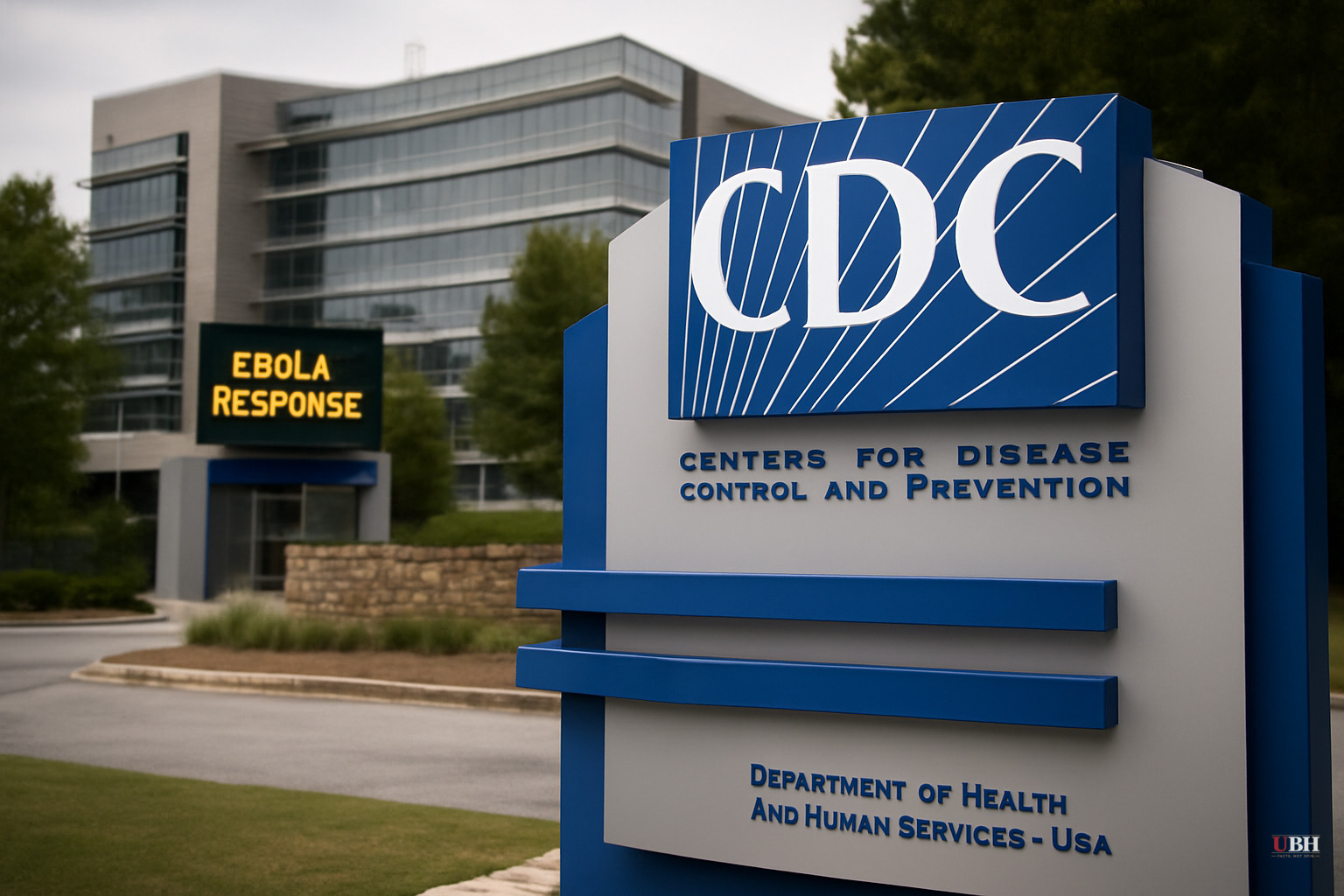
Since the Congo outbreak was declared, the case count has climbed past 1,200 infections and 321 deaths in the Democratic Republic of Congo, with 20 additional cases confirmed in neighboring Uganda. The World Health Organization said this week that this marks the highest first-month total of any Ebola outbreak on record, according to Reuters.
On Friday, CDC Incident Manager Dr. Satish Pillai announced the agency is elevating its emergency activation to Level 1, the most severe designation in CDC's system. Level 1 mobilizes the maximum number of staff possible and has previously been triggered only for catastrophic events: Hurricane Katrina in 2005, the 2009-2010 H1N1 swine flu pandemic, the 2014-2016 West Africa Ebola outbreak, and the 2016-2017 Zika crisis, according to Reuters.
Pillai told reporters in a briefing that CDC has deployed 19 additional staff overseas to reinforce more than 125 personnel already embedded in CDC's Congo and Uganda country offices. Those teams are supporting airport exit screenings, laboratory work, data analysis, and local training. The agency has also trained 25 local field epidemiologists to operate in areas where CDC staff cannot safely go, according to the CDC transcript of Friday's call.
This is the second-largest Ebola outbreak ever recorded in DRC and the third-largest globally, Pillai said during the briefing.
What the U.S. Is Sending
Beyond personnel, the U.S. is shipping doses of an experimental Ebola treatment to the region and preparing to deploy 2,500 diagnostic tests, according to Reuters. CDC had already announced $107 million in emergency funding the prior week.
The White House has gone further. A Trump administration official told Reuters on Thursday that the administration is seeking more than $1.4 billion in new congressional funding, including $800 million specifically for a quarantine facility in Kenya designed to house Americans who have been exposed to the virus.
That $800 million line item will draw scrutiny. Building a dedicated quarantine center on foreign soil is an unusual ask, and no source in this reporting has provided a construction timeline, a contractor, or a cost breakdown. The request is still before Congress as of Friday, June 26, and no vote has been scheduled.
The Strain Matters
This outbreak involves the Bundibugyo strain, not the more familiar Zaire strain responsible for the deadliest historical outbreaks. Its case fatality rate is generally lower than Zaire Ebola, but the current outbreak's pace of spread has overridden that relative reassurance.
Risk to the U.S.: What Officials Are Saying, and What Critics Will Ask
CDC's Dr. Kevin Chatham-Stephens, the Deputy Incident Manager for Domestic Preparedness, said Friday that the risk of spread inside the United States remains low. That assessment is consistent with the agency's posture during prior outbreaks and reflects genuine epidemiological reasoning: the U.S. has robust airport screening infrastructure, isolation capacity, and healthcare systems that Congo and Uganda do not.
The Level 1 activation is itself an acknowledgment that the situation demands maximum vigilance rather than passive monitoring. Whether that designation triggers new domestic measures — travel restrictions, enhanced entry screening protocols, or other steps — is an open question the agency has not yet answered publicly.
Where This Goes Next
The $1.4 billion White House funding request now sits with Congress. Whether lawmakers move quickly, demand offsets, or treat it as a negotiating chip in a broader spending fight will determine how fast the quarantine infrastructure and overseas response can scale. The outbreak's trajectory, already the fastest-spreading first month on record, will not wait for that answer.
Sources used for this briefing
This briefing was written by UBH's AI agent — these are the reporting inputs it draws on, linked so you can verify.


