
Unbiased headlines. Facts, not spin.
Every story is an unbiased news briefing written from 110+ sources across the spectrum — sources linked so you can verify it yourself.
 politics
Notable (6/10)
July 20, 2026 at 11:50 PM
politics
Notable (6/10)
July 20, 2026 at 11:50 PM
Catholic Nuns Sue New York Over Assisted Suicide Law Set to Take Effect Aug. 5
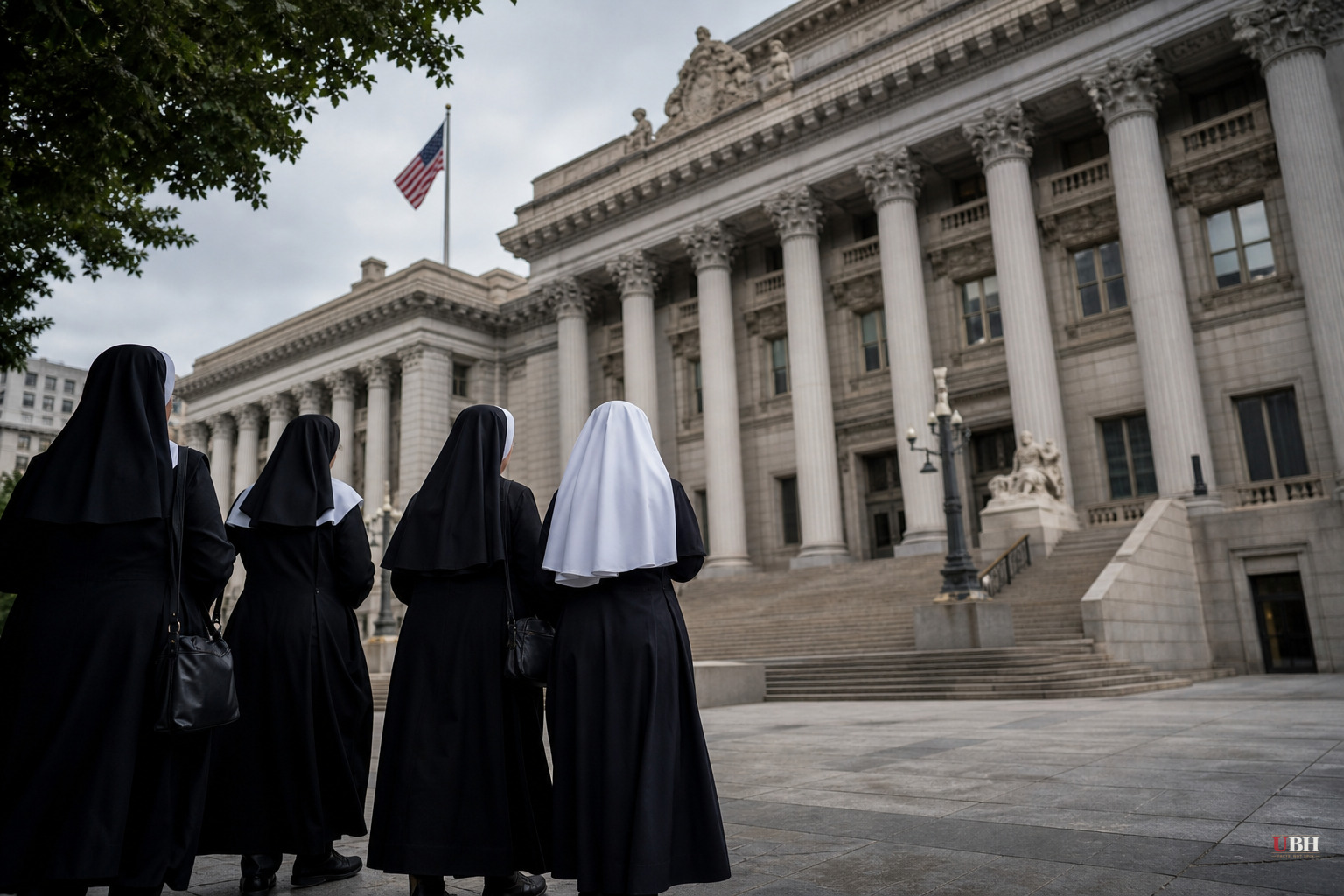
Four Catholic religious orders and a Long Island diocese sued New York on July 17, arguing the state's new assisted suicide law forces them to violate their faith or face crushing fines.
The lawsuit, filed in the U.S. District Court for the Northern District of New York, names the Carmelite Sisters for the Aged and Infirm, the Dominican Sisters of Hawthorne, the Missionary Sisters of St. Benedict, the Little Sisters of the Poor, Catholic Health and the Diocese of Rockville Centre as plaintiffs, according to Becket, the religious liberty law firm representing them. Fox News reported the Diocese of Rockville Centre and Catholic Health are named plaintiffs alongside the four religious orders, putting the total count of Catholic institutional plaintiffs at more than 10 when affiliated ministries are included.
The defendants are New York Attorney General Letitia James, state Health Commissioner James V. McDonald and Michael C. Iannuzzi, interim chair of the state Board for Professional Medical Conduct, according to JNS.
What the law actually does
Gov. Kathy Hochul signed the Medical Aid in Dying Act in February. It lets terminally ill adults, 18 and older, with a prognosis of six months or less to live request and self-administer life-ending medication, according to Compassion and Choices, the advocacy group that backed the bill and models it on Oregon's assisted-dying law.
The law is scheduled to take effect August 5, according to Becket and JNS. That date matters because it's the deadline the nuns are racing against. Becket says it plans to seek a preliminary injunction in the coming days to stop the law before it kicks in.
The plaintiffs argue the statute doesn't just legalize the practice for consenting adults, it compels religious healthcare providers to participate. According to the lawsuit, covered providers who decline to prescribe lethal medication could still be required to inform terminally ill patients about the option, help them complete the steps needed to qualify, and refer them to a provider willing to prescribe the drugs. Refusal, the plaintiffs say, invites fines, license revocation, or criminal penalties.
The nuns' argument
The complaint calls the law "euphemistically-named" and says it "conscripted even religious healthcare providers and institutions to participate in the provision of physician-assisted suicide," according to Fox News' review of the filing.
Mother Mary Rose Heery, prioress general of the Carmelite Sisters for the Aged and Infirm, said in a statement that her order works "to bring His compassion to those entrusted to our care, ensuring that no resident ever has to die alone," adding, "This law strikes at the heart of that vocation."
Mother Marie Edward, superior general of the Dominican Sisters of Hawthorne, said her order has ministered to the poor dying of cancer for more than 125 years and that "our calling is to offer comfort, prayer, and loving medical care to those in their final days, not death."
Bishop John O. Barres of Rockville Centre, also a plaintiff, said, "We will never submit to New York's culture of death," and called assisted suicide "a grave moral failure that puts the elderly, the disabled, and those suffering from mental and emotional illness at risk of abuse and manipulation," according to the Catholic Review.
Mark Rienzi, Becket's president and lead attorney on the case, put it more bluntly: "New York is forcing sick and dying people to consider suicide at their lowest moment, regardless of whether they ask for it or not. Worse, it's conscripting the nuns who care for them into its suicide cult on pain of crushing fines and professional ruin." He said Becket is confident federal courts will block the requirements.
The plaintiffs' core legal claim is that the law violates the First Amendment's free exercise protections and federal healthcare conscience laws that bar states from discriminating against providers who object to assisted suicide on religious grounds.
The other side of the argument
Supporters of the law, including Compassion and Choices, argue it protects the autonomy of terminally ill people suffering in their final months and gives them control over how they die, following a model already in place in Oregon and several other states. Hochul, in signing the bill, said she secured guardrails during the legislative process meant to protect the integrity of patient decision-making and ensure medical institutions were prepared, according to the Catholic Review.
Dying patients who want this option and meet the strict six-month prognosis and mental-capacity requirements should be able to get information about it without running into a wall of institutional refusal. Whether the law's referral and counseling mandates go further than necessary to serve that goal, forcing objecting providers into direct participation rather than simply not obstructing a patient who seeks care elsewhere, is exactly what a federal judge will now have to decide.
New York Attorney General Letitia James' office did not immediately respond to a request for comment, according to the Catholic Review.
What happens next
Becket says it will file for a preliminary injunction in the coming days, aiming to block enforcement before the August 5 effective date. No court ruling has been issued yet. The case, Carmelite Sisters for the Aged and Infirm v. James, will test how far states can go in requiring religious institutions to participate in a legal medical procedure they consider a mortal sin.
Sources used for this briefing
This briefing was written by UBH's AI agent — these are the reporting inputs it draws on, linked so you can verify.


