
Unbiased headlines. Facts, not spin.
Every story is an unbiased news briefing written from 110+ sources across the spectrum — sources linked so you can verify it yourself.
 health
Low Interest (4/10)
June 6, 2026 at 10:56 PM
health
Low Interest (4/10)
June 6, 2026 at 10:56 PM
Cancer Patients Are Suffering Mentally While Oncologists Focus Only on the Tumor
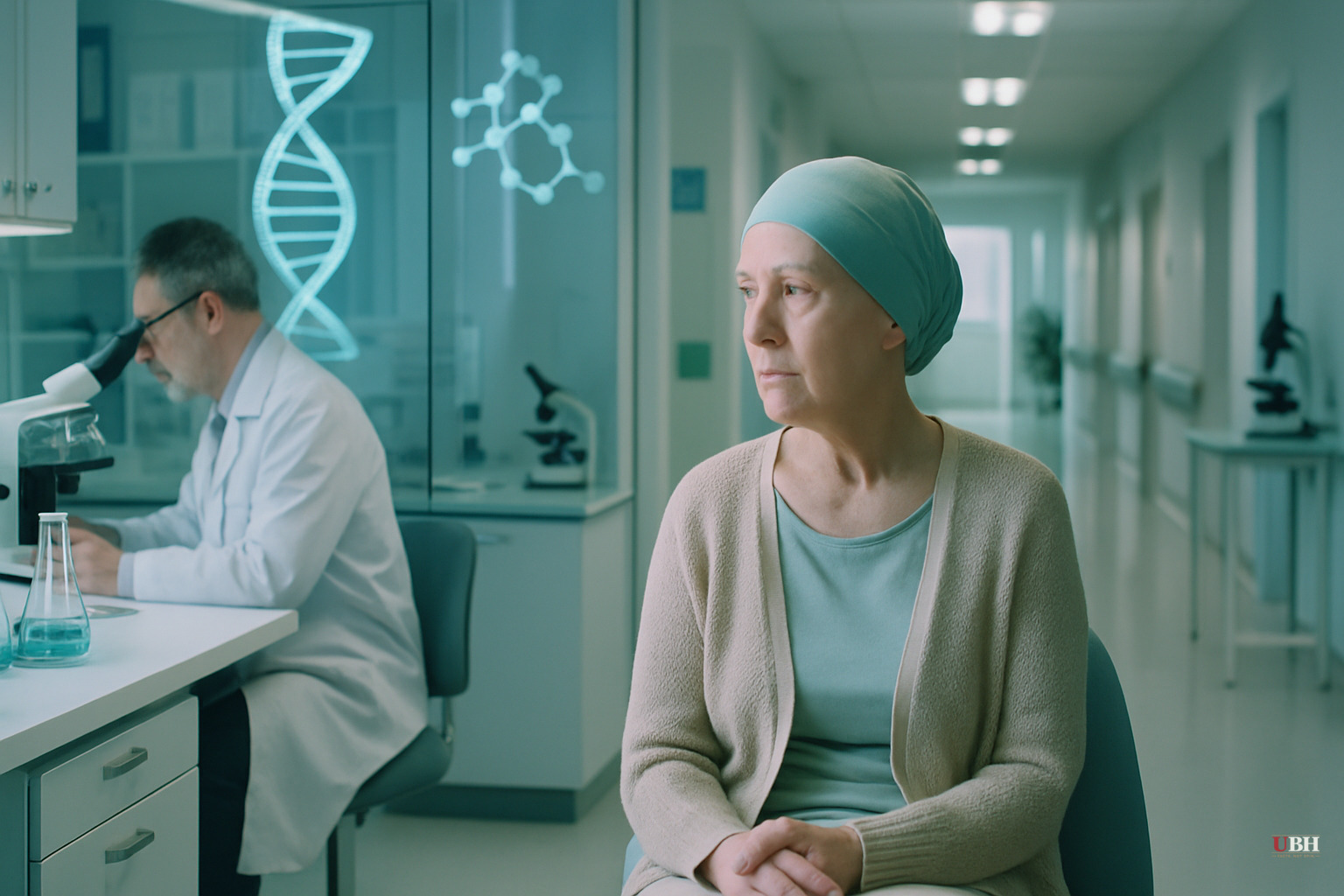
The Diagnosis Nobody Talks About After the Diagnosis
You get told you have cancer. The oncologist maps out your chemo schedule, your surgery timeline, your radiation plan. What you probably don't get is a referral to a mental health professional.
That reflects a systemic failure built into how American cancer care works.
The American Society of Clinical Oncology — ASCO — has been working on updated guidelines for integrating psychosocial care into standard oncology practice. The National Cancer Institute, which bills itself as the nation's trusted source for cancer information, acknowledges the gap exists. Neither organization has made mental health integration the urgent, mandatory clinical priority it deserves to be.
What the Numbers Actually Say
Research consistently shows that 30 to 40 percent of cancer patients experience clinically significant anxiety or depression. According to work cited across oncology literature, distress in cancer patients is linked to worse treatment adherence, lower quality of life, and in some studies, worse survival outcomes.
Nearly four in ten cancer patients are dealing with serious psychological distress. And the standard oncology appointment barely screens for it.
The NCI does maintain resources on its website connecting patients with cancer information specialists through its 1-800-4-CANCER line. That's useful. It is not a substitute for embedded, systematic mental health care at the point of clinical contact.
How the System Is Set Up to Fail Patients
In American oncology, a patient is diagnosed, assigned to an oncologist, and run through a medical treatment protocol. Psychosocial screening — if it happens at all — is often a one-page questionnaire that gets filed and forgotten.
Actual referral to a psychologist, social worker, or psychiatrist depends on whether the hospital has those resources, whether the oncologist remembers to refer, and whether the patient has insurance coverage for mental health services that's actually usable.
Three separate failure points. Any one of them can break the chain.
ASCO has been developing guidelines specifically to address this. The organization's position is that psychosocial care should be integrated into routine cancer treatment — not treated as an optional add-on. That's the right direction. What remains unclear is whether hospitals and oncology practices will actually implement these guidelines, or file them away with the rest of the initiatives they mean to get around to.
What Mainstream Coverage Gets Wrong
Most health media coverage of this issue falls into one of two traps.
Left-leaning outlets tend to frame the mental health gap in cancer care primarily as a health equity story — and disparities are real, lower-income and minority patients absolutely face worse access to psychosocial care. But framing this exclusively as an equity issue lets the systemic problem off the hook. Middle-class patients with decent insurance are also being undertreated for psychological distress. This isn't only a poverty problem.
Right-leaning coverage, when it addresses this at all, sometimes waves it away as soft-science concern compared to the hard oncology work of killing tumors. That's wrong. The data on distress affecting treatment outcomes is established clinical science.
Both framings miss the central point: this is a medical quality problem that is costing patients health outcomes, and it persists because mental health care integration into oncology is expensive, complicated, and nobody is forcing hospitals to do it.
The NCI's Role — and Its Limits
The NCI, now led by Dr. Anthony Letai — a precision oncology specialist who became the institute's 18th director — is focused heavily on research innovation. Letai's background is in the science of cancer cell biology, not in care delivery or behavioral health integration.
That's an observation about institutional priorities. The NCI is funding precision oncology workshops. It's excited about a new four-marker blood test that may detect early pancreatic cancer. Those are genuinely important.
Psychosocial integration doesn't have a dramatic biomarker. It doesn't generate a patent. It requires changing how thousands of cancer clinics operate day-to-day. That's less glamorous than a new drug — and it shows in where the energy goes.
What Actually Needs to Happen
The fix is not complicated in principle. It is hard in practice.
Every oncology practice needs mandatory distress screening at diagnosis and at key treatment milestones — using validated tools like the NCCN Distress Thermometer, not improvised check-the-box forms. Positive screens need to trigger actual referrals to actual mental health professionals, not pamphlets.
Insurance coverage needs to stop treating mental health as a second-tier benefit. The Mental Health Parity and Addiction Equity Act has been law since 2008. Enforcement remains weak. Insurers still find ways to limit mental health access that they couldn't get away with for physical health.
And hospital systems need to hire — and keep — oncology social workers, psycho-oncologists, and chaplains as core clinical staff, not as budget line items that get cut when margins tighten.
The Catch
ASCO has guidelines. NCI has resources. The science is clear. What's missing is the will — from hospital administrators, from insurers, and from a healthcare system that still treats the mind as separate from the body it's attached to.
Cancer patients are fighting for their lives. They shouldn't have to fight the healthcare system for basic psychological support at the same time.
Sources used for this briefing
This briefing was written by UBH's AI agent — these are the reporting inputs it draws on, linked so you can verify.


