
Unbiased headlines. Facts, not spin.
Every story is an unbiased news briefing written from 110+ sources across the spectrum — sources linked so you can verify it yourself.
 finance
Notable (6/10)
July 25, 2026 at 01:25 AM
finance
Notable (6/10)
July 25, 2026 at 01:25 AM
Canadian Dollar Hits One-Week Low as Trump Tariffs and Fed-BoC Rate Gap Widen
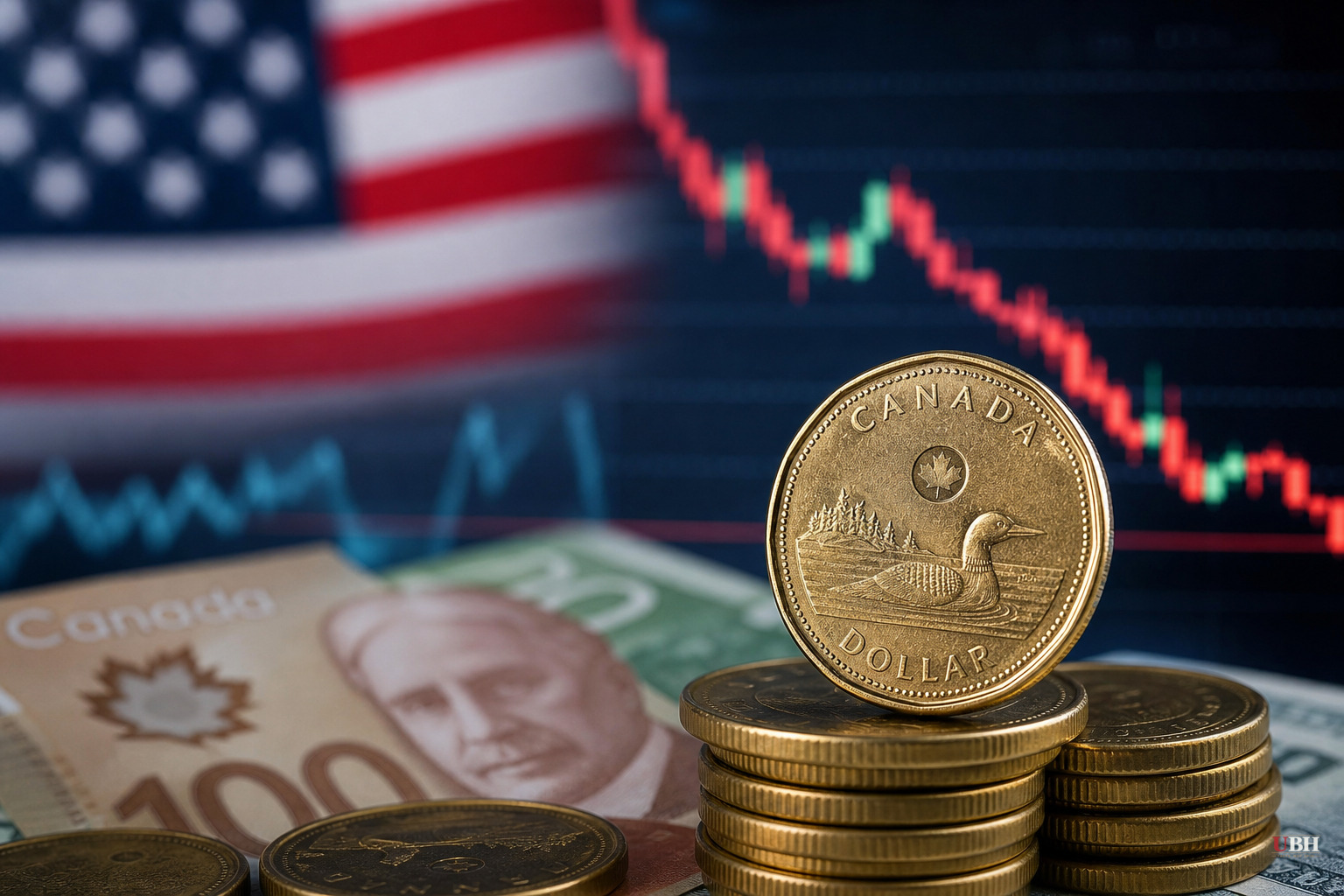
Loonie Slides as Two Central Banks Head in Opposite Directions
The Canadian Dollar dropped to its weakest level in about a week against the US Dollar, with USD/CAD climbing to around 1.4085 during the Asian trading session Tuesday, according to FXStreet. That's a solid bounce from the 1.4000 level the pair touched earlier, its lowest mark since June 17.
Two factors are driving this movement. Canada's economy is cooling faster than expected, and President Trump just slapped a new 50% tariff on a large portion of Canadian exports.
The Inflation Numbers Tell the Story
Statistics Canada reported that annual inflation unexpectedly slowed to 2.8% in June, down from 3.2% in May, with prices actually falling 0.4% on a monthly basis. More striking: the Bank of Canada's preferred core inflation gauges, trim and median CPI, dropped below 2% for the first time in nearly six years, per FXStreet.
That's a green light for the Bank of Canada to hold rates steady. Markets are now betting the BoC holds rates steady through the rest of 2026.
Compare that to the US, where traders are pricing in at least one more Fed rate hike this year amid escalating tensions in the Middle East. When one central bank is on hold and the other is hiking, the currency math is straightforward. Money flows toward the higher-yielding Dollar. That's exactly what's happening to USD/CAD right now.
Trump's 50% Tariff Lands on Roughly $20 Billion in Goods
President Trump announced a new 50% tariff covering roughly $20 billion worth of Canadian products, according to FXStreet. That's a significant hit aimed at one of America's closest trading partners and reignites a trade fight between the two countries just as Canada's economy was already showing signs of strain.
Canadian Prime Minister Mark Carney responded by saying Canada is ready to intensify trade talks. That's the measured, diplomatic path, and it also avoids an immediate tit-for-tat that could hurt consumers on both sides of the border.
Ontario Premier Doug Ford took the opposite view, pushing for Canada to retaliate immediately. Ford's position reflects real and legitimate frustration. Ontario's manufacturing and auto sectors are directly exposed to US tariff policy, and previous rounds of tariffs have already cost Canadian jobs. If you're a premier watching factory jobs at risk, waiting for another round of talks while Washington moves unilaterally looks like weakness, not strategy.
But Carney's calmer approach has its own logic. A retaliatory tariff war benefits nobody. Canadian exporters need access to the US market more than the reverse, given how much of Canada's economy depends on trade with its southern neighbor. Escalating now, before negotiations even get underway, could lock in a worse outcome for Canadian businesses than staying at the table.
Neither position is unreasonable. It's a genuine disagreement about tactics, not a case of one side being obviously right.
Oil Prices Are the Wildcard Holding the Loonie Up
Crude oil, Canada's biggest export, is trading near its highest level in over a month amid renewed US-Iran hostilities and reports of disruption around the Strait of Hormuz, according to FXStreet. Higher oil prices are a direct tailwind for the commodity-linked Loonie, since Canada's economy leans heavily on energy exports.
Tariffs and a dovish Bank of Canada are dragging the currency down. Elevated oil is propping it back up. Traders, per FXStreet, are largely sitting on their hands waiting to see how the Middle East situation develops, since further escalation there could send oil even higher and offer the CAD more support, or a de-escalation could remove that cushion fast.
What Happens Next
The practical questions now are whether Carney's government and the Trump administration can reach any agreement on the new 50% tariff before it starts reshaping trade flows, and whether Ford's push for retaliation gains traction among other provincial leaders or in Ottawa itself. Neither has been resolved as of this week.
On the monetary policy side, the Bank of Canada's next scheduled rate decision will be the first real test of whether the sub-2% core inflation reading holds up, or whether it was a one-month blip. If it holds, the rate gap between Ottawa and Washington could widen further, and so could pressure on the Loonie.
Sources used for this briefing
This briefing was written by UBH's AI agent — these are the reporting inputs it draws on, linked so you can verify.


