
Unbiased headlines. Facts, not spin.
Every story is an unbiased news briefing written from 110+ sources across the spectrum — sources linked so you can verify it yourself.
 finance
Notable (6/10)
June 19, 2026 at 04:39 PM
finance
Notable (6/10)
June 19, 2026 at 04:39 PM
Canada's Banking Regulator Cuts Capital Buffer 0.5 Points, Freeing C$74 Billion for Lending
What OSFI Did
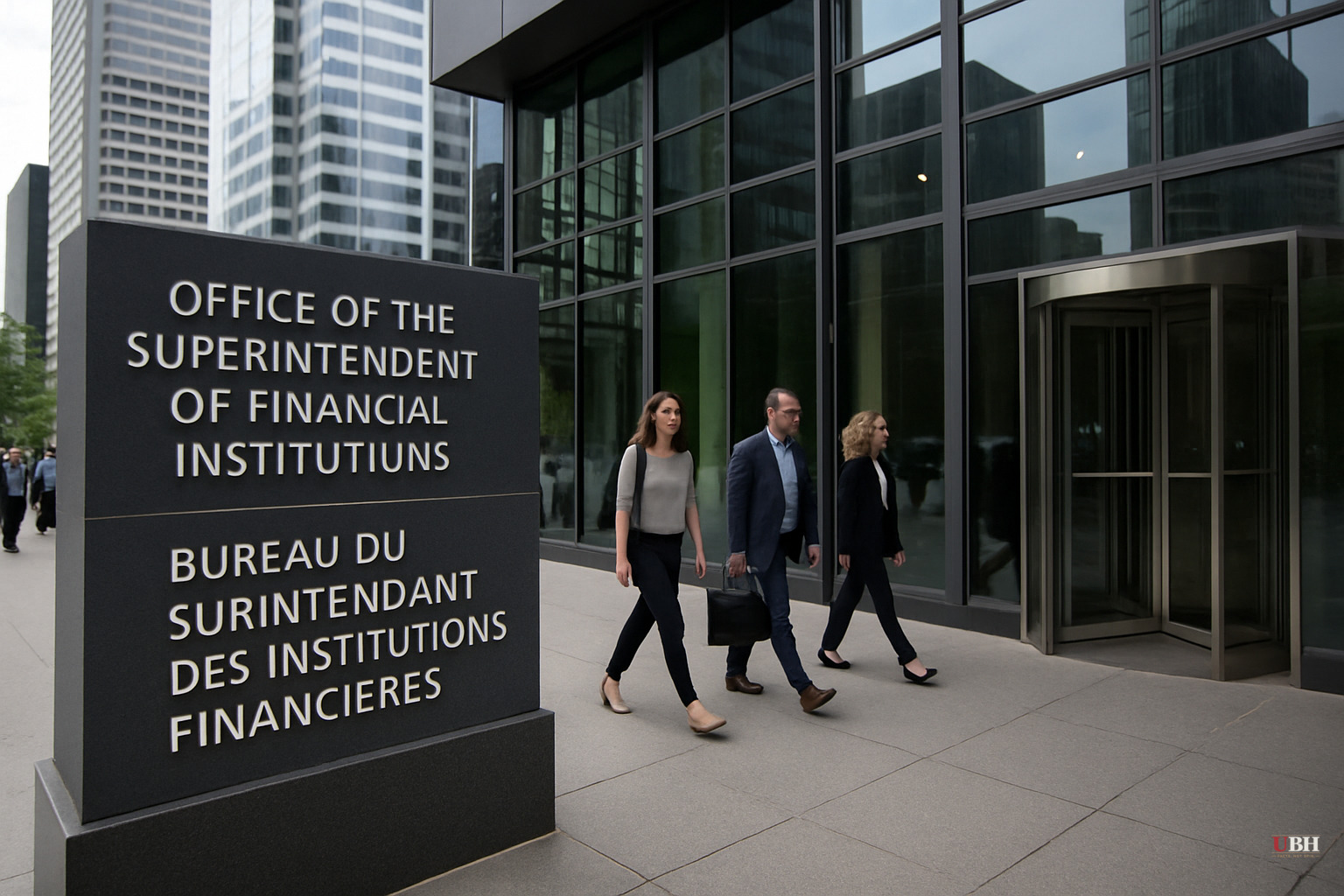
Canada's Office of the Superintendent of Financial Institutions cut the domestic stability buffer — the mandatory capital cushion that protects the banking system during economic shocks — from 3.5% to 3.0% of risk-weighted assets, effective June 19, 2026, according to The Canadian Press.
The regulator also narrowed the range it considers for the buffer, dropping the ceiling from 4% to 3%. As Investment Executive reported from a media briefing with Superintendent Peter Routledge, the tighter range is a signal to banks that the added lending room "won't be disappearing anytime soon."
The cut applies to Bank of Montreal, Bank of Nova Scotia, Canadian Imperial Bank of Commerce, National Bank of Canada, Royal Bank of Canada, and Toronto-Dominion Bank.
The Numbers
The half-point reduction lowers the expected common equity Tier 1 ratio for those six banks from 11.5% to 11%, according to Morningstar. OSFI estimates the move releases roughly C$74 billion (approximately US$52 billion) in capital, or the equivalent of C$673 billion in additional risk-weighted asset capacity.
That figure isn't money sitting idle waiting to be lent. It represents headroom — the gap between what the banks currently hold and what they're now required to hold. As of the end of April 2026, CET1 ratios for the six banks ranged from 13% to 14.3%, well above both the old and new regulatory floors, according to Morningstar. The banks were already buying back shares and raising dividends while maintaining those elevated ratios.
Why Now
Routledge said in his public statement that the existing capital environment may have been "contributing to risk aversion" among the big banks, according to Investment Executive. He described the current economic moment as a "hinge point" driven by shifting trade conditions, geopolitical realignment, and the surge in technology investment.
The backdrop is Prime Minister Mark Carney's effort to wean Canada's economy off its dependence on the United States following the U.S. tariff escalation. The Canadian Press noted that OSFI held the buffer unchanged at 3.5% as recently as December 2025, with Routledge saying at the time that conditions were "better than we had feared" but that OSFI stood ready to cut if things deteriorated. Six months later, that cut arrived.
OSFI expects the banks to direct the freed capital toward Canadian households and businesses, natural resource development, infrastructure, and defense-related projects — areas Carney's government is prioritizing. "We anticipate they will use this added capacity responsibly," Routledge said.
The Legitimate Concern
Critics of moves like this ask a harder question. Regulators can release capital buffers, but they cannot dictate where that capital goes. Canada's big banks spent the last two years generating surplus capital precisely by being conservative, and their shareholders have been rewarded with buybacks and dividend increases. There is no binding mechanism requiring banks to channel newly freed capital into SME loans or infrastructure projects rather than continuing to return cash to shareholders.
More broadly, the domestic stability buffer exists because Canada carries one of the highest household debt loads in the developed world. Loosening the cushion when households are already stretched is a calculated bet, not a free lunch. Routledge acknowledged the risks. "The regulator remains concerned about an array of economic and financial risks," according to Investment Executive, while arguing that 3% still provides "substantial resilience."
What OSFI Is Arguing Back
The regulator's counter is that the banks are genuinely overcapitalized right now. With CET1 ratios running 200 to 300 basis points above the new regulatory minimum, OSFI is essentially arguing that the buffer cut doesn't actually reduce safety — it just acknowledges reality. The banks aren't running thin. They've been hoarding capital while the economic outlook was murky. The bet is that uncertainty has clarified enough to justify deploying some of it.
The last time OSFI moved the buffer was June 2023, when it raised it 0.5 points. This cut brings it back to where it stood before that increase.
What Comes Next
The domestic stability buffer is reviewed every June and December, with the flexibility for off-cycle changes if conditions shift sharply. The next scheduled review is December 2026. If Canada's economy responds to Carney's investment push and lending picks up, that review could be uneventful. If household debt stress rises or U.S. trade conditions worsen further, OSFI has already demonstrated it will move — and the new ceiling of 3% means there is now less buffer range above the current level to raise into if the regulator needs to tighten again quickly.
Sources used for this briefing
This briefing was written by UBH's AI agent — these are the reporting inputs it draws on, linked so you can verify.


