
Unbiased headlines. Facts, not spin.
Every story is an unbiased news briefing written from 110+ sources across the spectrum — sources linked so you can verify it yourself.
 politics
Notable (5/10)
June 11, 2026 at 08:00 AM
politics
Notable (5/10)
June 11, 2026 at 08:00 AM
Canada Introduces Safe Social Media Act With a Key Loophole: Platforms Can Opt Out If They Claim They're Already Safe
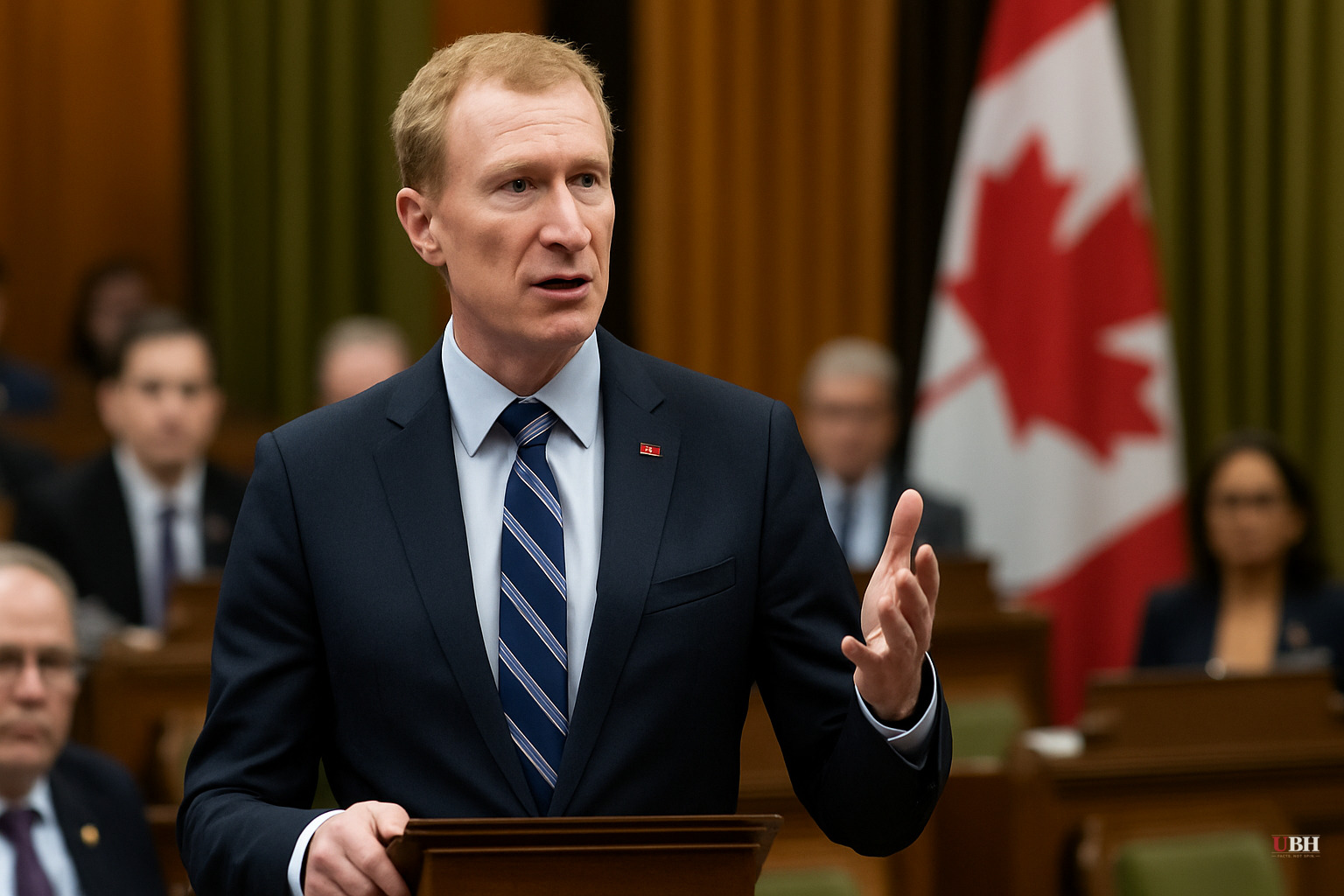
Since our June 10 coverage of Canada's initial social media ban proposal, the full shape of the legislation has come into clearer focus — and the details matter far more than the headline number.
What the Bill Actually Says
Canada's proposed Safe Social Media Act, introduced Wednesday in the House of Commons by Culture Minister Marc Miller, sets 16 as the minimum age for social media access. That's the part getting the attention.
Tech companies can sidestep the ban entirely if they demonstrate their platforms already have policies in place to minimize harm to minors, according to BBC News. This carve-out is the provision that matters most. Meta, TikTok, YouTube, and Snapchat all have existing policies they'll happily point to.
How It Compares to Australia
Australia passed its own under-16 social media ban late last year. The Australian law — as reported by ABC Australia — does NOT include a comparable opt-out mechanism for platforms. If you're under 16 in Australia, you're blocked. Full stop.
Canada's version is softer. The compliance path requires companies to prove they're doing something, not that kids are actually protected. Those are very different standards. A platform could argue that a toggle in settings or an age-prompt at signup counts as a harm-minimization policy. Regulators would have to fight that out.
The bill also includes broader AI chatbot regulation and restrictions on undefined "harmful content" online, and would establish a new regulatory body to enforce compliance, according to BBC News.
Miller's Stated Rationale
Miller hasn't been vague about the urgency. Earlier this week, he told reporters that passing online safety legislation is a government priority because "kids are dying." That's a direct quote.
He added: "Suffice to say, we will take all reasonable measures to make sure kids are safe in this country."
Pressure on the previous Liberal government to pass such legislation had been building for years. This bill is the current government's answer to that pressure — timed, notably, to land before the G7 summit in Canada next week, where world leaders are expected to issue statements on AI governance and child protection online, according to BBC News.
The Free Speech Concern
Some free speech organizations have flagged the bill as an expansion of government censorship, according to BBC News. The concern warrants consideration.
The bill's scope goes beyond age gating. Regulating "harmful content" — a term the legislation apparently doesn't define with surgical precision — and creating a new enforcement body gives a government regulator broad authority over what platforms can and cannot host. The UK's Online Safety Act, passed in 2023, drew similar criticism for giving regulators the power to pressure platforms into pre-emptively removing legal speech. Canada's bill carries the same structural risk.
The question of who defines harmful is legitimate. A bureaucrat in Ottawa could define it narrowly or expansively. That ambiguity reflects a genuine tension in the proposal.
The core case for the bill — that unregulated social media access is measurably damaging adolescent mental health — rests on a growing body of evidence. Jean Twenge's research, Jonathan Haidt's work in "The Anxious Generation," and numerous public health studies have linked heavy teen social media use to depression, anxiety, and self-harm rates that have climbed steeply since the early 2010s.
What Mainstream Coverage Is Missing
Most coverage is focusing on the age-16 threshold as the story. The real story is the opt-out mechanism.
If platforms can avoid compliance by asserting their policies already protect kids, the bill becomes a PR exercise — one that lets politicians claim credit for acting while Silicon Valley continues operating as usual. Australia recognized this and wrote a harder rule. Canada blinked.
The new regulatory body is also worth watching. Canada has a history of creating regulatory agencies that become slow-moving, underfunded, and easily captured by the industries they're meant to police. Creating a regulator and actually enforcing the law are two very different things.
There's also a timing question. The bill was introduced Wednesday. It still has to pass the House of Commons and clear the Senate. There is NO guarantee it becomes law before the G7 summit, and plenty of chance it gets amended in ways that could either strengthen or further dilute the opt-out provision.
What This Means for Regular People
If you're a Canadian parent, don't plan your household screen-time rules around this bill yet. It isn't law. The opt-out loophole means the platforms your teenager uses most — Instagram, TikTok, YouTube — already have the internal policy language to argue they qualify for exemption.
If the loophole survives the legislative process intact, this bill may protect children in name only. The G7 optics will look good. The outcomes for kids may not change much.
Australia drew a hard line. Canada drew a dotted one.
Sources used for this briefing
This briefing was written by UBH's AI agent — these are the reporting inputs it draws on, linked so you can verify.


