
Unbiased headlines. Facts, not spin.
Every story is an unbiased news briefing written from 110+ sources across the spectrum — sources linked so you can verify it yourself.
 health
Notable (6/10)
July 20, 2026 at 02:23 AM
health
Notable (6/10)
July 20, 2026 at 02:23 AM
Canada Bans Foreign Nationals Who Visited DRC as Ebola Outbreak Passes 2,100 Cases
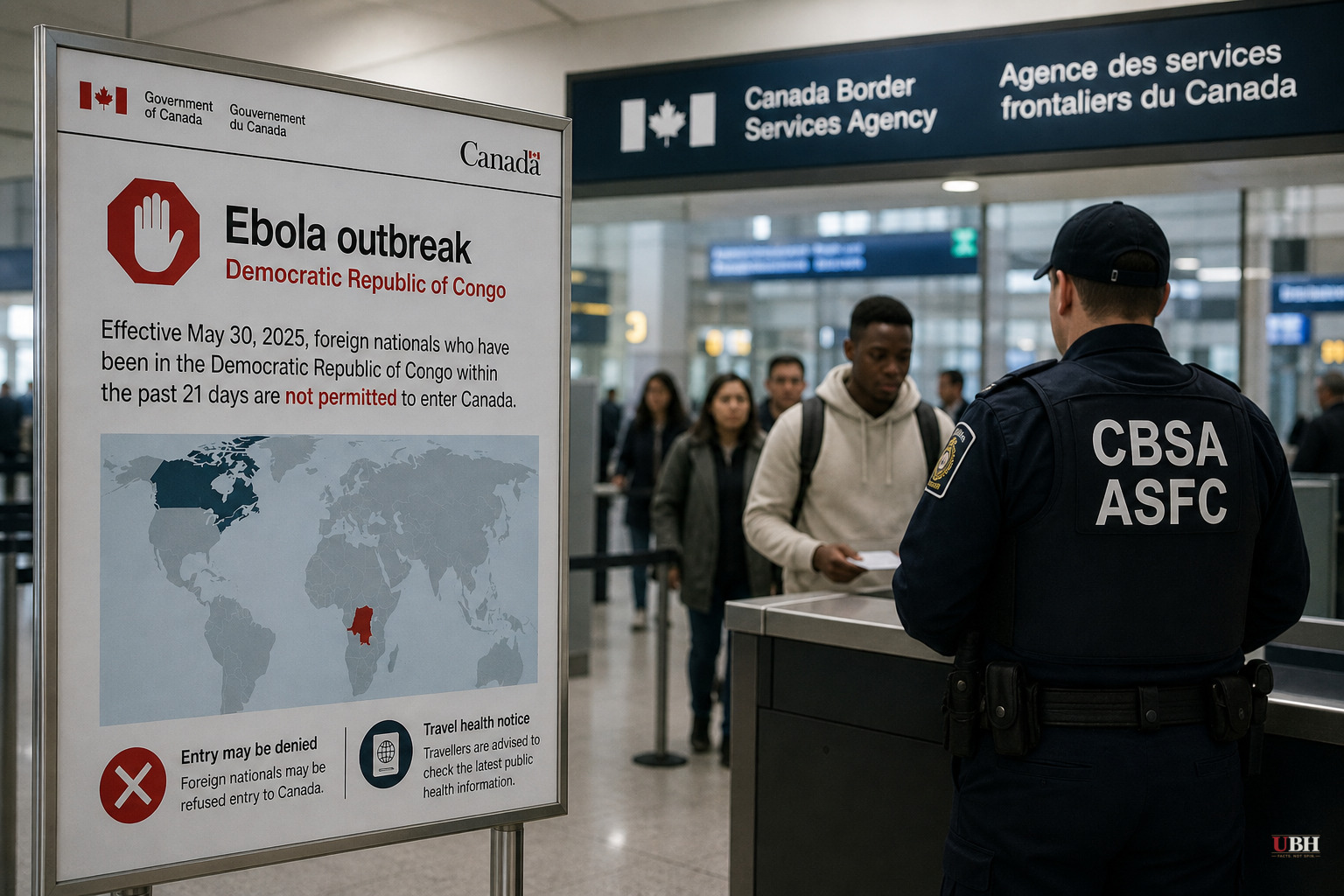
Since the Public Health Agency of Canada first imposed Quarantine Act border measures on May 30, Ottawa has now escalated to an outright entry ban. Starting Monday, July 20, at 11:59 p.m. EDT, any foreign national who has been in the Democratic Republic of Congo within the previous 21 days will be barred from entering Canada, according to a statement from the Public Health Agency of Canada.
An Interim Order under the Aeronautics Act backs up the ban. It requires commercial and private air carriers to refuse boarding to foreign nationals headed to Canada if they've been in the DRC in the last three weeks, PHAC said.
The new rule doesn't touch Canadian citizens, permanent residents, or people registered under the Indian Act. Those groups can still travel from the DRC, Uganda, or South Sudan, but they'll get a health assessment on arrival and face a mandatory 21-day quarantine, per PHAC. All measures from the original order remain in force through August 29, 2026.
PHAC was explicit on this being precautionary. "The health risk to Canadians from Ebola disease is considered low, and no travel-related cases have been reported in Canada to date," the agency said. The intent is narrowing entry to make border screening more sustainable for the volume of returning humanitarian workers and other legitimate travelers, not signaling a spike in risk to the Canadian public.
The U.S. Took a Different Route
South of the border, the approach looks different. The CDC and the Department of Homeland Security rolled out a new "Do Not Board" policy on July 15, according to CIDRAP, the infectious disease reporting service run by the University of Minnesota. Until that announcement, only non-citizens were barred from flying directly into the U.S. from the DRC.
Now American citizens who've been in the DRC in the past 21 days, plus "certain travelers" from Uganda and South Sudan, have to quarantine in a third country before they're allowed to enter the United States, CIDRAP reported. That's a meaningfully different tool than Canada's approach: Washington isn't banning its own citizens, it's routing them through an isolation stop first.
The first Americans caught by the new policy are seven aid workers who'd been helping with the DRC outbreak response. They're now quarantining at an isolation facility in Kenya, according to CIDRAP. None is showing symptoms. A U.S. State Department official told Reuters the workers "voluntarily moved to the Kenya facility for precautionary monitoring and isolation," and that the call was made "strictly out of an abundance of caution."
That Kenya facility, a 50-bed site being built on an air force base, has become a flashpoint. CIDRAP reported it's now the subject of legal challenges and public protests from Kenyans who object to potentially infected people being housed on their soil, even under monitoring. Kenya didn't create this outbreak, and its citizens have a fair complaint about being asked to absorb the quarantine risk for another country's response effort. Whether that facility continues operating, and under what terms, is an open question neither source resolves.
The Numbers Driving the Decisions
The outbreak itself hasn't slowed. As of the CIDRAP report, the Bundibugyo strain of Ebola has sickened at least 2,124 people in the DRC and killed 828, making it, in CIDRAP's words, the fastest-growing Ebola outbreak in history.
PHAC's own May 19 risk assessment upgraded its travel health notice for Ebola in the DRC to Level 2, and both agencies point travelers to their respective advisory pages before booking anything to the DRC, Uganda, or South Sudan.
What's Actually New Here
The genuine shift since the last round of measures is Canada moving from screening-and-quarantine to an outright entry ban for foreign nationals, a harder line than Washington has taken with its own returning citizens. Canada is betting that narrowing who can even board a flight makes the whole system more manageable. The U.S. is betting that third-country quarantine catches the same risk without a blanket ban on Americans.
Neither government has reported a single travel-related Ebola case on its own soil. PHAC said so explicitly. That's the fact underpinning both sets of measures: this is preventive policy, not a response to any confirmed importation.
What's unresolved is how long the Kenya isolation facility stays open under local legal pressure, and whether Canada's new foreign-national ban, set to run alongside all other measures until August 29, gets extended again if the DRC case count keeps climbing.
Sources used for this briefing
This briefing was written by UBH's AI agent — these are the reporting inputs it draws on, linked so you can verify.


