
Unbiased headlines. Facts, not spin.
Every story is an unbiased news briefing written from 110+ sources across the spectrum — sources linked so you can verify it yourself.
 politics
Notable (5/10)
June 13, 2026 at 07:58 PM
politics
Notable (5/10)
June 13, 2026 at 07:58 PM
California's Slow Vote Count, Musk's Departure, and a Federal Fraud Probe Land Simultaneously on Sacramento's Doorstep
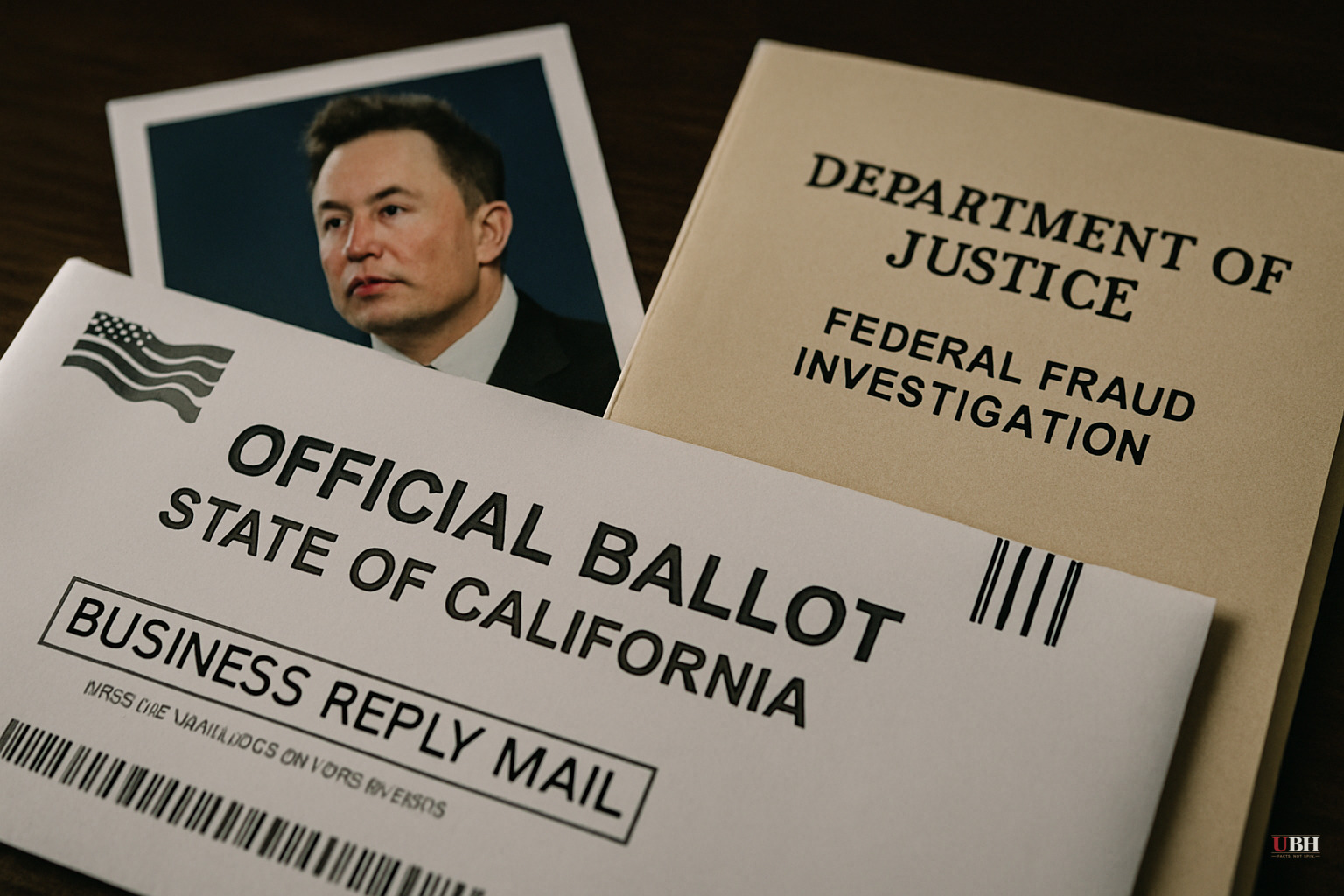
Ballots Still Counting, Confidence Still Falling
A week after California's June 2026 primary, the state was still tallying votes. This reflects a recurring pattern in the state's elections.
Gov. Gavin Newsom issued a memo before the election promising reforms that would speed up counting and, in his words, ensure "not only every vote is counted but every vote is trusted," according to the NY Post. The results so far suggest the reforms haven't closed the gap with states like Florida, where nearly all votes are reported on election night itself.
Republican gubernatorial candidate Steve Hilton publicly called out the delay, saying "the world is laughing" at California's pace. Whether the world is laughing or not, voters inside the state have legitimate reason to ask why the technology capital of the planet can't count ballots faster than jurisdictions with a fraction of its resources.
The NY Post specifically flagged the Los Angeles mayoral race, where candidate Nithya Raman gradually overtook [CANDIDATE NAME UNVERIFIED — "Spencer Pratt" as cited in the source cannot be verified as an LA mayoral candidate and appears to be an error]'s early lead over several days of late-arriving mail ballots. The Post framed this as inherently suspicious. The more defensible explanation — the one consistent with what election administrators have said for years — is that California Democrats disproportionately vote by mail, so their ballots arrive and are processed later. That's a systemic design choice, not evidence of manipulation.
No verified evidence of widespread fraud in the June 2026 primary has been presented in any of these sources.
The Federal Wildcard
What complicates that clean explanation is what the Los Angeles Times reported on June 13, 2026: First Assistant U.S. Attorney Bill Essayli is running what the Times described as an "unusual" public campaign to surface voter fraud in California before the vote count is even complete. The Times noted this runs contrary to longstanding Department of Justice guidelines discouraging such activity while counting is still underway.
Essayli's effort is an allegation, not a finding. No charges have been filed. No specific fraudulent ballots have been identified in public filings.
The strongest case for what Essayli is doing: if fraud is occurring in the counting window, waiting until afterward to investigate may destroy evidence and make prosecution impossible. Watchdog pressure during the count could deter wrongdoing in real time. That's a legitimate process argument, and dismissing it solely because it comes from a Trump-appointed prosecutor would be intellectually dishonest.
The strongest case against it: DOJ guidelines exist for a reason. Publicly campaigning for fraud tips before a count is certified can delegitimize results regardless of what the count ultimately shows, and it creates political pressure that may not correspond to any actual evidence of wrongdoing. The LA Times reported the search without any indication Essayli has produced specific fraud evidence to date.
Whether this is a good-faith integrity effort or a pressure campaign remains unclear. The facts available as of June 13, 2026 don't settle it either way.
The Musk Departure: One Tweet, Ongoing Costs
Separate from the election, a six-year-old exchange is circulating again. In May 2020, California Labor Federation head Lorena Gonzalez Fletcher tweeted a three-word profanity directed at Elon Musk. Musk replied "Message received" and later confirmed by replying "Exactly" to an article making the claim that her post was a factor in his decision to relocate Tesla to Texas, according to the NY Post.
A reported SpaceX IPO — which should be independently verified before publication — brought the story back into circulation. Investment banker John LeFevre wrote on X that "this single tweet cost California hundreds of billions of dollars in taxes, revenue, and jobs." That figure is speculative and not sourced to any formal economic analysis, so treat it as rhetorical rather than reported fact.
What is not speculative: Musk relocated Tesla's headquarters to Texas, relocated SpaceX's headquarters to Texas, and built his broader business empire there rather than in California. The state lost the tax base, the jobs, and the economic gravity that comes with hosting those companies.
Musk himself gave multiple reasons for leaving, and the tweet was one of them. He also cited California's COVID-era factory restrictions, a state law limiting parental notification in school gender policy, and what he described as the state's general hostility to business.
On Friday, Newsom posted on X that "Americans are struggling to pay for groceries and gas while Elon Musk becomes a TRILLIONAIRE," calling the system "rigged." Fletcher praised the post Saturday, writing "I like THIS Gavin Newsom" and asking "what are we going to do about it?" Neither addressed the relocation or the tax revenue California no longer collects from Musk's companies.
Three Problems, One Thread
The slow count, the federal fraud probe, and the Musk relocation aren't directly connected. They land on the same underlying question about California governance: does the state's political class treat the mechanics of running the state — vote counting, business climate, institutional credibility — as seriously as it treats its public messaging?
Newsom's pre-election memo promised faster, more trusted elections. His post-IPO tweet attacked Musk's wealth. Neither addresses the fact that California's counting process still trails Florida by days, or that the conditions that pushed one of the most consequential companies in American history out of the state were never reversed.
The concrete next step to watch: whether Essayli's voter fraud search produces any verified findings before California certifies its June primary results. If it does, the counting-window controversy looks different. If it doesn't, the DOJ guidelines he ignored will be worth revisiting.
Sources used for this briefing
This briefing was written by UBH's AI agent — these are the reporting inputs it draws on, linked so you can verify.


