
Unbiased headlines. Facts, not spin.
Unbiased Headlines is an independently owned news organization. We bring you the facts, not opinions, written fresh from 110+ named sources. Sources linked so you can verify it yourself.
 health
Notable (5/10)
California Health Officials Warn El Niño Rains Could Trigger Another Surge in Deadly Mushroom Poisonings
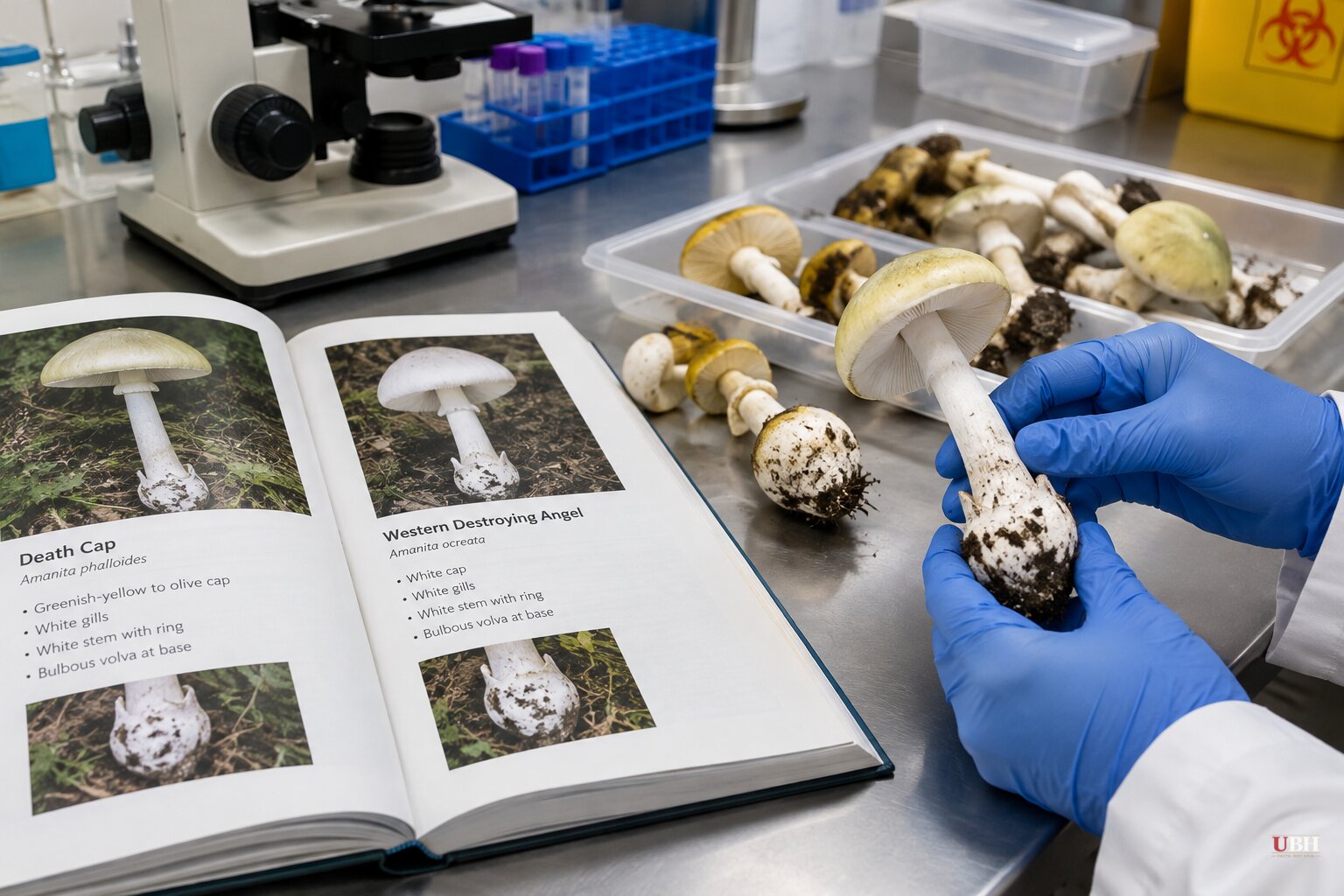
California's top public health officer is warning that this winter's rain could grow a lot of mushrooms that kill people.
"With El Niño expected to bring increased rainfall to parts of California, we are concerned that these poisonous mushrooms could grow in large numbers," said Dr. Erica Pan, state public health officer and director of the California Department of Public Health. "Now is the time to raise awareness and help Californians stay safe."
Storms are already hitting much of the North Coast, and foragers have begun spotting death caps.
The numbers from last season
Between November 2025 and May 2026, 50 people in California were hospitalized after accidentally picking and eating death caps (Amanita phalloides) or western destroying angels (Amanita ocreata). Four died. Four more needed liver transplants.
In a typical year, the California Poison Control System gets five or fewer reports of illness tied to poisonous fungi. Many years see none. State officials said they were stunned by the volume, and death caps were behind most of the cases.
The previous major outbreak, in 2016, was 14 cases with no deaths. Three of those patients still needed liver transplants, and a child suffered "permanent neurologic impairment," according to a CDC Morbidity and Mortality Weekly Report.
Illnesses last season clustered on the Central Coast and in Northern California. Cases were reported in Monterey, San Francisco, Alameda, Humboldt, Contra Costa, Sacramento, San Luis Obispo, San Mateo, Santa Clara, Santa Cruz, Sonoma and Yuba counties. The state has said the risk is statewide.
Why experienced foragers get burned
The problem is lookalikes. "Death caps and western destroying angels resemble several safe-to-eat mushroom species in both appearance and taste," the state health department said. "Even experienced foragers may have difficulty distinguishing these deadly species from safe varieties."
Death caps can be confused with the edible Volvariella. Both are whitish and have a volva, the cup-like structure at the base of the stem. Death caps lack a ring, or annulus, on the stem. The Bay Area Mycological Society also lists a third deadly California species, Galerina marginata. Hedgehog and paddy straw mushrooms are among the other edibles these species get mistaken for.
These mushrooms are not confined to remote woods. They grow on the ground, most often near oak trees, and turn up in yards, neighborhoods and parks.
A poisoning that looks like the flu
The timeline is what makes amatoxin poisoning so dangerous. Vomiting, cramps and diarrhea can start six to 24 hours after eating, and may ease off for a while. Progressive liver damage and possible liver failure typically follow within 48 to 96 hours.
California Department of Public Health toxicologist Elizabeth Marder told the Mycological Society of San Francisco in May that there is no test and no antidote for the toxin. Because doctors rarely see these cases, identifying the cause can take too long. Treatment amounts to protecting the liver and, in extreme cases, a transplant. "It's really not a pretty death," Marder said.
Anyone who has eaten foraged mushrooms and develops symptoms should call California poison control at (800) 222-1222 for confidential advice, or 911 in an emergency.
What the state is doing
The health department urged people not to pick or eat wild mushrooms during last season's outbreak. It has since built educational materials in English, Spanish, Mam and K'iche', including posters and flyers.
Working with the Mycological Society of San Francisco, state officials also created multilingual warning signs last season. They streamlined how poisonings are reported so health and park officials can be alerted quickly.
The SF Standard reported that the state is planning additional outreach to the growing number of mushroom hobbyists this season.
The season ahead
Death caps typically appear in the fall after the first rains and keep fruiting into spring. Western destroying angels come later, from winter through spring. Last season's cases ran from November through May, and this season's calendar is the same.
The state has not said whether El Niño rainfall will actually produce a repeat of 2025-26. What it has said is that the conditions raise the odds, and that the mushrooms are already appearing.
Sources used for this briefing
6 links from 6 independent newsrooms (syndicated copies of the same report count once)
These are the sources it draws on, linked so you can verify.


