
Unbiased headlines. Facts, not spin.
Unbiased Headlines is an independently owned news organization. We bring you the facts, not opinions, written fresh from 110+ named sources. Sources linked so you can verify it yourself.
 health
Notable (5/10)
health
Notable (5/10)
Cabinet Secretariat Sends Stent Safety Concerns to India's Health Ministry After Sri Lanka Reportedly Pulls Three Indian Models
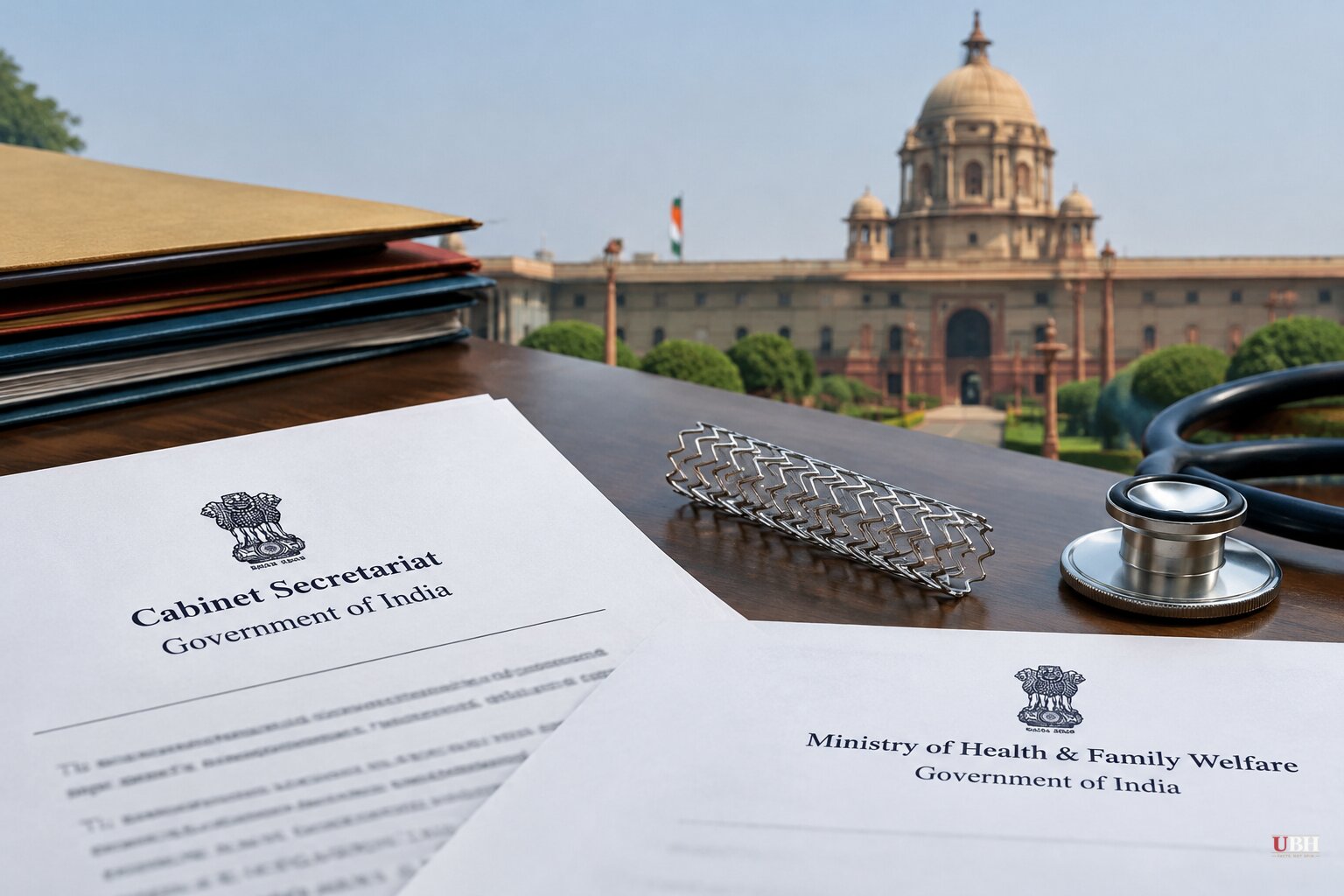
India's Cabinet Secretariat has put coronary stent safety on the health ministry's desk. The trigger is a set of reports that Sri Lanka pulled three Indian-made drug-eluting stent models from its market.
In an Oct. 5 letter, Cabinet Secretary T V Somanathan acknowledged a representation from Rajya Sabha MP Dr. Ajeet Madhavrao Gopchade, a medical doctor. He said it had been forwarded to the department of health and family welfare "for appropriate action and a reply." Gopchade's representation is dated September 28 in one report and September 29 in two others; the sources do not agree on the exact date.
What Sri Lanka is reported to have done
Gopchade's representation relies on media reports. According to those reports, Sri Lanka's medical device regulator ordered three models of Indian-manufactured drug-eluting stents withdrawn. The reports say the order followed an investigation by the country's Medical Device Evaluation Committee.
Four problems were cited:
- Improper positioning of the stent
- Stent dislodgement
- Acute stent thrombosis, a clot forming inside the stent soon after implantation
- Failure of the stent to expand properly
The concern covers three specific models, not Indian stents as a category. Sri Lanka's Health Ministry has not issued a detailed public statement on its next steps. Lawmakers, medical professionals and patient advocacy groups there are pressing it to identify patients who may already have received the affected devices.
What Gopchade is asking for
The MP's requests go well beyond three product lines. He wants more stringent pre-market testing of stents and their delivery systems, covering durability, deployment, expansion and dislodgement.
He also wants stronger clinical documentation so stents are implanted only when medically indicated, with alternatives considered where appropriate.
The centerpiece is end-to-end traceability. Under his proposal, every implanted stent would be tracked by batch and serial number. If a safety alert emerged, hospitals could identify affected patients quickly and a recall could be targeted rather than broad.
He also seeks stronger post-market surveillance, better adverse-event reporting and patient follow-up. His last proposal is a mechanism to promptly review safety alerts, recalls and withdrawals issued by foreign regulators when the same or similar devices are sold in India.
What is not established
Gopchade himself cautioned that the reported concerns might not all be substantiated. He argued they still justify a look at existing safeguards.
The Cabinet Secretariat's direction does not establish any defect or regulatory breach. No Indian regulatory findings and no domestic recall have been reported. A withdrawal in Sri Lanka does not by itself mean the same products are unsafe in India.
The core issue is whether the system has any way to know. India regulates devices under the Medical Devices Rules, 2017, with the Central Drugs Standard Control Organisation overseeing approvals and quality requirements. Gopchade's proposals imply the current setup may not catch problems early. He asked outright whether the framework for coronary stents needs strengthening.
There is some data on that. A retrospective study of reports filed with India's National Coordination Centre under the Materiovigilance Programme between 2020 and 2022 analysed 10,542 medical-device adverse-event reports. Of those, 2,075 were associated with cardiac stents.
The stakes for Indian manufacturers
Stents are a domestic success story. Price controls introduced in 2017 helped Indian manufacturers expand in catheterization labs and compete with multinational brands on cost. Export markets in South Asia, Africa and Latin America have become a growth avenue.
That business depends on hospital buyers believing they get comparable clinical performance at a lower price. Procurement teams that see a safety signal tend to tighten vendor qualification, ask for more clinical evidence, or move volume to established brands.
Traceability mandates would also add compliance requirements for manufacturers. That is a cost, and it is also how a faulty batch gets found before it spreads.
What happens next
The health ministry has been asked for action and a reply. No timeline has been made public. Whether it responds with a review of foreign-regulator alerts, tighter traceability rules, or nothing beyond a letter will show how seriously Delhi treats a safety signal from a neighboring market. In Sri Lanka, the Health Ministry has yet to say how it will track down patients who received the withdrawn models.
Sources used for this briefing
7 links from 7 independent newsrooms (syndicated copies of the same report count once)
These are the sources it draws on, linked so you can verify.


