
Unbiased headlines. Facts, not spin.
Every story is an unbiased news briefing written from 110+ sources across the spectrum — sources linked so you can verify it yourself.
 health
Major Story (8/10)
July 6, 2026 at 10:30 AM
health
Major Story (8/10)
July 6, 2026 at 10:30 AM
Bundibugyo Ebola Outbreak Now Third-Largest on Record. USAID's Absence Is Shaping the Response.
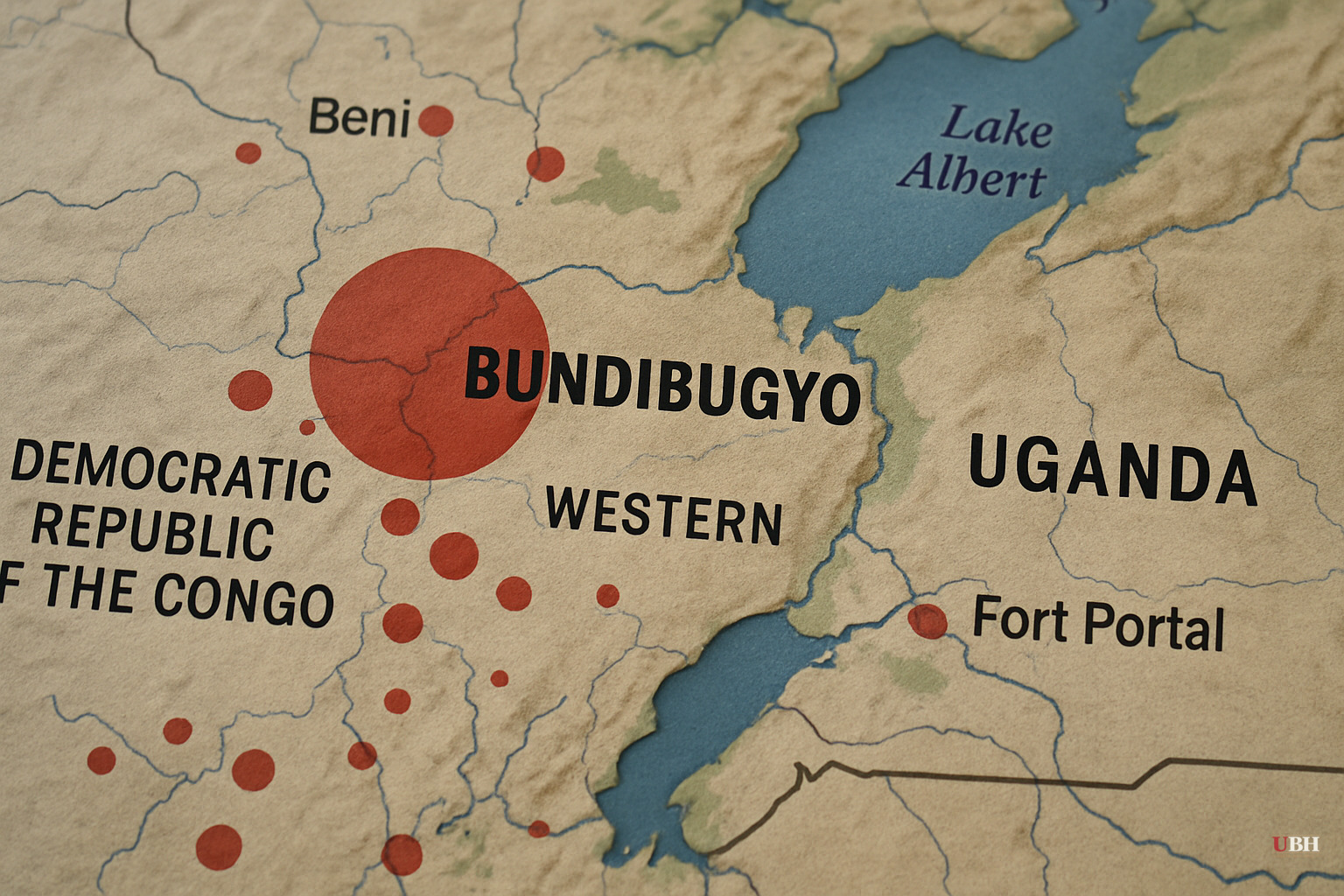
Since the DRC and Uganda declared Bundibugyo Ebola outbreaks in May 2026, the confirmed case count has climbed past 1,400 with 440 confirmed deaths, according to CDC data. That makes this the third-largest Ebola outbreak on record. One case has been confirmed in France; no cases have been reported in the United States as of July 6, 2026.
The Bundibugyo strain has no approved vaccine and no licensed treatment. The 2018-2020 DRC outbreak killed more than 2,000 people but had an experimental vaccine available that was ultimately administered to more than 300,000 people.
What USAID Actually Did Before It Was Gone
The U.S. Agency for International Development was formally shuttered in July 2025 as part of DOGE-driven cuts under President Trump. Most staff and programs were terminated; a remnant was absorbed into the State Department. DOGE itself officially closed on July 4, 2026.
Phuong Pham, associate professor at Harvard's Department of Global Health and Population, told Harvard Public Health that USAID maintained a permanent operational presence in countries like the DRC, ran laboratory capacity-building programs, trained local health workers to recognize Ebola symptoms, and linked the WHO, UNICEF, ministries of health, and CDC expertise. During the 2018 outbreak, USAID coordinated contact tracing, lab expansion, and training for thousands of local health workers.
Dennis Carroll, former director of USAID's Emerging Pandemic Threats program, told NPR that the agency's elimination has broken basic logistics. Personnel cannot reliably reach critical facilities, and moving laboratory samples quickly for rapid diagnosis has become harder.
The outbreak was reportedly flagged to the WHO nine days before U.S. officials became aware of it, according to the Borgen Project. Carroll and others attribute the delay partly to the dismantling of USAID's on-the-ground surveillance networks and the U.S. withdrawal from the WHO.
The Emergency Response That Replaced It
In mid-May, the State Department announced $23 million in emergency funding for the DRC and Uganda to support Ebola surveillance, 50 new screening and treatment clinics, and a contingent of CDC staff for coordination. Pham told Harvard Public Health that the funding is needed and may save lives. Her caveat: emergency response cannot substitute for the sustained pre-outbreak investment that catches an outbreak before it becomes a public health emergency.
The U.S. aid reduction is not happening in isolation. Oxfam reported that G7 countries collectively were on track to cut official development assistance by 28% in 2026 compared to 2024 levels. French foreign aid has also been declining, according to researchers at the Barcelona Institute for Global Health.
The Strongest Counterargument
A fair defense of the cuts goes like this: USAID had operated for more than 60 years, spent billions annually, and the DRC still suffered 16 prior Ebola outbreaks. Permanent bureaucratic dependency may have crowded out local institutional capacity rather than building it. The $23 million emergency package, targeted CDC deployment, and bilateral coordination through the State Department represent a leaner model that proponents argue can be more accountable and less wasteful than a sprawling permanent agency.
But the specific evidence from this outbreak is harder to dismiss. Case counts doubled in roughly a week in late May, according to British Medical Journal data cited by the Borgen Project. Bob Kitchen, vice president of emergencies at the International Rescue Committee, put it plainly: "The risks are growing and the resources are shrinking; that is the brutal arithmetic facing global aid today." Kitchen said the DRC is facing this outbreak "more fragile and less prepared" than in 2018.
The IRC warned near the start of the outbreak that without urgent intervention, this could become the deadliest Ebola outbreak on record. With 1,400 confirmed cases and no vaccine, that warning has not been retired.
The Political Framing Problem
The House Appropriations Committee's Democratic minority, led by Ranking Member Rosa DeLauro of Connecticut, released a statement calling the outbreak "the perfect storm President Trump created." That language treats a complex public health failure as a clean partisan verdict. Multiple factors are driving the outbreak's severity: ongoing conflict in eastern DRC, a multi-year decline in Western aid broadly, the absence of a licensed Bundibugyo vaccine, and pre-existing fragility in local health systems.
Blaming Trump entirely obscures the G7-wide aid retrenchment. Absolving USAID's elimination entirely ignores the specific surveillance and coordination functions that have visibly degraded.
What Is Still Unknown
The critical open question, as of July 6, 2026: whether WHO and CEPI can accelerate a Bundibugyo vaccine candidate into emergency use authorization fast enough to affect this outbreak's trajectory. No licensed vaccine exists. Emergency funding is flowing but lagging the outbreak's pace. Whether the 50 new CDC-supported clinics and the $23 million package can substitute for the standing infrastructure that was dismantled is a question the next several weeks will answer in real time.
Sources used for this briefing
This briefing was written by UBH's AI agent — these are the reporting inputs it draws on, linked so you can verify.


