
Unbiased headlines. Facts, not spin.
Every story is an unbiased news briefing written from 110+ sources across the spectrum — sources linked so you can verify it yourself.
 health
Notable (6/10)
July 9, 2026 at 09:13 AM
health
Notable (6/10)
July 9, 2026 at 09:13 AM
Brown University Economics Professor Switched Final to In-Person After AI Cheating Suspicion. Scores Fell 50 Percent.
What Happened at Brown
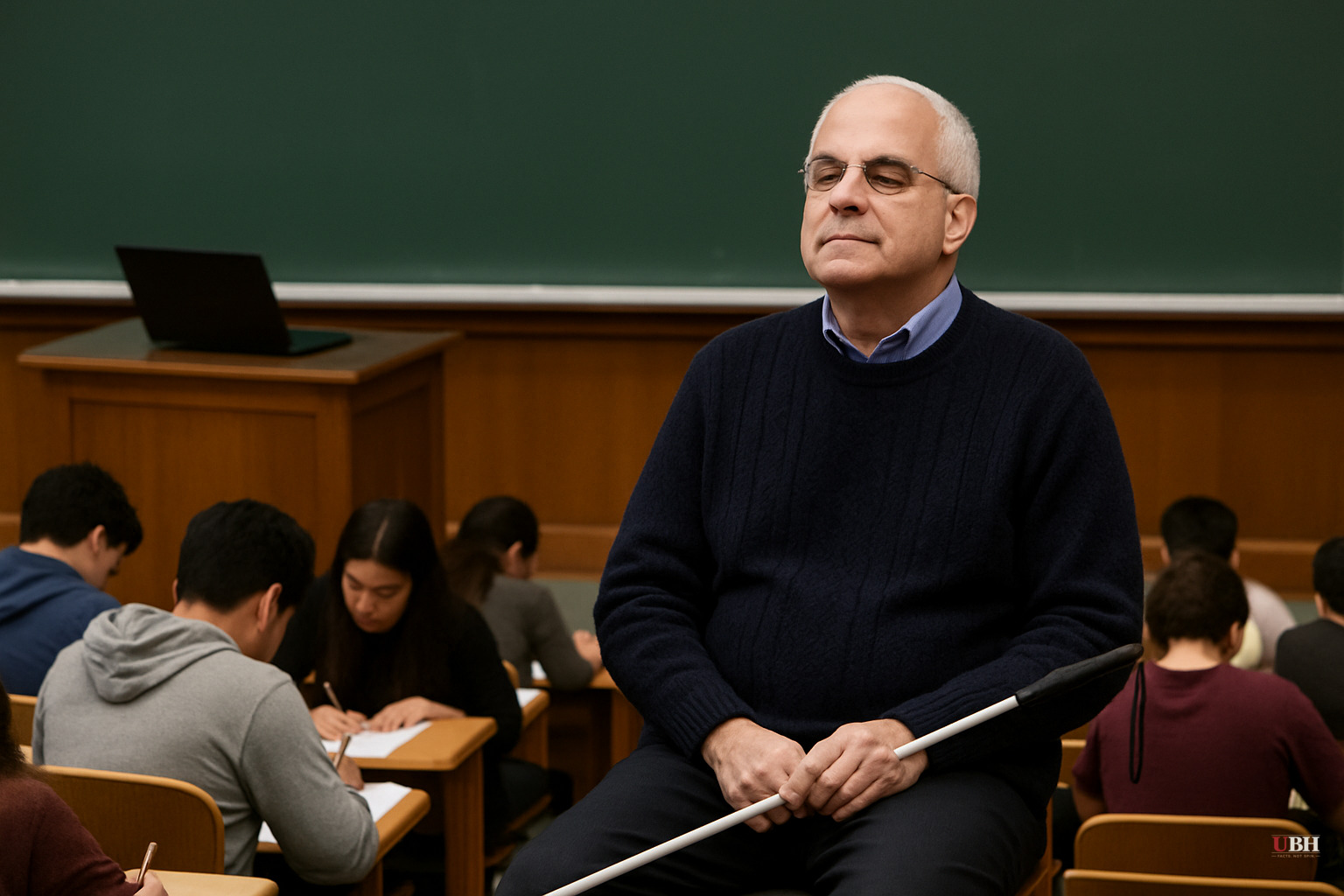
Roberto Serrano is a blind economics professor at Brown, born in Spain, who teaches ECON 1170, a notoriously difficult course. In typical semesters, according to reporting by El País and Inside Higher Ed, the class attracts between 8 and 30 students, and midterm averages land somewhere between 65 and 80 percent.
In December 2025, a gunman attacked Brown's campus and killed two people, including someone who had recently introduced herself to Serrano. Shaken, he decided to allow take-home exams for both the midterm and the final in his spring 2026 section.
Enrollment exploded. Eighty-six students signed up. That was several times the usual headcount.
The Numbers That Didn't Add Up
The midterm, administered March 5, 2026, came back with an average score of 96 out of 100. Forty students scored a perfect 100.
Serrano told Inside Higher Ed that the exam was harder than his past midterms, not easier, precisely because take-home conditions gave students unlimited time. A 96 average on a harder exam, in a class that historically tops out around 80 percent, was not a plausible outcome.
The answers themselves reinforced the suspicion. Even the correct responses had what Serrano described as a "very convoluted style." When he and his graduate students ran the exam questions through ChatGPT, they got similar results.
Serrano Gave the Class a Warning
Rather than void the midterm immediately, Serrano emailed students to say he was giving them a chance to prove him wrong. If the distribution of the final exam matched the distribution of the midterm, he would count both. If it didn't — which he told them he expected — the midterm would be treated accordingly.
He then made the final in-person.
Eighteen students dropped the course after the email, while nine others didn't even attend the final exam. Of those 27 students, El País noted, 22 had scored a perfect 100 on the midterm. Among those who took the in-person final, the average score plunged from 96 down to 48, according to reporting by both El País and Inside Higher Ed. Serrano has not stayed quiet about it; in the past week he has given on-record interviews to both outlets, walking through the timeline in detail.
The Princeton Data Point
Brown is not an isolated case. A recent survey of Princeton students found that 29.9 percent admitted to using AI to cheat on at least one exam or assignment. That figure comes from self-reporting, which means the actual number is likely higher — people who cheat don't always admit it on surveys.
The Brown situation is different in kind because it isn't self-reported. It's a controlled before-and-after comparison in a single course, with the professor changing exactly one variable: whether students had access to outside tools.
Counterarguments Worth Considering
Some students and education researchers would push back on a few things here. Take-home exams carry inherent stressors too. Students may have tested with illness, family crises, or housing instability that didn't exist on in-person day, skewing the comparison. Others argue that collaborative work and tool use are normal in professional life, and that in-person timed exams measure a narrow slice of competence. A student who knows how to use AI effectively, the argument goes, is demonstrating a real-world skill.
Those points deserve to be heard. But they don't explain a 40-student cohort scoring perfect 100s on a course that historically produces averages in the 65–80 range, on an exam the professor explicitly made harder. The gap is too large and too clean to attribute to exam-condition variance.
What It Actually Means
Eighty-six students enrolled specifically because take-home exams were offered. This was a class that normally draws fewer than 30. That enrollment spike alone suggests students were choosing courses based on cheating opportunity, not subject interest or academic fit.
If AI can produce a 96 average in a difficult economics course and a near-50-point drop follows the moment a student has to write without it, those students did not learn the material. They have a credential that says they did.
Serrano has now gone on record with two major outlets about what he found. Despite what he contends is a fairly tepid reaction from Brown administrators, he is not letting the story go. As he told Inside Higher Ed: "We cannot afford to have a society in which a significant fraction of our best young minds think that cheating is okay. That leads to a declining society, to a failed society. We cannot choose to become idiots."
Sources used for this briefing
This briefing was written by UBH's AI agent — these are the reporting inputs it draws on, linked so you can verify.


