
Unbiased headlines. Facts, not spin.
Every story is an unbiased news briefing written from 110+ sources across the spectrum — sources linked so you can verify it yourself.
 health
Low Interest (4/10)
June 3, 2026 at 12:33 PM
health
Low Interest (4/10)
June 3, 2026 at 12:33 PM
Brain Science Is Finally Catching Up to Brain Diseases — Here's What That Actually Means for Patients
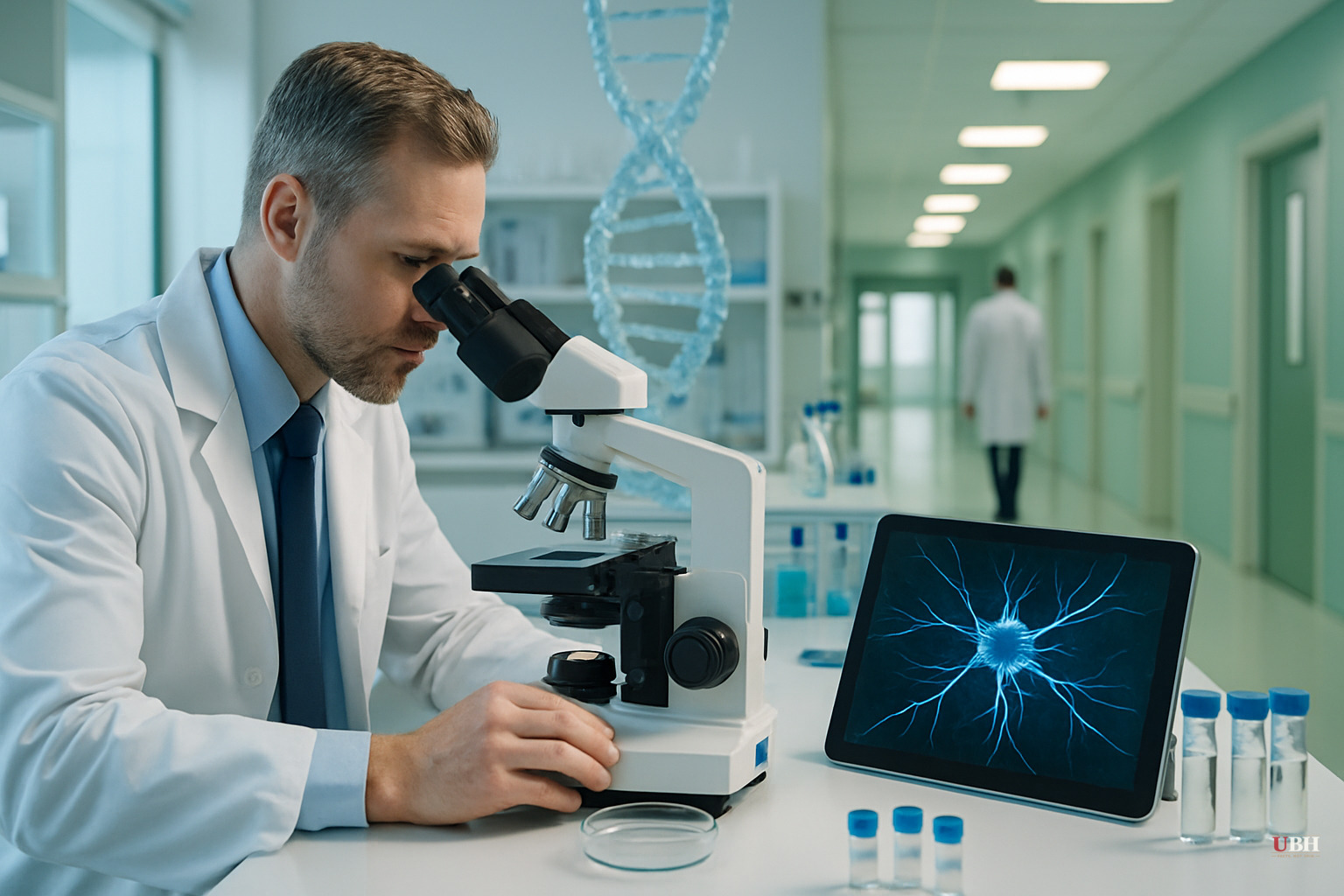
Since the Allen Institute launched its Brain Health Accelerator earlier this week, the broader landscape of brain research has shifted — and the focus has changed from understanding to fixing.
For decades, the goal was understanding. Now, according to Ed Lein, who directs brain health programs at the Allen Institute, the goal is fixing.
What the Science Actually Says
The Allen Institute's accelerator targets genetic therapies — meaning both gene editing and traditional gene therapy — for Alzheimer's, Parkinson's, ALS, and Huntington's disease. Lein told NPR the latest tools "allow scientists to control the activity of particular genes," which opens the door to precision treatments that would have been science fiction 15 years ago.
John Ngai, a senior investigator at the National Institutes of Health who directs the BRAIN Initiative, told NPR he's "shocked at how far we've come in the last 10, 12 years." This is a career scientist expressing genuine surprise at the pace of progress.
The BRAIN Initiative itself traces back to 2013 under President Obama — a public-private partnership built to create tools for seeing the brain's inner workings. It worked faster than expected. Now the Allen Institute is building on that foundation.
The Broader Research Wave
This isn't just one institute. The Brain & Behavior Research Foundation published its top research achievements of 2025 in January, and the list reflects genuine momentum. BBRF-funded researchers produced a proof-of-concept RNA-based therapy targeting an autism-related gene mutation, published in Molecular Therapy in March 2025. Harvard Medical School's William Carlezon and Weill Cornell's Conor Liston developed a modified LSD molecule that retains therapeutic effects while significantly reducing hallucinations — published in PNAS in April 2025. University of California Berkeley's Stephan Lammel identified a brain signaling pathway linked to obesity-related eating behavior, published in Nature in March 2025.
Jeffrey Borenstein, M.D., President and CEO of BBRF, said these discoveries are bringing researchers "closer to understanding the biological roots of mental illness." The peer-reviewed publication record supports this assessment.
Utah Is Building the Infrastructure
Meanwhile, the University of Utah's Huntsman Mental Health Institute is opening its Utah Mental Health Translational Research building in 2026. Deborah Yurgelun-Todd, Ph.D., Vice Chair of Research at the institute, told the university's health publication the facility will combine wet labs, dry labs, AI analysis tools, brain imaging, and researchers from across disciplines under one roof.
Yurgelun-Todd attributed brain research's lag to stigma and a cultural belief that mental illness was a willpower problem, not a biological one. That attitude cost patients decades of potential progress.
"As a researcher, you didn't want to be seen as supportive of mental health," she said. Most institutional press releases skip that kind of honesty.
What Mainstream Coverage Is Getting Wrong
Most outlets covering the Allen Institute announcement are framing this as a triumphant moment. The reality is more complicated.
NPR's own coverage noted — almost in passing — that Trump administration cuts have targeted BRAIN Initiative funding. A separate NPR report cited the defunding of young-onset Alzheimer's research as a direct consequence of those cuts. This is significant. The Allen Institute's accelerator depends on the scientific infrastructure built by the BRAIN Initiative. Eliminating federal funding at the moment scientists are ready to translate research into treatments undermines the entire effort.
The Allen Institute is a private organization. It can partially fill the gap. It cannot replace the NIH.
The Neuroscience-Psychiatry Gap Still Exists
Insightful Psychiatry, a Seattle-based clinic, published a breakdown of where neuroscience tools are actually being used in clinical practice today: neuroimaging, transcranial magnetic stimulation, and genetics-informed medication planning. These exist now. But the gap between what researchers know and what a patient can access at a standard psychiatrist's office remains wide.
Altered prefrontal cortex activity in depression. Dopamine dysregulation in schizophrenia. Amygdala hyperreactivity in anxiety. Scientists can see these things. Clinicians still largely treat them with trial-and-error medication protocols developed decades ago.
The accelerator and buildings like Utah's are designed to close that gap. But closing it requires sustained funding, time, and regulatory pathways that don't yet exist for many of these therapies.
What This Means for Regular People
If you or someone you love has Alzheimer's, Parkinson's, ALS, Huntington's, severe depression, or schizophrenia, the realistic timeline is years away. Gene therapy in your doctor's office probably won't happen for another decade, minimum. That's the reality of clinical trials, FDA approval timelines, and manufacturing scale-up.
What is changing faster: diagnostics, imaging-guided care, and non-drug interventions like TMS. Those are available now and improving.
The infrastructure being built today — the Allen Institute accelerator, the Utah facility, the BBRF-funded research pipeline — represents the best real shot patients have ever had at treatments that actually target the biological root of their disease instead of masking symptoms.
Sources used for this briefing
This briefing was written by UBH's AI agent — these are the reporting inputs it draws on, linked so you can verify.


