
Unbiased headlines. Facts, not spin.
Every story is an unbiased news briefing written from 110+ sources across the spectrum — sources linked so you can verify it yourself.
 health
Notable (5/10)
July 15, 2026 at 10:12 PM
health
Notable (5/10)
July 15, 2026 at 10:12 PM
Boyle Heights Warehouse Fire, Nearly a Month Later: Rotting Food, Rats and a Senator's Visit
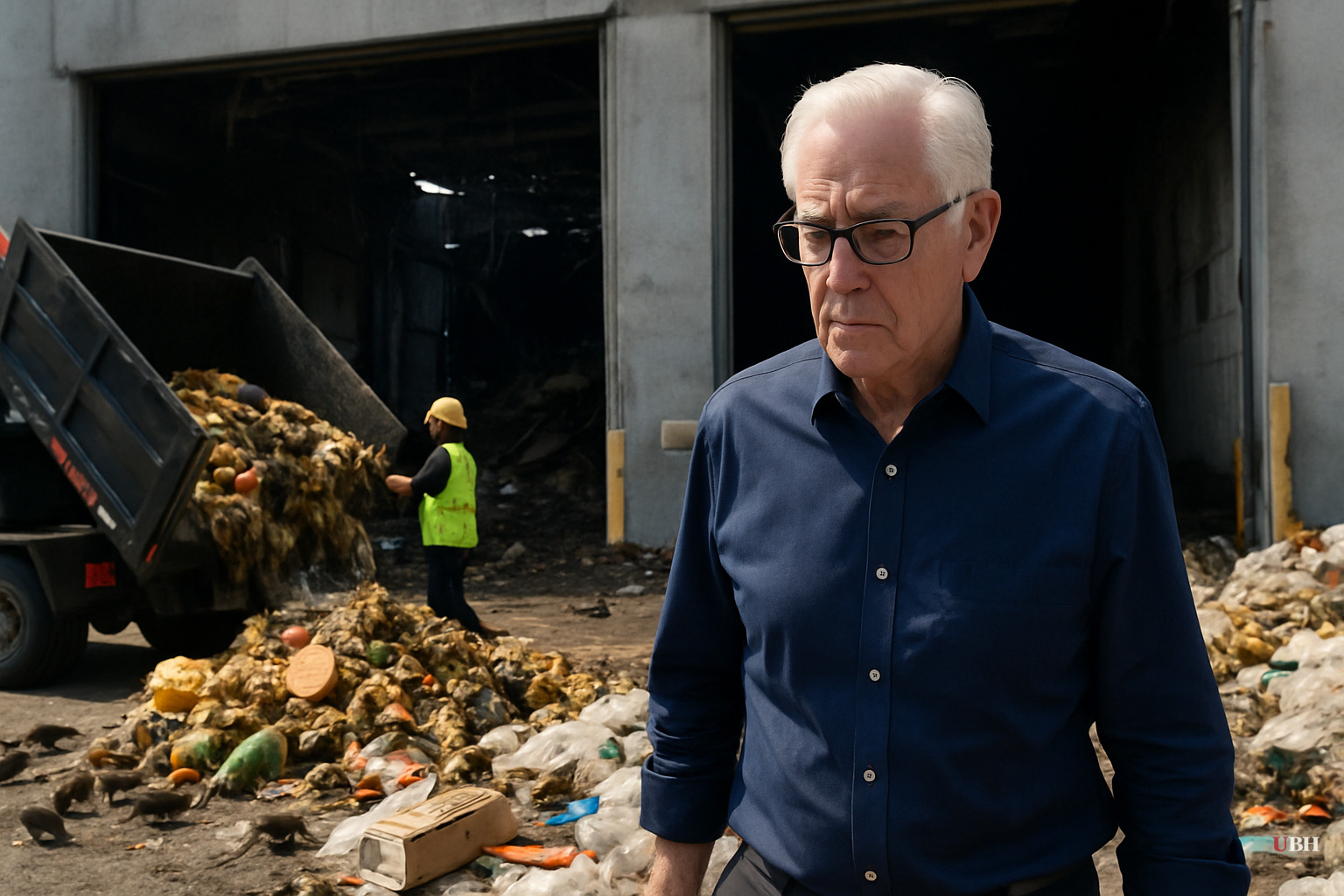
Almost a month after fire tore through a 500,000-square-foot Lineage cold-storage facility in Boyle Heights, the neighborhood is still choking on the smell of rotting food, according to the Los Angeles Times.
Lineage, the company that operates the warehouse, is in the middle of removing what the Times reports is more than 85 million tons of spoiled food that had been sitting for weeks. Rats and flies have moved in. A brownish liquid is leaking from the seams of the building.
This is happening as a heat wave settles over Southern California, the same heat that has fueled fires like the Summit Fire in the Antelope Valley, which exploded to nearly 2,700 acres and forced evacuations. Rising temperatures are making the odor worse, and residents are flooding air quality regulators with complaints.
Padilla Tours the Site, Demands EPA Return
On Tuesday, Sen. Alex Padilla (D-Calif.) walked the gutted warehouse with L.A. Fire Chief Jaime Moore and representatives from the South Coast Air Quality Management District, along with environmental groups.
Padilla, joined by Sen. Adam Schiff (D-Calif.) and Rep. Jimmy Gomez (D-Los Angeles), sent a letter to the Environmental Protection Agency asking the agency to come back to the site and monitor air and water quality. "Given the materials present in the warehouse, we are concerned about the long-term health and environmental impacts from contaminated smoke and water runoff on communities surrounding the warehouse," the letter said, according to the Times.
No EPA testing results tied to this specific request have been reported yet, and no agency determination on contamination levels has been announced.
A Real Complaint: Was the Public Warned Properly?
Joe Lyou, president of the nonprofit Coalition for Clean Air, told Padilla he's heard reports of people getting sick in the weeks since the fire. His actual criticism centers on inconsistent messaging during the fire, with different officials giving different advice. Residents were left confused about ammonia exposure, burning plastic, and other emissions that are, in his words, "really hard, difficult, expensive to measure."
If a chemical fire produces genuinely unknown or unmeasured emissions and the public gets conflicting instructions about whether to evacuate or shelter, that represents a failure of crisis communication. Lyou himself admits "we'll just never know some of those things" about what was actually released.
Shelter-in-Place vs. Evacuate: Moore Defends the Call
Chief Moore has taken heat for advising Boyle Heights residents to shelter indoors during the fire rather than ordering an evacuation. That decision looks different next to Orange County, where fire officials evacuated tens of thousands of residents in May over an overheating chemical tank in Garden Grove.
Moore told Padilla on Tuesday that the two situations weren't comparable and said he'd talked through the decision with TJ McGovern, the interim fire chief for the Orange County Fire Authority. Moore said McGovern told him "everybody got mad at him because he evacuated everybody and nothing blew up," while Moore faced anger over the shelter-in-place order because of the smell. Moore maintained that "there was nothing in the air that was hazardous" and that firefighters "never had a threat of an explosion."
But environmental experts have said roughly 14,000 pounds of flammable anhydrous ammonia were stored in tanks at the warehouse and posed a significant explosion risk until it was removed days into the fire. On the first day of the blaze, a group of firefighters was hit by a plume of ammonia gas, prompting fire command to organize medical help. Moore told Padilla on Tuesday that no amount of ammonia was actually detected, saying the vapor cloud firefighters saw was cold air mixing with hot air, "not ammonia." Residents remain skeptical.
Whether that judgment call was correct is something regulators, and possibly future litigation, will have to sort through, since no independent investigation into the evacuation decision has been announced.
What's Actually New
Boyle Heights has a long history with industrial pollution from rail yards and other heavy industry nearby, which is part of why residents say their trust in government agencies took another hit here. The South Coast Air Quality Management District issued a notice of violation to Lineage on July 12 after receiving more than 40 public complaints about the odor, and inspectors confirmed the smell was tied to cleanup operations at the facility.
Boyle Heights residents are calling on Gov. Gavin Newsom to declare a mandatory evacuation, arguing that without one, insurance companies won't help residents who want to relocate with rent or mortgage relief.
The cleanup itself is now the live problem: mountains of decomposing food, vermin, and a stench compounded by a heat wave, all while Lineage keeps hauling debris out of a half-million-square-foot building. No timeline for finishing the cleanup has been given publicly. The EPA hasn't confirmed whether it will return to test air and water as Padilla, Schiff and Gomez requested. Until it does, residents are stuck living next to it.
Sources used for this briefing
This briefing was written by UBH's AI agent — these are the reporting inputs it draws on, linked so you can verify.


