
Original briefings. Zero spin.
Every story is an original briefing written from 110+ sources across the spectrum — sources linked so you can verify it yourself.
 politics
Major Story (7/10)
Event date: September 2, 2026
politics
Major Story (7/10)
Event date: September 2, 2026
Border Patrol Used a Marijuana Farmer's Bank Records to Set Up a Traffic Stop, Court Documents Show
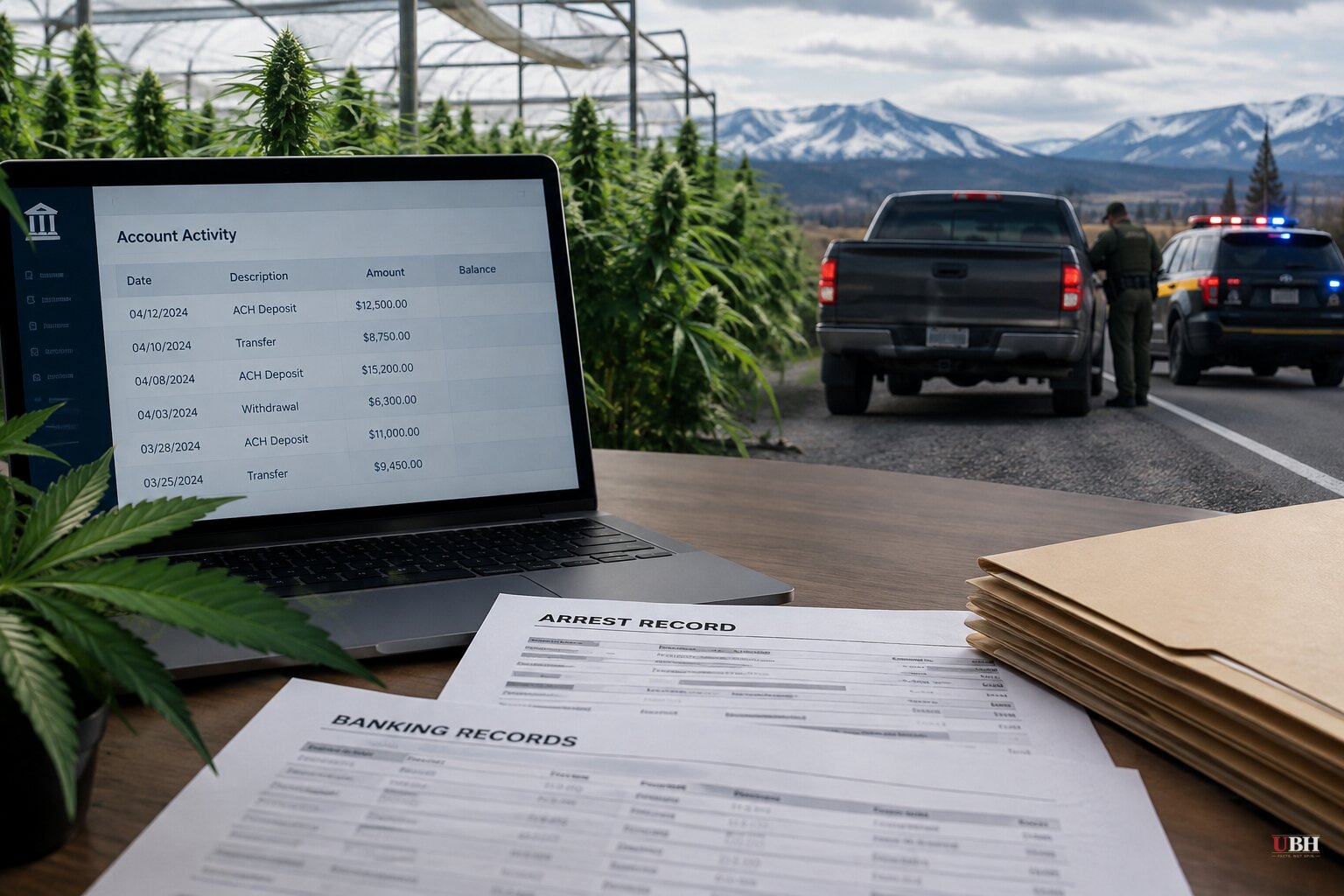
A federal agent in Spokane, Washington ran a marijuana farmer's bank records through a database, flagged him as a suspected narcotics trafficker, and passed that tip to Montana state troopers who pulled him over. Court documents obtained by 404 Media show this happened to Kyle William Olson, a licensed California cannabis grower, according to reporting from Reason.
Montana Highway Patrol troopers told Olson at the scene they stopped him for an obstructed license plate. His defense team later obtained a different explanation: a report from the Predictive Intelligence Targeting Team at the U.S. Border Patrol's Spokane sector, which had cross-referenced Olson's banking data with arrest records and unspecified "law-enforcement sensitive records."
"Based on this analysis, I relayed the information to [Montana Highway Patrol] Sergeant James Beck as law enforcement-sensitive situational awareness to support general interdiction efforts and officer safety considerations," Border Patrol Agent Matthew Frank Phelps wrote in the report, per Reason's review of the documents. Olson was charged with DUI and possession of marijuana with intent to distribute. DHS did not tell 404 Media how it obtained his private bank records.
Not an Isolated Case
This isn't the first time DHS agencies have engineered stops through a back door. Border Patrol and Immigration and Customs Enforcement run a nationwide network of license plate readers that flag "patterns of life" to local police, who then find a separate pretext to search the vehicle. Bexar County Sheriff's Deputy Joel Babb put it plainly in a deposition tied to a lawsuit the Institute for Justice filed over these searches: "The beautiful thing about the Texas Traffic Code is there's thousands of things you can stop a vehicle for."
Bank records are apparently now feeding that same pipeline, run through units with names like "Predictive Intelligence Targeting Team." DHS has separately built out access to enormous private datasets. An earlier 404 Media investigation found ICE gained access to an industry database covering 1.8 billion insurance claims and 58 million medical bills.
Defenders of this kind of financial monitoring have a real argument. The Bank Secrecy Act and the PATRIOT Act of 2001 require banks to flag suspicious transactions specifically to help law enforcement catch money laundering, drug trafficking, and terrorism financing, and FinCEN's Suspicious Activity Report system exists for exactly that purpose. Agent Phelps framed his tip as routine "officer safety" information sharing, not a rogue operation. The Treasury Department has also pushed to keep a program requiring money transfer offices to report transactions suspected of tied to illegal immigration.
According to a bipartisan group in Congress, none of this appears to run through a judge.
Congress Wants the GAO to Look
On August 10, 2026, Senator Ron Wyden (D-OR) and Representatives Warren Davidson (R-OH), Pramila Jayapal (D-WA), and Andy Biggs (R-AZ) sent a letter to Acting Comptroller General Orice W. Brown at the Government Accountability Office, requesting a full review of federal agencies' surveillance of Americans' bank accounts, according to Coin Center's summary of the letter.
The lawmakers flagged at least three specific practices. First, federal law enforcement's ability to subpoena bank records "without a court review or approval" under the Right to Financial Privacy Act, a law that supposedly requires notifying Americans when their records are seized, but the Department of Justice has told Wyden's office it cannot demonstrate it's actually complying. Second, the FBI's use of National Security Letters to pull historical financial records without prior judicial review, sometimes with gag orders attached. Third, the DOJ's use of the All Writs Act, a 1789 statute meant to fill procedural gaps, to compel banks into ongoing real-time monitoring of a targeted account, something Congress has never explicitly authorized.
Coin Center, which has long pushed for Fourth Amendment protections for financial data, called the effort bipartisan and said it "applauds" the push for accountability. The letter does not target the DHS predictive-targeting program specifically, but it covers the same underlying question: what happens when the government builds surveillance tools without a warrant requirement built in.
A Separate Fix, Aimed at a Different Problem
On September 2, 2026, the Federal Reserve, FDIC, NCUA, OCC, and FinCEN issued a joint statement clarifying how banks can talk to customers about suspected fraud or account closures without violating SAR confidentiality rules. That statement is tied to Executive Order 14331, "Guaranteeing Fair Banking for All Americans," and is aimed at the separate debanking controversy, where customers get their accounts closed with no explanation. It does not address the DHS-to-local-police pipeline at issue in the Olson case, and the agencies were explicit that it changes no existing legal requirements.
Olson's case is still working through Montana's courts. Whether the GAO agrees to take up Wyden, Davidson, Jayapal, and Biggs's request, and what it finds if it does, remains the open question that will determine whether Border Patrol's bank-record pipeline gets any outside check at all.
Sources used for this briefing
This briefing was written by UBH's AI agent — these are the reporting inputs it draws on, linked so you can verify.


