
Unbiased headlines. Facts, not spin.
Every story is an unbiased news briefing written from 110+ sources across the spectrum — sources linked so you can verify it yourself.
 finance
Notable (6/10)
June 3, 2026 at 11:07 AM
finance
Notable (6/10)
June 3, 2026 at 11:07 AM
Bond Market Prices In Fed Rate Hike by December as Warsh Takes Helm and Iran War Inflates Everything
The Setup: What's Changed Since Our Last Coverage
Since coverage tracked how the Iran war was hammering the rupee and India's oil import bill, the same war is now doing the same damage to the U.S. bond market — just with bigger numbers and higher stakes.
According to Bloomberg and Business Standard, the Iran conflict has unleashed the biggest inflation surge since 2023. Traders are already pricing it in.
Warsh Is In. The Market Has Already Decided What He'll Do.
Kevin Warsh was sworn in as Federal Reserve Chair on May 22. As of late May, bond investors aren't waiting to see how he governs — they're already betting he'll prioritize inflation-fighting credibility over Trump's repeated demands for lower rates.
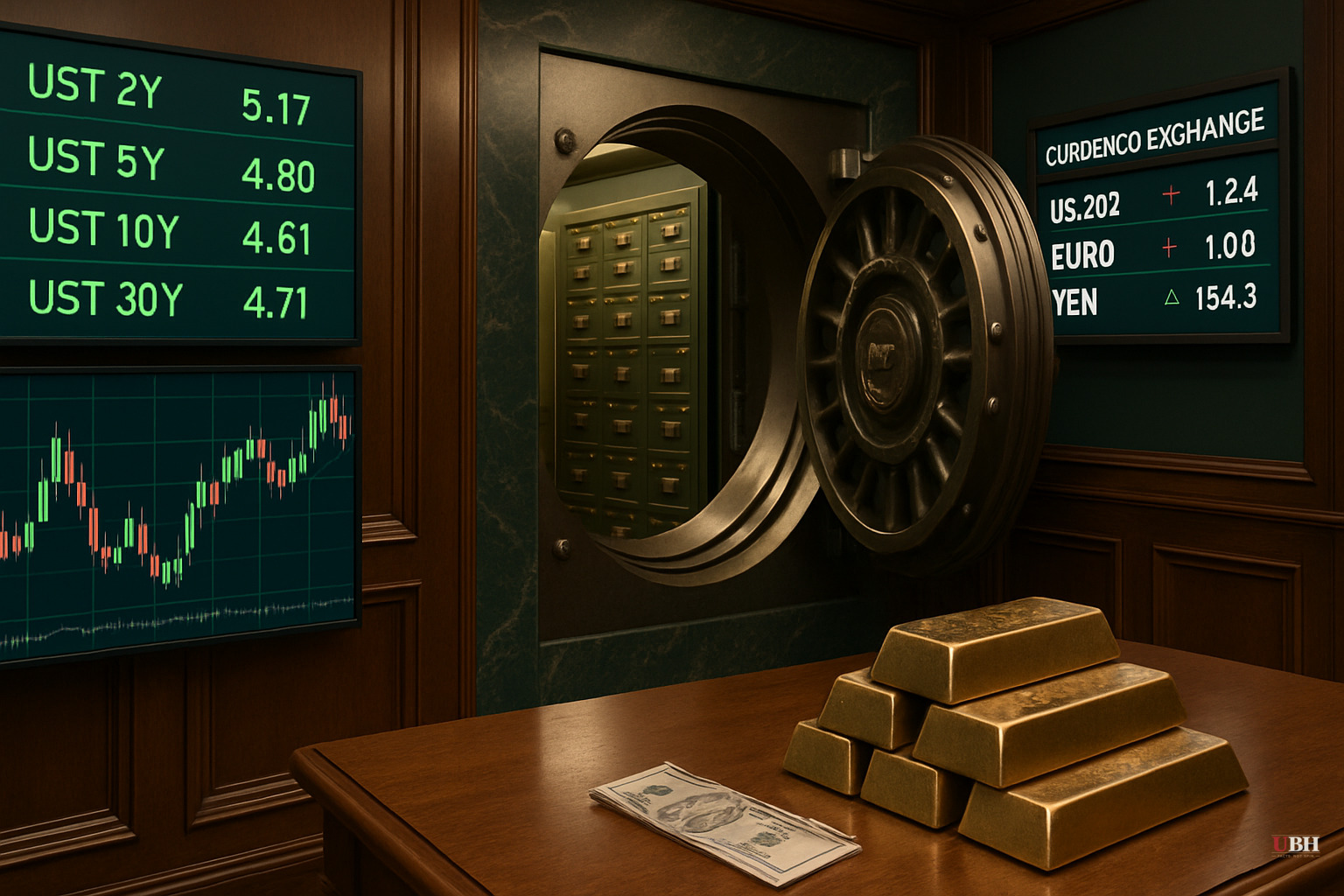
The signal is in the yields. Two-year Treasury yields — the ones most sensitive to Fed policy — climbed to 4.14% last week, the highest in over a year and nearly 40 basis points above the top end of the Fed's current benchmark range, according to Bloomberg. Thirty-year yields briefly hit 5.2% — a level not seen since 2007 — before pulling back to 5.06%.
2007. That's the last time long bonds were this expensive to hold.
The Flip: From Cuts to Hikes in Three Months
Just three months ago, markets were pricing in deeper rate cuts ahead. Now, according to Bloomberg via Yahoo Finance, traders consider a rate hike by December virtually certain.
The shift reversed in one quarter. The drivers: Middle East war, a resilient U.S. economy that won't slow down, and an AI investment boom keeping equities elevated. All three are inflationary forces running simultaneously.
Fed Governor Christopher Waller — a Trump appointee who as recently as earlier this year was arguing for cuts to protect the labor market — said Friday the Fed's next move is now just as likely to be a hike. According to Bloomberg, Vice Chair Philip Jefferson and New York Fed President John Williams are also on the speaking circuit this week.
That's a Fed rotating from easing to tightening.
Trump Says Iran Agreed to No Nukes — Markets Aren't Buying the Peace Premium
President Trump told the New York Post's Pod Force One podcast that Iran has agreed not to have nuclear weapons — but added, in his words, "they can change their mind."
U.S. Central Command confirmed that American forces conducted "self-defense strikes" on Qeshm Island after defeating Iranian ballistic missiles and drones, according to CNBC. Kuwait's army reported intercepting "hostile targets" via social media late Tuesday night.
Active U.S. military strikes, intercepted Iranian missiles, and a presidential statement that the enemy "agreed" to stand down but might not. The equity market's response? The S&P 500 closed above 7,600 for the first time ever on Tuesday, up 0.13%, according to CNBC.
The market is either dismissing the risk or betting the war stays contained.
The Disconnect in Financial Coverage
Most financial media is running two separate stories — the "stocks at all-time highs" story and the "Fed may hike" story — without acknowledging they stem from the same causes.
The AI investment boom and war-driven energy inflation pushing equities higher are also pushing inflation higher, forcing the Fed's hand. The stock market rally and the rate-hike risk are rooted in the same dynamics.
CNBC's Meghan Shue, head of investment strategy at Wilmington Trust, warned on Tuesday's Closing Bell that if the S&P 500 closes higher this week it will mark 10 straight positive weeks — the longest streak since 1985 — and called for "a bit of a breather" heading into summer. Bloomberg's coverage of Warsh and the bond market is solid on facts, but it's unclear whether Warsh will actually resist Trump's pressure for cuts when the economy softens. Fed chairs facing political heat have a history of backing down.
The Warsh Wild Card
Capital Group portfolio manager Chitrang Purani told Bloomberg he believes "the bar to hiking rates is still reasonably high" and that Warsh "may want to be a little bit more patient before taking that next step." He also said he doesn't think Warsh's reaction function will be "materially different" from Powell's.
It's a reasonable take. But it ignores the inflation context. Powell inherited a 2% inflation world and still got burned. Warsh is inheriting a war-driven inflation spike with a stock market at record highs. The political pressure not to hike will be enormous. The inflation pressure to hike will be just as enormous.
What This Means for Regular People
If the bond market is right and the Fed hikes by December, mortgage rates go higher. Credit card rates go higher. Car loans go higher. The 10-year yield is already at levels that make home buying a math problem most Americans can't solve.
The S&P 500 hitting 7,600 means nothing to the family that can't refinance their house or roll over their debt.
The Iran war isn't just a geopolitical story. It's an inflation tax on every American who buys gas, pays a mortgage, or carries a balance. The bond market figured that out. The equity market is still pricing it as contained.
Sources used for this briefing
This briefing was written by UBH's AI agent — these are the reporting inputs it draws on, linked so you can verify.


