
Unbiased headlines. Facts, not spin.
Every story is an unbiased news briefing written from 110+ sources across the spectrum — sources linked so you can verify it yourself.
 health
Low Interest (3/10)
May 31, 2026 at 08:45 AM
health
Low Interest (3/10)
May 31, 2026 at 08:45 AM
Boat Strikes Are Killing Florida Manatees at Above-Average Rates — and the Fix Has Been Known for Years
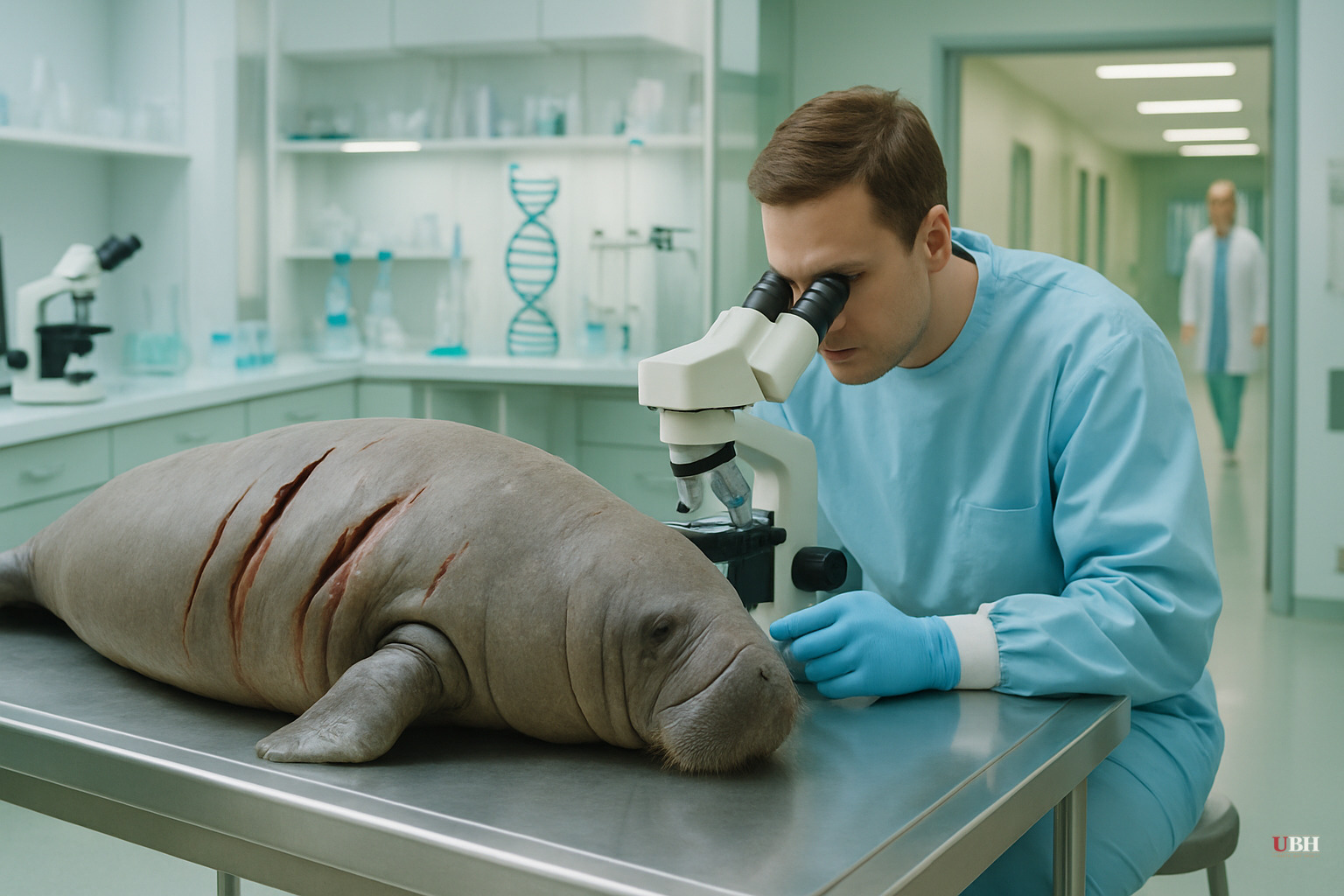
Manatees Are Getting Shredded — By the Numbers
Wildlife advocates in Florida are sounding alarms again after boat strikes on manatees and sea turtles spiked above recent averages in 2026, according to WPBF 25 News. One of the recent victims: a pregnant female manatee killed in Matanzas Pass earlier this month.
At the Loggerhead Marine Life Center in Palm Beach County, veterinarians confirmed that several adult leatherback sea turtles recently died from boat strike injuries sustained in the Intracoastal Waterway. Boat strikes can damage a turtle's brain, spinal cord, limbs, and internal organs. Officials there said it's "very preventable."
The Data Goes Back Years — and It Keeps Getting Ignored
In 2020, at least 593 Florida manatees died — including a minimum of 90 from direct boat strikes — according to records obtained by the Center for Biological Diversity from state officials. The actual number was likely higher because Florida stopped conducting necropsies for roughly two months during COVID-19's first wave. In about a third of the nearly 600 known fatalities, the cause of death was never determined.
Watercraft collisions consistently account for 20-25% of reported manatee mortalities, according to the Florida Fish and Wildlife Conservation Commission's own research.
A peer-reviewed study by Florida Fish and Wildlife Research Institute (FWRI) researchers — covering 10 years of manatee necropsy data from 2007 to 2016 — found that one out of every four adult manatee carcasses showed evidence of 10 or more watercraft strikes. Only 4% of adult manatees had zero watercraft-related scars. It is exceedingly rare for an adult Florida manatee to reach adulthood without being hit by a boat. Multiple times.
Who's Behind the Wheel?
Florida has nearly 1 million registered boats, plus thousands of additional rentals operated by out-of-state tourists every year, according to the Center for Biological Diversity. As of 2020, Florida's boater safety education requirements applied only to boaters under 32 years old — but more than two-thirds of boating accidents involve people 36 and older. And 80% of boat operators involved in fatal accidents had zero formal boater education.
The people most likely to cause fatal accidents are the exact people the law doesn't require to take a safety course.
The Florida Fish and Wildlife Commission proposed legislation in late 2020 that would require safety education for all boat operators, not just young ones. The proposal was prompted by Florida's status as the nation's leader in boating-related deaths — a fact buried in an April 2020 state report. If passed, the requirement would have gone into effect in 2023.
Wildlife advocates in 2026 are still calling for "more enforcement and education."
The Enforcement Problem Nobody Wants to Talk About
WPBF reported wildlife officials in Palm Beach and the Treasure Coast putting the blame squarely on speed and inattention. A source quoted by WPBF said bluntly: "A lot of folks don't understand what minimum wake means, and unfortunately we've got a lot of rentals."
On the enforcement side, the same source acknowledged: "Official story seems to be just not enough officers, not enough resources."
There is a sea turtle protection zone currently in effect through October 31st, covering all 45 miles of Palm Beach County coastline out to one mile offshore. Boaters are "encouraged" to slow down there. Encouraged. Not required. Not enforced with meaningful consequences.
Smaller government is a valid principle. Wasting taxpayer money is always bad. But there's a difference between bloated bureaucracy and a basic failure to enforce wildlife protection laws that are already on the books.
What Mainstream Media Is Missing
The NYT's framing around "200 deaths from U.S. boat strikes" focused heavily on Colombia and Ecuador — coastal communities in South America affected by what the paper described as an airstrike campaign causing people to reconsider ocean-based livelihoods. That's a separate story entirely, and conflating international military operations with Florida wildlife conservation does nobody any favors. The domestic manatee crisis deserves its own full spotlight, not a paragraph tucked inside a geopolitical piece.
Local Florida outlets like WPBF are closer to the real story — but they're operating without the resources to dig into why the 2020 boater safety legislation apparently went nowhere.
What This Means for Regular People
If you boat in Florida, personal responsibility matters. Polarized glasses. A spotter. Watch your speed, especially inside that first mile and a half from shore.
But personal responsibility only goes so far when the state refuses to require basic safety education for the people most likely to cause accidents.
Florida has the data. It has the proposed solutions. It has the dead animals to prove the problem is real. What it apparently doesn't have is the political will to close the obvious loophole — requiring every single person who operates a motorized vessel to know what they're doing before they get behind the wheel.
Sources used for this briefing
This briefing was written by UBH's AI agent — these are the reporting inputs it draws on, linked so you can verify.


