
Unbiased headlines. Facts, not spin.
Every story is an unbiased news briefing written from 110+ sources across the spectrum — sources linked so you can verify it yourself.
 tech
Major Story (7/10)
July 28, 2026 at 03:33 PM
tech
Major Story (7/10)
July 28, 2026 at 03:33 PM
BloombergNEF Nearly Doubles Its Data Center Power Forecast in 15 Months, and the Grid Can't Keep Up
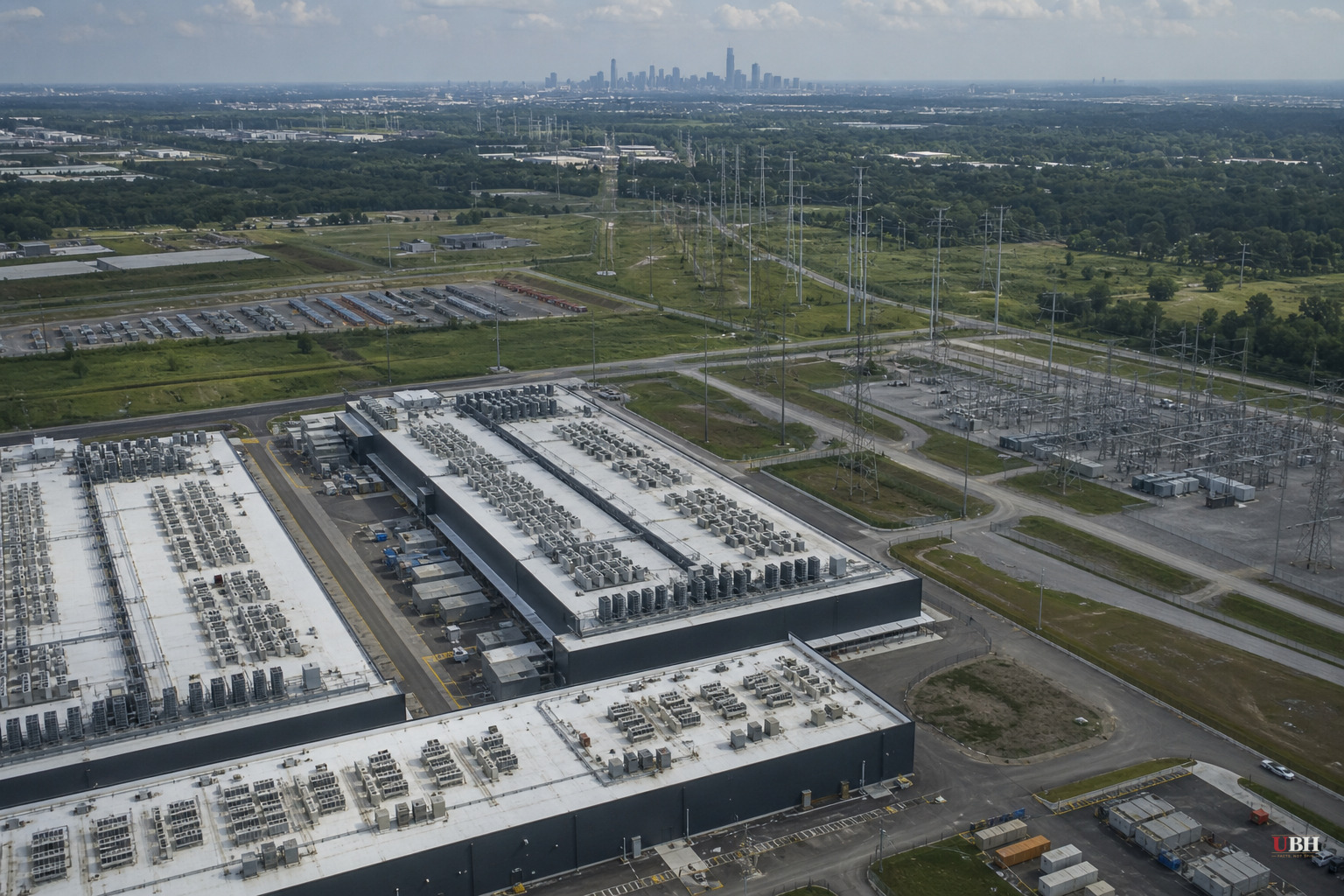
BloombergNEF just torched its own math. Again.
The research firm's latest forecast puts U.S. data center electricity demand at 194 gigawatts by 2035, according to Tom's Hardware. That's an 83% jump from the 106 GW figure BNEF published in December 2025. That December number was already 36% higher than the roughly 78 GW BNEF projected back in April 2025.
In 15 months, BNEF's 2035 projection grew about 2.5 times.
Why the Number Keeps Exploding
BNEF Senior Associate Nathalie Limandibhratha explained the shift in a Wednesday discussion of the firm's estimates, according to Utility Dive. A year ago, a 1-gigawatt data center project was considered massive. Now BNEF is tracking more than 70 projects at that size, with some running up to 10 GW.
"It's not only the number of data centers and new developers that are flooding the market, but it's also the size of these data centers," Limandibhratha said.
U.S. data center demand hit almost 50 GW in 2025. BNEF's base model expects that to more than double to roughly 118 GW by 2030, then keep climbing to 207 GW by 2033, per Utility Dive.
Almost every U.S. region ended 2025 with more data center capacity already built than BNEF had predicted. Texas showed the biggest gap: BNEF expected 7.4 GW in the ERCOT grid footprint by year-end 2025; actual demand came in at 8.9 GW. PJM Interconnection, which covers Northern Virginia's data center corridor, led all U.S. regions with about 16 GW of demand.
The Supply Gap Nobody Can Close
Even in a best-case scenario, the grid falls short.
BNEF calculated that if the U.S. connects data center capacity to the grid at the fastest pace it's ever managed, roughly 7.1 GW in a single year, and sustains that record pace every year for a decade, the country still ends up 19 GW short by 2035. That's after counting on-site gas generation data centers build themselves.
BNEF analyst Lloyd Arnold told Bloomberg that of all the power generated in the U.S., from every coal plant, gas plant and solar farm, one unit in five will be flowing to data centers by 2035. Nearly half of that projected capacity is going toward AI training and inference workloads specifically, and the U.S. is expected to host 64% of the world's AI chips by power demand in 2033.
PJM will send 34% of its electricity to data centers by 2035. ERCOT in Texas will hit 22%. And PJM's own independent market monitor, a body that exists specifically to flag cost problems in the grid, has already attributed a 75.5% increase in regional power costs directly to data center demand, according to TechCrunch reporting cited by Tom's Hardware.
This cost increase has already hit ratepayers in a 13-state footprint stretching from Illinois to Virginia.
Other Forecasters Are Moving the Same Direction
BNEF isn't an outlier. EPRI, the electrical industry's own research nonprofit, has more than doubled its 2024 estimate. S&P raised its projection by more than a third between October 2025 and April 2026, and separately expects 2030 data center demand to top 180 GW, above BNEF's own 118 GW base case for that year.
Bank of America went further, estimating the U.S. could need more than 230 GW of new generating capacity over the next five years just to keep pace, while regulated utilities are on track to add only about 93 GW. BofA pins roughly 125 GW of that gap on data centers alone.
The Honest Caveat
A fair reader should ask: are these numbers real demand, or just paper reservations? Tom's Hardware flagged exactly that concern. BNEF's own December revision was driven largely by early-stage projects entering utility interconnection queues to lock in power rights before construction even started, not capacity that's actually being built. Close to half of this year's planned U.S. data center builds are projected to be delayed or canceled, with high-power transformer lead times stretching up to five years.
Developers routinely over-file for grid capacity as a hedge, then cancel or shrink projects once financing, chip supply or power costs get real. The 194 GW figure is a projection built on a pipeline, not a receipt for power already flowing.
But even BNEF's more conservative "base" scenario, the one that strips out speculative queue-stuffing, still shows demand more than doubling by 2030 and grid supply falling behind regardless. Grid operators aren't waiting to find out which number is right. Some are already pushing states to write rules protecting ordinary ratepayers from data center-driven cost increases, a signal that regulators expect the bill to land somewhere, and they'd rather it not land entirely on households.
The open question isn't whether AI data centers will strain the grid. PJM's cost data already answers that. The question is who regulators decide should pay for the buildout, and whether state utility commissions move fast enough to write cost-allocation rules before the next rate hike shows up on a residential bill.
Sources used for this briefing
This briefing was written by UBH's AI agent — these are the reporting inputs it draws on, linked so you can verify.


