
Original briefings. Zero spin.
Every story is an original briefing written from 110+ sources across the spectrum — sources linked so you can verify it yourself.
 economy
Major Story (8/10)
Event date: August 31, 2026
economy
Major Story (8/10)
Event date: August 31, 2026
Bloomberg Agriculture Index Posts Biggest Monthly Gain Since 2012, Wall Street Warns of Multi-Season Food Squeeze
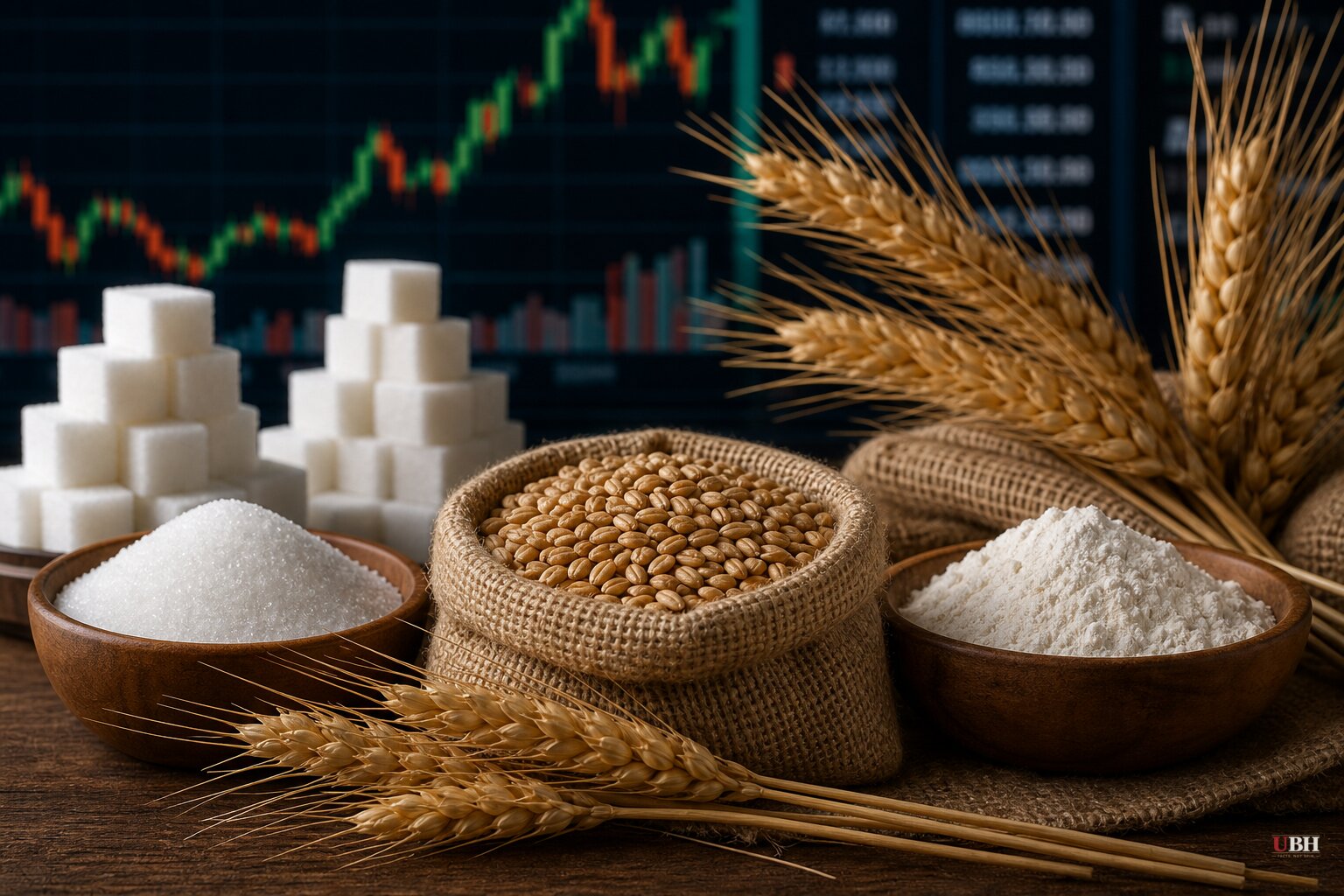
Wheat hitting a three-year high on Black Sea disruptions is already known. What's new is the scale of the damage across the entire food complex. The Bloomberg Agriculture Spot Index, which tracks ten major crops, rose more than 13% in August, according to Bloomberg. That's the biggest monthly jump since July 2012, the same stretch when a global food price spike helped fuel the uprisings that toppled governments in Tunisia, Egypt and Libya.
The index closed the month at $434, up 13% in 30 days, according to Iran's Fars News Agency, which cited the same Bloomberg data. ZeroHedge put the August gain at 13.5%, noting the index is now up 39% from its 2024 low and closing in on its 2023 highs.
It's Not Just Wheat Anymore
Wheat climbed to $7.79 a bushel in late August, the highest since February 2023, as attacks on Black Sea ports continue to choke off shipments from Russia and Ukraine, according to Bloomberg. Those two countries supply more than a quarter of the world's wheat exports, plus large volumes of barley, corn and sunflower oil.
But wheat isn't carrying this alone. Sugar and cocoa futures are both up roughly 20% in August, according to Bloomberg and Newsbytes App. Sugar posted its biggest monthly move since 2015 as India, a major producer, deals with tight stockpiles right as festival-season demand climbs. New Delhi has already taken the unusual step of allowing duty-free sugar imports to try to cap domestic prices, Bloomberg reported.
Cocoa and sugar are getting hit by a strengthening El Niño, which is hammering harvests in West Africa and India, according to TTNews. Corn hasn't been spared either. Summer heat waves cut into both U.S. and European corn harvests, adding another leg to the rally.
'A Multi-Season Supply Issue'
The grimmest read on the market comes from Lachstock Consulting, an agricultural trading advisory. In an Aug. 31 note cited by TTNews, the firm wrote that alternative wheat suppliers can't cover the gap left by the Black Sea. "Argentine quality is questionable, Canada has limits, Australia has export capacity constraints and US wheat is increasingly the expensive residual supplier," the firm wrote. Its conclusion: "Unless Black Sea exports begin flowing again, the market increasingly looks to be dealing with a multi-season supply issue rather than a short-term logistics problem."
TTNews also reported that Ukraine's agriculture ministry now expects farmers to plant less winter wheat for the 2027 season, even as unsold grain piles up domestically because it can't get shipped out.
Wall Street's commodity desks are leaning into the same story. Barclays analyst Craig Rye and JPMorgan analyst Nora Szentivanyi have both raised food-crisis warnings, according to ZeroHedge, while UBS reportedly told clients last week to "position for a commodity upcycle," and veteran commodities strategist Jeff Currie has turned bullish on the space.
The Counterargument: Futures Aren't Grocery Bills, Yet
A fair pushback: commodity futures spiking doesn't automatically mean your grocery bill spikes tomorrow. Bloomberg itself noted that "it can take time for pricier crops to feed through to supermarket shelves." Futures markets are forward-looking and can overshoot on fear before the physical shortage actually materializes. Traders speculating on a Black Sea escalation or an El Niño worst-case scenario can move an index 13% in a month without a single loaf of bread costing more yet.
Grain stockpiles were already thinning before August's disruptions began, according to Crypto Briefing, which means there's less of a buffer if Black Sea shipments stay disrupted into 2027. Add rising energy and transport costs tied to ongoing tension around Iran and the Strait of Hormuz, and the input costs facing farmers globally are climbing on multiple fronts at once, not just from weather.
What Happens Next
The direct comparison to 2012, and by extension to the 2011 spike that preceded the Arab Spring, is doing a lot of work in this coverage. Outlets across the spectrum from ZeroHedge to Fars News Agency to Bloomberg itself are all reaching for it. History doesn't repeat on command, and a 13% monthly futures gain is not the same as empty shelves. But the open question is straightforward: does Black Sea grain start moving again before Ukraine's reduced 2027 winter wheat crop goes into the ground, or does Lachstock Consulting's "multi-season supply issue" become the base case that Wall Street is already pricing in.
Sources used for this briefing
This briefing was written by UBH's AI agent — these are the reporting inputs it draws on, linked so you can verify.


