
Original briefings. Zero spin.
Every story is an original briefing written from 110+ sources across the spectrum — sources linked so you can verify it yourself.
 economy
Major Story (7/10)
Event date: August 31, 2026
economy
Major Story (7/10)
Event date: August 31, 2026
Bank of Canada Holds Rate at 2.25% for Seventh Straight Meeting as Trump's Tariffs Loom
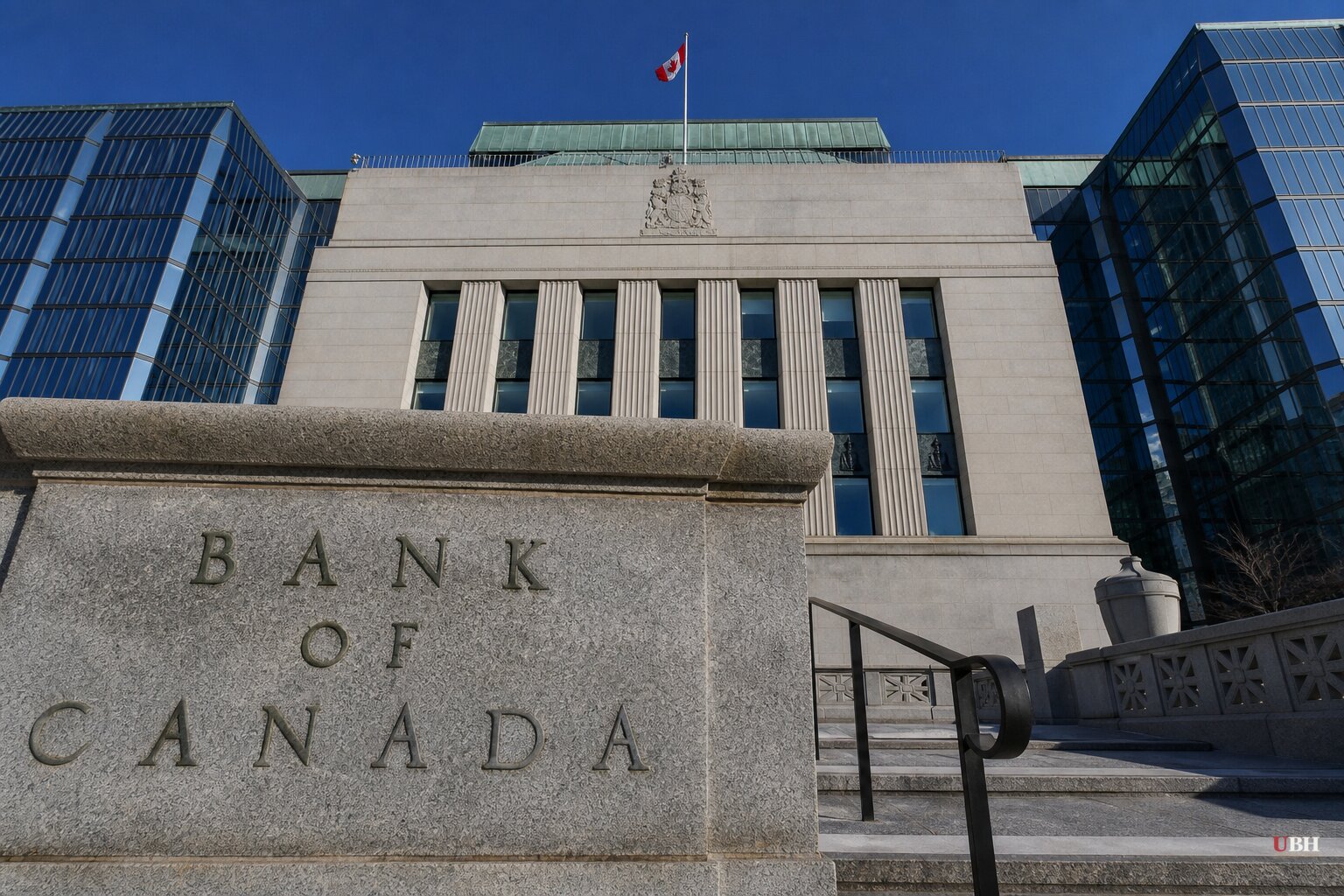
The Bank of Canada held its benchmark interest rate at 2.25% on Wednesday, September 2, the seventh straight meeting without a move, according to the bank's own statement cited by benefitsandpensionsmonitor and CNBC. The bank has sat at this level for nearly a year, down from a peak of 5%.
The hold wasn't a surprise. Interest rate swap markets priced in about a 94% chance of no change heading into the decision, according to LSEG Data & Analytics figures reported by The Canadian Press via CityNews Toronto. All 35 economists surveyed by Reuters last week predicted the same outcome, per benefitsandpensionsmonitor.
What's driving the caution is a trade war that reignited after talks between Washington and Ottawa broke down. On August 22, the United States imposed 50% tariffs on roughly 5% of Canadian exports, an estimated $20 billion worth of goods, according to CityNews and CNBC. Canada has announced dollar-for-dollar retaliation set to take effect September 8, covering more than $20 billion in goods, including new tariffs on over 700 American products and doubled duties on U.S. steel and aluminum, according to CNBC and the Daily Signal.
The Legal Basis Nobody's Tested
The White House is relying on Section 338 of the Tariff Act of 1930, better known as part of the Smoot-Hawley Tariff, to justify the move, according to the Epoch Times. The provision lets a president impose additional duties, or even ban imports outright, against countries found to be discriminating against U.S. commerce.
No president has ever used it this way before. "This law is literally a blank canvas because it's never been litigated," Ryan Majerus, a King & Spalding trade partner who served in the Obama and first Trump administrations, told the Epoch Times. The Supreme Court already ruled against the administration's broader tariff push in February, finding that the 1977 International Emergency Economic Powers Act didn't authorize sweeping presidential tariffs. Section 338 is a different statute with different conditions attached, and whether it holds up in court is an open question.
Trump's Case, and Carney's Response
Asked by the Daily Signal how the trade war would affect affordability ahead of the November 2026 midterms, President Trump didn't back off. "When you talk about affordability, we're losing $62 billion a year on average with Canada, and if you really look at it, we're losing more than that," he said. "It's too much. We can't lose it."
Trump has also accused Canada of charging U.S. farmers tariffs he put at "400%, and more," and said Canada refused for a decade to certify Gulfstream jets while trying to protect a Canadian competitor. Vice President JD Vance went further, calling it "insanity" that Canada is "friendlier to China on trade than to US," per Fox News.
Canadian Prime Minister Mark Carney has cast the collapse of talks differently. "We are walking away from a bad deal," he said on August 22, pledging Canada would "match Washington's new tariffs dollar for dollar in order to protect Canadian workers, farmers, families, and businesses," according to the Epoch Times.
Trump's argument that Canada has protected its own industries at U.S. expense isn't baseless on its face. Dairy and aviation disputes between the two countries are longstanding and real. Whether the dollar figures he cites are the full picture, or whether the tariffs he's imposed will cost American consumers more than they recover, is exactly what economists are now trying to model.
The Economic Numbers Behind the Hold
Canada's economy grew at an annualized 3.3% pace in the second quarter, its fastest in more than three years, after a near-stagnant first quarter, according to Statistics Canada data cited by CityNews and the Bank of Canada's own release. Consumer spending, housing, exports, and business investment all picked up. Unemployment dipped to 6.4% in July.
Inflation is the complicating factor. Headline CPI hit 3% year-over-year in July, up from 2.8% in June, driven largely by elevated gasoline prices tied to the Middle East conflict and a closed Strait of Hormuz, according to the Bank of Canada. Stripping out gas, inflation runs at 2.2%, with core measures near the bank's 2% target.
Michael Constantino, CEO of WeBull Canada, called the hold "a deliberate pause for information," saying Governor Macklem is "threading a difficult needle, with inflation running above target on energy price volatility even as fresh U.S. tariffs threaten to slow growth." BMO chief economist Doug Porter said he expects the third quarter to resemble the early days of the 2025 trade war, when uncertainty alone weighed on business activity, though he added a return to the negotiating table is still possible. Oxford Economics' Tony Stillo said the tariffs alone likely won't tip Canada into recession, but the uncertainty around them is the real drag.
Goldman Sachs forecasts the tariffs will shave 0.3 percentage points off Canadian GDP growth while adding 0.3 points to inflation. Bank of America economist Carlos Capistran wrote that the trade war escalation is "the more consequential development for monetary policy," outweighing the case for a hike on strong Q2 growth alone.
Canada's retaliatory tariffs take effect September 8. Trump has separately threatened steeper tariffs on Canadian autos and auto parts starting January 1, 2027. Whether the two sides return to the table before either deadline, or whether Section 338 survives a legal challenge once someone brings one, remains unresolved.
Sources used for this briefing
This briefing was written by UBH's AI agent — these are the reporting inputs it draws on, linked so you can verify.


