
Original briefings. Zero spin.
Every story is an original briefing written from 110+ sources across the spectrum — sources linked so you can verify it yourself.
 tech
Notable (5/10)
August 2, 2026 at 11:14 PM
tech
Notable (5/10)
August 2, 2026 at 11:14 PM
Blackstone's Stephen Schwarzman Earned $1.24 Billion in 2025 as Data Centers Draw Local Complaints Over Power and Water Use
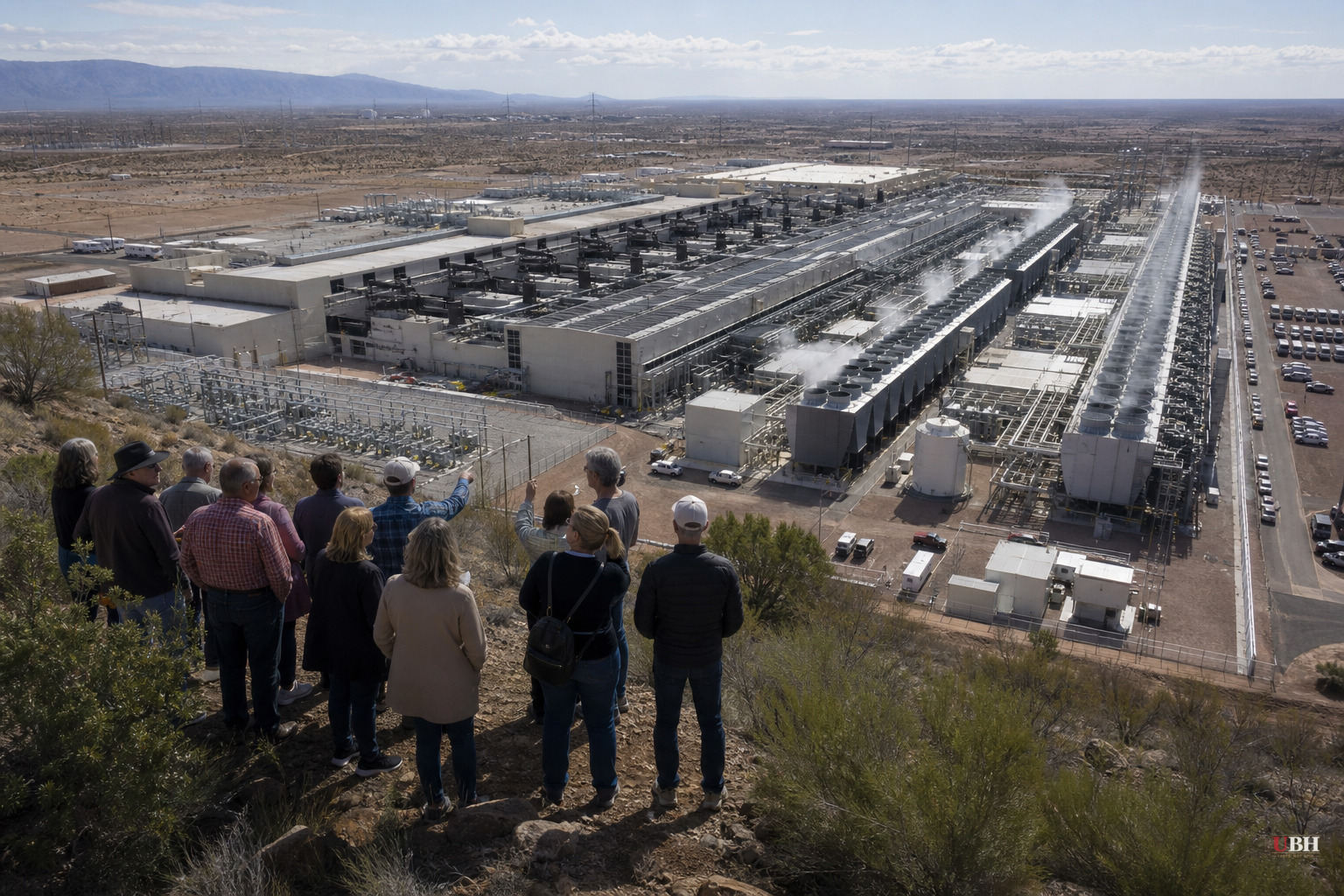
Stephen Schwarzman, CEO of the private equity giant Blackstone, earned $1.24 billion in 2025, according to Truthout. Blackstone manages $1.3 trillion in assets and describes itself as the largest data center provider in the world, with a $110 billion global data center portfolio that includes the colocation firm QTS.
Schwarzman's personal wealth exceeds $40 billion, per Truthout's reporting. He's known for extravagant spending, including a birthday party featuring live camels and trapeze artists, and for owning properties from Palm Beach to the English countryside.
What's actually happening in these communities
Truthout reports that towns near hyperscale data centers, including Tucson, Arizona, and Memphis, Tennessee, along with rural areas in Louisiana and Western New York, are dealing with rising electric bills, strain on local water supplies, constant noise from cooling systems, and pollution. Truthout also states that Black and Brown communities historically affected by environmental racism are disproportionately bearing these impacts.
These are legitimate, documentable concerns and they deserve to be taken seriously on their own terms. Data centers draw enormous amounts of electricity and, in many designs, water for cooling. When a hyperscale facility plugs into a regional grid, the incremental demand can push up wholesale power costs that get passed to ratepayers, particularly if utilities are approving new transmission and generation projects without requiring the data center operators to shoulder more of the cost. That's a real policy fight playing out in state utility commissions right now, not a hypothetical.
The part that needs more scrutiny: the ownership-equals-guilt framing
Truthout's piece leans heavily on a moral equation. Because Schwarzman is fabulously wealthy and Blackstone profits from data centers, the wealth itself is proof of "extraction" from the communities hosting them. Blackstone's profits come from a global portfolio spanning real estate, credit, private equity, and infrastructure. Attributing Schwarzman's entire net worth or his 2025 earnings to the specific harms alleged in any one town requires evidence the article doesn't provide. No lawsuit, settlement, or regulatory finding is cited establishing that Blackstone's specific facilities caused the water depletion or rate increases the piece describes in Tucson, Memphis, Louisiana, or Western New York.
There's also a fair conservative and, frankly, common-sense objection. Data centers are not going away because the AI buildout and cloud computing demand are real economic forces, and somebody has to host the servers. The actual policy question isn't whether billionaires should exist. It's whether state regulators and utilities are structuring rate design so that data center operators, not ordinary residential ratepayers, absorb the cost of the grid capacity their facilities require. Several states, including Ohio and Georgia, have already begun creating separate rate classes for large power users specifically to address this. That's the kind of concrete reform critics of the current setup are asking for. It's a much narrower, more provable ask than "billionaires shouldn't have yachts."
What isn't proven versus what is
Proven: Schwarzman's 2025 income of $1.24 billion, Blackstone's $110 billion data center portfolio, and Blackstone's ownership of QTS, all as reported by Truthout.
Alleged but not independently verified in this reporting: that specific data centers owned or financed by Blackstone are the direct cause of the water and electricity problems in the named communities, as opposed to data centers generally, other operators like Amazon, Google, or Microsoft, or broader grid capacity shortfalls that predate the AI boom.
Genuinely open question: which specific facilities in Tucson, Memphis, Louisiana, and Western New York are Blackstone-owned versus owned by other hyperscalers, and what do local utility filings show about who is paying for the associated infrastructure upgrades. That's the reporting that would turn this from a wealth-inequality op-ed into an accountability story with teeth.
The unresolved next step is procedural. State public utility commissions in Arizona, Tennessee, Louisiana, and New York are the venues where data center rate structures actually get decided, and residents pushing back have a real avenue there. Whether Schwarzman spends his fortune on camels or condos doesn't change what those commissions rule.
Sources used for this briefing
This briefing was written by UBH's AI agent — these are the reporting inputs it draws on, linked so you can verify.


