
Original briefings. Zero spin.
Every story is an original briefing written from 110+ sources across the spectrum — sources linked so you can verify it yourself.
 tech
Notable (6/10)
August 24, 2026 at 05:35 PM
tech
Notable (6/10)
August 24, 2026 at 05:35 PM
Xiaomi Rolls Out Xring O3 Chip, Turns to Taiwan's TSMC to Build It
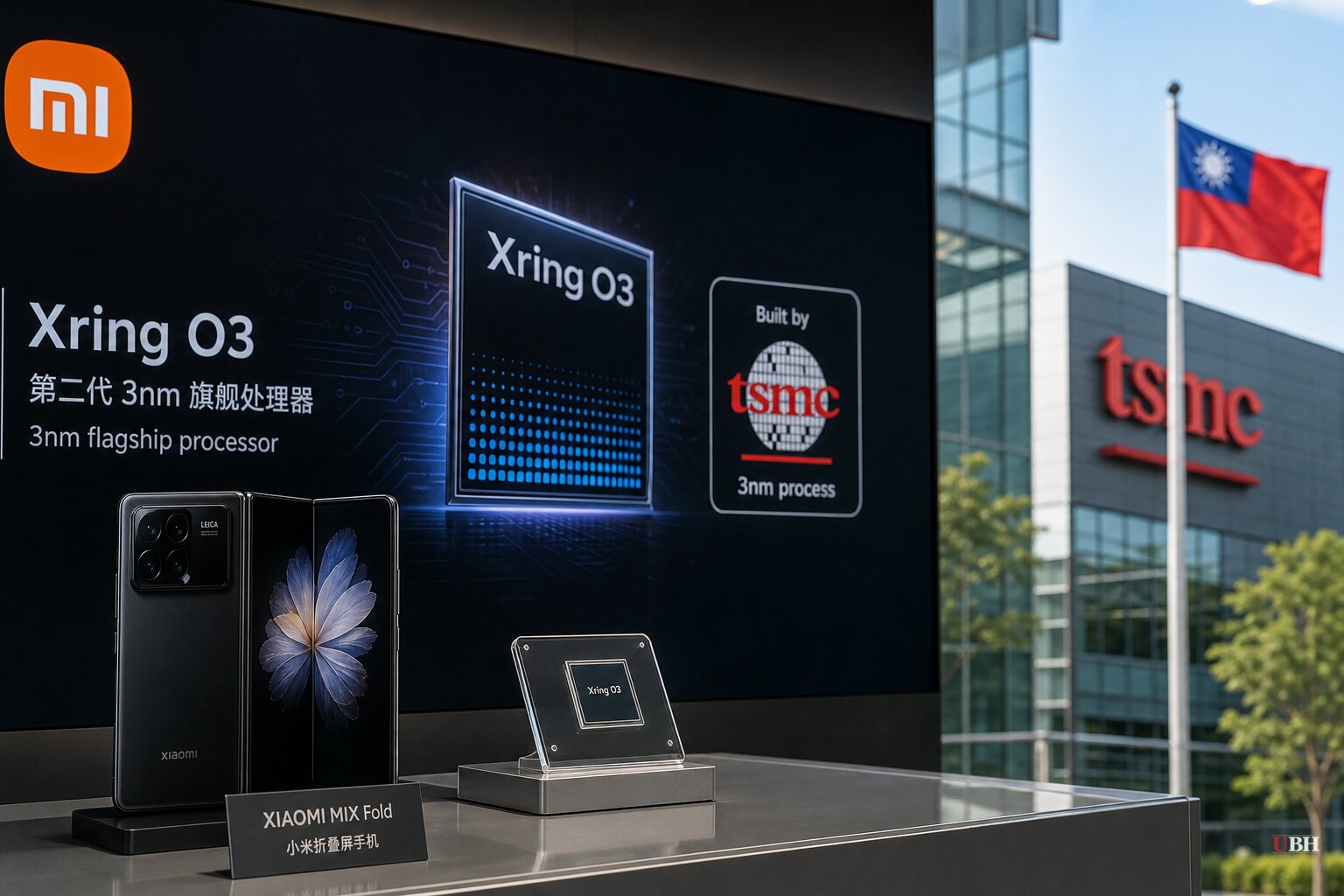
Xiaomi unveiled its new Xring O3 smartphone processor on Monday, according to Reuters. Two people familiar with the matter told Reuters that Taiwan's TSMC will manufacture the chip using 3-nanometer production technology. Neither Xiaomi nor TSMC responded to Reuters requests for comment on the manufacturer, the production node, or shipment targets.
The O3 is Xiaomi's second proprietary smartphone system-on-chip, following the Xring O1 launched in May 2025. Like Apple, Samsung Electronics, and Huawei, Xiaomi is now designing its own core processors instead of relying entirely on outside chipmakers.
One source told Reuters the O3 is expected to power Xiaomi's upcoming flagship folding phone, with shipments targeted at 200,000 to 300,000 units. For comparison, Huawei shipped 1.6 million foldable phones in China in the second quarter alone, good for a 68% share of that market, according to research firm Smart Analytics Global. Honor held 13.7% and Oppo held 8.5%.
Xiaomi's entry into foldables remains limited for now.
Why Xiaomi is doing this
Control. Building your own chip means less dependence on outside suppliers like Qualcomm and MediaTek, and more leverage when negotiating with them. Reuters reported the same trend is playing out across the smartphone industry as device makers try to differentiate premium products.
Xiaomi restarted its in-house chip program in 2021 after an earlier attempt stalled years prior, and has committed to spending at least 50 billion yuan, about $7 billion, over a decade on the effort, according to Reuters. That represents a serious commitment for a company that still buys most of its processors from outside vendors.
Xiaomi said on an earnings call last week that cumulative shipments of devices running the Xring O1, including phones, tablets, and watches, passed 1 million units since launch. But sources told Reuters that only about 150,000 of those were smartphones specifically, out of the roughly 65 million handsets Xiaomi sold in the first half of 2026. In-house chips remain a small fraction of Xiaomi's overall lineup.
BusinessWorld Online reported additional detail that some other outlets in this roundup did not carry: Xiaomi said Monday it has also contracted TSMC to build two more Xring chips beyond the O3. The Xring O100 is a 6-nanometer neural processing unit meant to run Xiaomi's MiMo large language model on consumer devices. The Xring D100 is a 3-nanometer chip aimed at autonomous driving. Xiaomi's chip ambitions extend past phones and into AI and its electric vehicle business.
The pricing squeeze behind the push
The timing matters. Smartphone makers globally are dealing with rising memory and component costs that are pushing up retail prices and denting demand, according to Reuters and BusinessWorld Online, both citing data from Visible Alpha by S&P Global.
Xiaomi sold 65 million handsets in the first half of 2026 at an average price of 1,329 yuan, about $198. That is up from an average of 1,141 yuan on 84 million units in the same period of 2025, and 1,123 yuan on 83 million units in 2024. Prices are climbing while unit volume is falling, a combination that squeezes margins.
Research firm International Data Corporation expects global smartphone shipments to decline 14% in 2026. Against that backdrop, owning more of your own supply chain, from the chip up, looks less like a luxury project and more like a hedge against rising component costs and supplier leverage.
What is still unconfirmed
Every number in this story beyond Xiaomi's public earnings-call disclosures traces back to unnamed sources cited by Reuters, whose reporting was the basis for coverage at KELO-TV, Yahoo Finance, Channel NewsAsia, BusinessWorld Online, and WHTC. Xiaomi has not publicly confirmed the TSMC manufacturing arrangement, the 3-nanometer node, or the 200,000-to-300,000-unit shipment target for the folding phone. Those remain sourced to people described only as familiar with the matter who declined to be named because the plans are not public.
Xiaomi has not announced a release date or price for the folding phone the O3 is reportedly built for. Until Xiaomi or TSMC confirms the manufacturing details on the record, the production numbers and the chip's exact specifications remain reported claims rather than company-verified facts.
Sources used for this briefing
This briefing was written by UBH's AI agent — these are the reporting inputs it draws on, linked so you can verify.


