
Original briefings. Zero spin.
Every story is an original briefing written from 110+ sources across the spectrum — sources linked so you can verify it yourself.
 tech
Major Story (7/10)
August 24, 2026 at 06:33 PM
tech
Major Story (7/10)
August 24, 2026 at 06:33 PM
Nvidia Puts $20 Billion Groq Acquisition Into Mass Production, Stock Falls Anyway
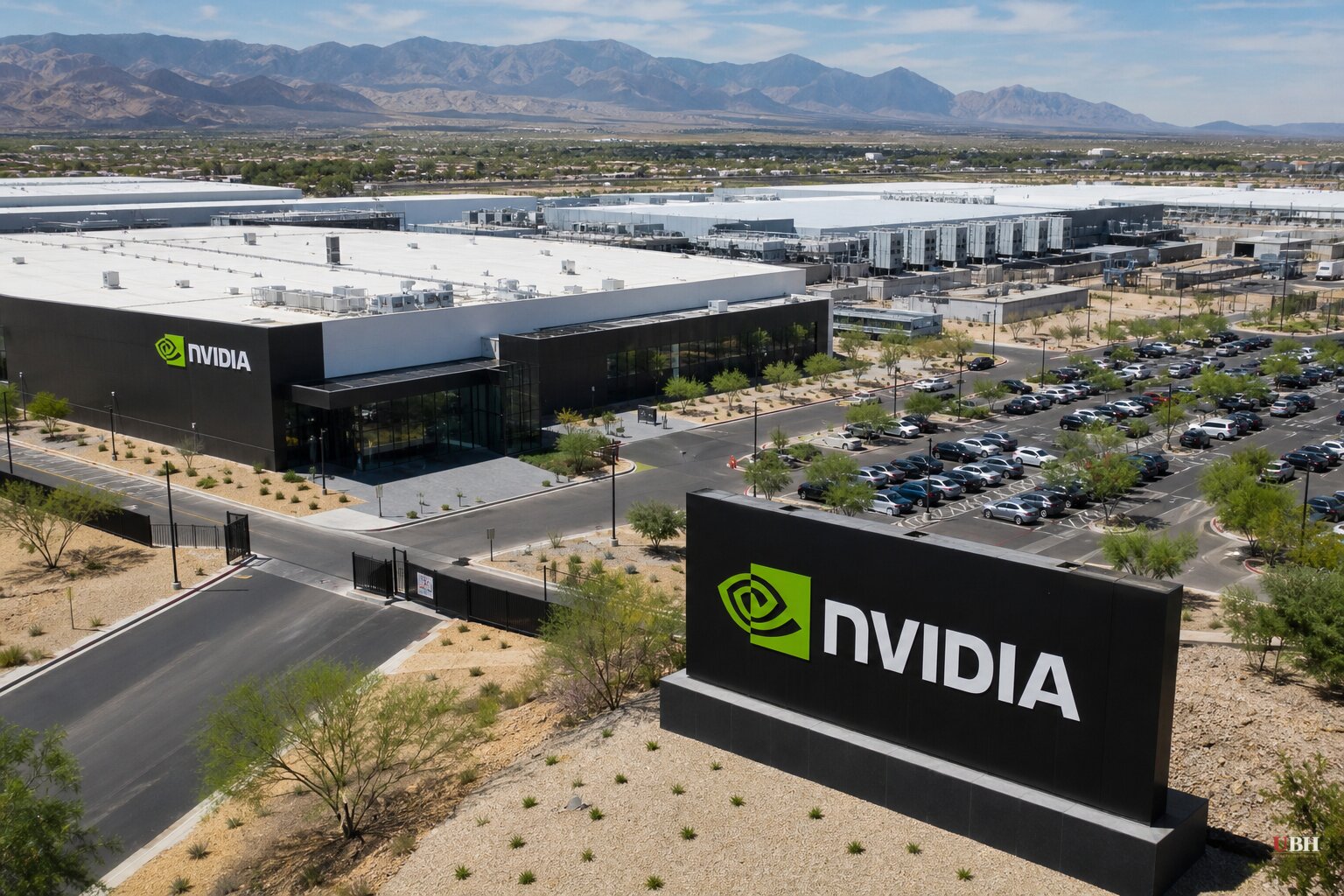
Nvidia turned its biggest acquisition ever into shipping hardware this week. The company said Monday its Groq 3 LPX rack has entered full mass production, according to CNBC. The chips will go live at cloud provider Nebius later this year, running alongside Nvidia's own Vera CPUs and Rubin GPUs.
This is the payoff from a $20 billion deal Nvidia signed in December to buy assets from AI chip startup Groq, its largest purchase on record. Nvidia senior director Dion Harris told reporters the goal is speed. Each rack packs 256 Groq 3 chips and can push out 3,400 tokens per second, citing a benchmark from Artificial Analysis. According to BigGo Finance, that number is a record for the Gemma 4 31B model specifically, achieved with a 100,000-token context window.
The speed metric carries direct commercial weight. Harris told reporters the tech "unlocks the ability to offer premium tiers of service for those users and those customers who actually demand the most latency-sensitive" workloads. Translation: cloud companies can charge more when AI agents and coding assistants respond instantly instead of lagging.
Why this chip exists separately from Nvidia's GPUs
Groq's architecture crams 500 megabytes of high-speed SRAM directly onto the chip, cutting out memory bottlenecks that slow down response times, according to both CNBC and Anadolu Agency. Samsung Electronics manufactures the Groq chips. Taiwan Semiconductor Manufacturing Co. still makes Nvidia's GPUs.
Harris was blunt that this isn't a GPU replacement. "This isn't about replacing GPUs," he said. "It's about using the right price, right processor for the right part of the workload." GPUs still handle training and general-purpose inference. Groq chips are built for one narrow job: the "decode" phase, where a trained model actually generates its response.
Jensen Huang made the split explicit back in March when Groq 3 LPX and Vera Rubin were unveiled. He said he'd hand over a quarter of the data center space earmarked for coding workloads to Groq chips. "The rest of my data center is all 100% Vera Rubin," Huang said at the time, according to CNBC.
The competition isn't waiting around
Nvidia isn't the only one chasing low-latency inference. AMD announced plans earlier this year to pair its rack-scale systems with chips from Cerebras, which has since gone public. OpenAI's newly announced "Ultrafast" mode, powered by Cerebras, currently promises 750 tokens per second, according to CNBC. BigGo Finance noted that head-to-head comparisons between Nvidia and Cerebras have gotten messy because the two setups use different chip counts, making apples-to-apples benchmarking tricky.
Nvidia is also making a broader bet that it needs to control physical infrastructure, not just chips. The Next Web reported Nvidia has taken minority stakes in three land-and-power companies in quick succession this month: SB Energy, Lancium (the power developer behind OpenAI's Stargate site in Abilene, Texas) and Cloverleaf Infrastructure, which secures land and electricity for data centers. Terms weren't disclosed for the Cloverleaf deal, though the Wall Street Journal reported Nvidia was expected to invest several hundred million dollars, per The Next Web's account.
The reasoning is straightforward: Nvidia can only sell as many chips as there are data centers to plug them into. Rubin ships in liquid-cooled form only, and racks are set to jump from roughly 250 kW to 600 kW starting next year, according to The Register's reporting cited by The Next Web. A facility built for air cooling can't just absorb that.
Wall Street's reaction was not a celebration
Despite the Groq milestone, the stock fell roughly 2% Monday after an early 3% pop, according to Cryptopolitan. Pluang reported it marked Nvidia's seventh straight day of declines heading into Wednesday's earnings report.
Pluang cited investor concern over rising AI chip prices, broader semiconductor sector weakness, and scrutiny of Nvidia's expanding financial entanglements. Nvidia has built up $73 billion in equity investments and $27 billion in additional commitments across AI labs and infrastructure players, per Pluang, which flagged that exposure as a source of contingent liability risk. Server prices have also climbed more than 15% on rising memory costs, straining relationships with the same customers Nvidia needs to keep buying.
Rosenblatt Securities isn't spooked. The firm kept its Buy rating and $325 price target, expecting Nvidia's fiscal second-quarter fiscal 2027 report to beat Wall Street's numbers and push shares higher, according to Cryptopolitan. Nvidia was trading around $214.72 Monday. InvestingPro's fair-value estimate sits lower, at $259.96.
Nvidia reports earnings Wednesday, August 26. The market will find out whether Groq's commercialization and the infrastructure land grab are translating into numbers, or whether the seven-day slide reflects something Wall Street thinks the hype hasn't priced in.
Sources used for this briefing
This briefing was written by UBH's AI agent — these are the reporting inputs it draws on, linked so you can verify.


