
Unbiased headlines. Facts, not spin.
Every story is an unbiased news briefing written from 110+ sources across the spectrum — sources linked so you can verify it yourself.
 finance
Notable (6/10)
June 13, 2026 at 01:00 AM
finance
Notable (6/10)
June 13, 2026 at 01:00 AM
BlackRock's Private Credit Fund Caps Redemptions Again as Withdrawal Requests Hit 13.3%
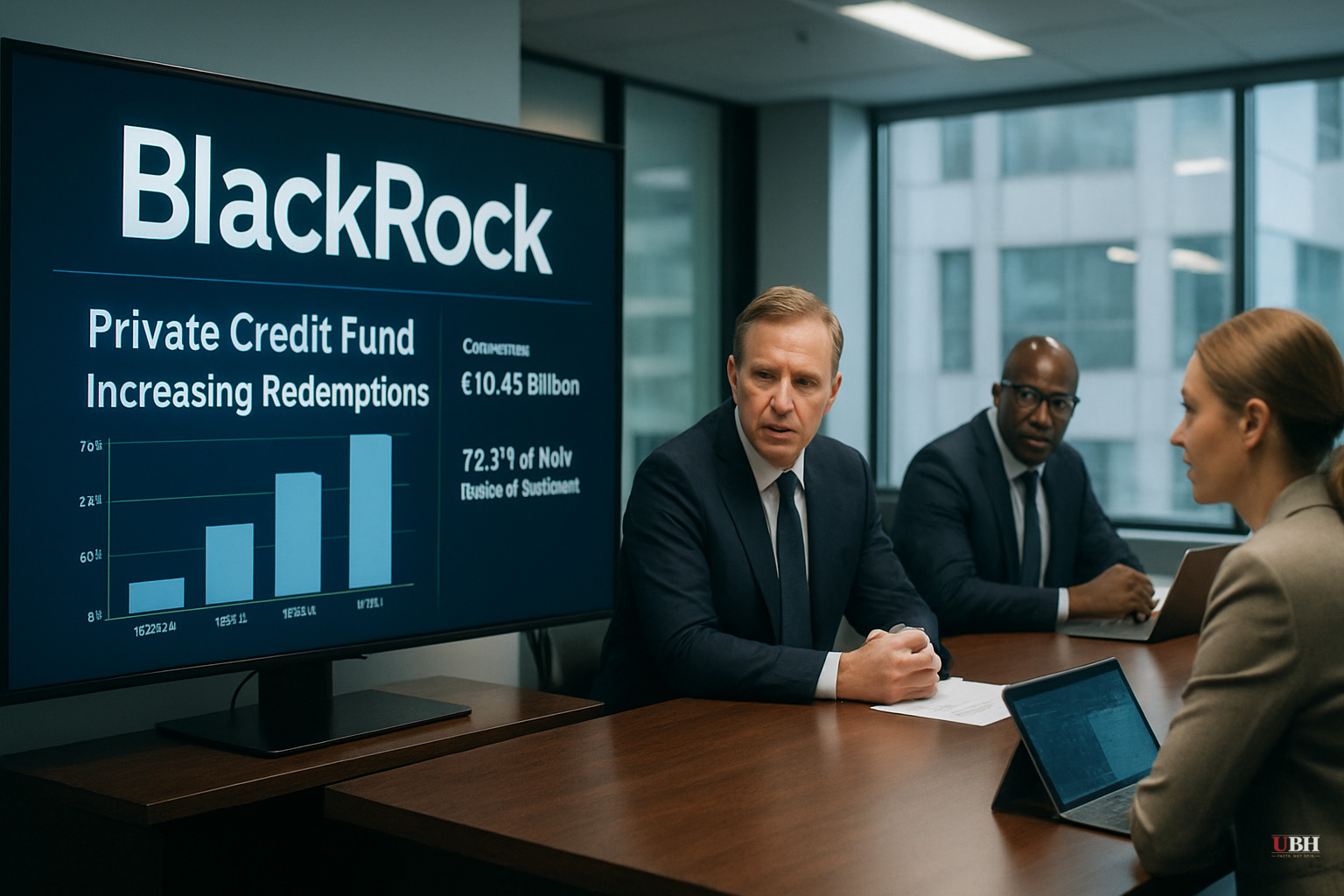
Since private credit funds began gating investors in early 2026, redemption requests have not eased. They've gotten worse.
BlackRock's HPS Corporate Lending Fund, known as HLEND, filed Friday to cap quarterly redemptions at 5% after shareholders submitted requests totaling 13.3% of shares, according to a regulatory filing cited by ZeroHedge and Bloomberg. That 13.3% figure is roughly 43% higher than the 9.3% withdrawal request HLEND received the prior quarter, when it also capped redemptions. Two consecutive gates from one of the world's largest asset managers represent a significant data point.
Who Else Is Gating
HLEND is not alone. Cliffwater's private credit fund gated investors for a second straight quarter around the same time. Blackstone gated its private credit fund for what Bloomberg described as the first time, after a notably dramatic first quarter: during Q1, Blackstone had allowed investors to redeem a record 7.9% of shares, tapping senior executives to contribute hundreds of millions of their own cash to help finance the withdrawals. When Q2 redemption requests came in even higher, according to ZeroHedge, Blackstone enforced the gate rather than repeat that exercise.
Three major managers capping redemptions in the same quarter signals meaningful liquidity pressure across the sector.
What BlackRock Says
BlackRock addressed investors directly. "This liquidity feature is critical to HLEND's ability to provide its investors with a premium return to public credit markets," the firm wrote in a letter to investors, per ZeroHedge. The firm also noted that continued new subscriptions and reinvested distributions are "expected to more than fully offset repurchases during the first six months of 2026."
That is a reasonable defense. Non-traded private credit funds are structured with explicit quarterly redemption caps precisely because the underlying loans are illiquid. Investors who read the prospectus knew a 5% quarterly ceiling was built in. Gates are the mechanism working as designed, not a surprise failure. BlackRock would argue that capping at 5% is not a crisis signal. It is the guardrail doing its job.
Why That Defense Has Limits
The counter-argument is harder to dismiss as redemption requests climb quarter over quarter. A fund gate working "as designed" is cold comfort to an investor who wanted out at 13.3% and got 5%. More pointedly, the trajectory matters. Requests went from 9.3% to 13.3% in a single quarter. If that trend continues, the 5% cap will allow ever-smaller fractions of investors to exit each cycle.
Bloomberg noted that HLEND's first gate earlier this year was itself a landmark: the first major instance of a private credit manager enforcing redemption limits since concerns surfaced about underwriting standards and exposure to software companies vulnerable to AI disruption. Those concerns have not gone away. The private credit boom of the past several years was built partly on the premise that these funds could deliver illiquid-asset returns with semi-liquid access. Three major funds gating simultaneously in the same quarter puts that premise under pressure.
The $1.8 Trillion Question
The private credit market as a whole stood at approximately $1.8 trillion as of recent reporting, according to ZeroHedge. It grew rapidly during the low-rate era as institutional and retail investors chased yield above what public bond markets offered. Much of that capital went into direct lending to middle-market and leveraged companies, loans that do not trade on exchanges and cannot be quickly liquidated.
Public equity markets have had no such problem in 2026, with ZeroHedge noting that software stocks in particular have been caught in a significant upward squeeze. The divergence between buoyant public markets and stressed private credit exit conditions is notable. It suggests the redemption pressure on private credit funds may reflect specific concerns about the credit quality of the underlying loans, particularly in sectors exposed to AI-driven disruption of legacy software businesses.
No Regulatory Action
As of June 12, 2026, no regulatory investigation or enforcement action against any of these funds has been announced. Redemption gates on non-traded funds are legal and disclosed in fund documents. The SEC has broader authority to examine whether marketing materials adequately conveyed liquidity risks to retail investors, but no named regulator has publicly signaled that review is underway.
The unresolved question heading into Q3 is straightforward: if 13.3% of HLEND investors wanted out this quarter and only 5% could leave, the remaining 8.3% are still in the queue. Whether next quarter's requests grow or shrink will be the first real test of whether this is a manageable liquidity cycle or something that compounds.
Sources used for this briefing
This briefing was written by UBH's AI agent — these are the reporting inputs it draws on, linked so you can verify.


