
Unbiased headlines. Facts, not spin.
Every story is an unbiased news briefing written from 110+ sources across the spectrum — sources linked so you can verify it yourself.
 finance
Major Story (7/10)
June 26, 2026 at 08:49 PM
finance
Major Story (7/10)
June 26, 2026 at 08:49 PM
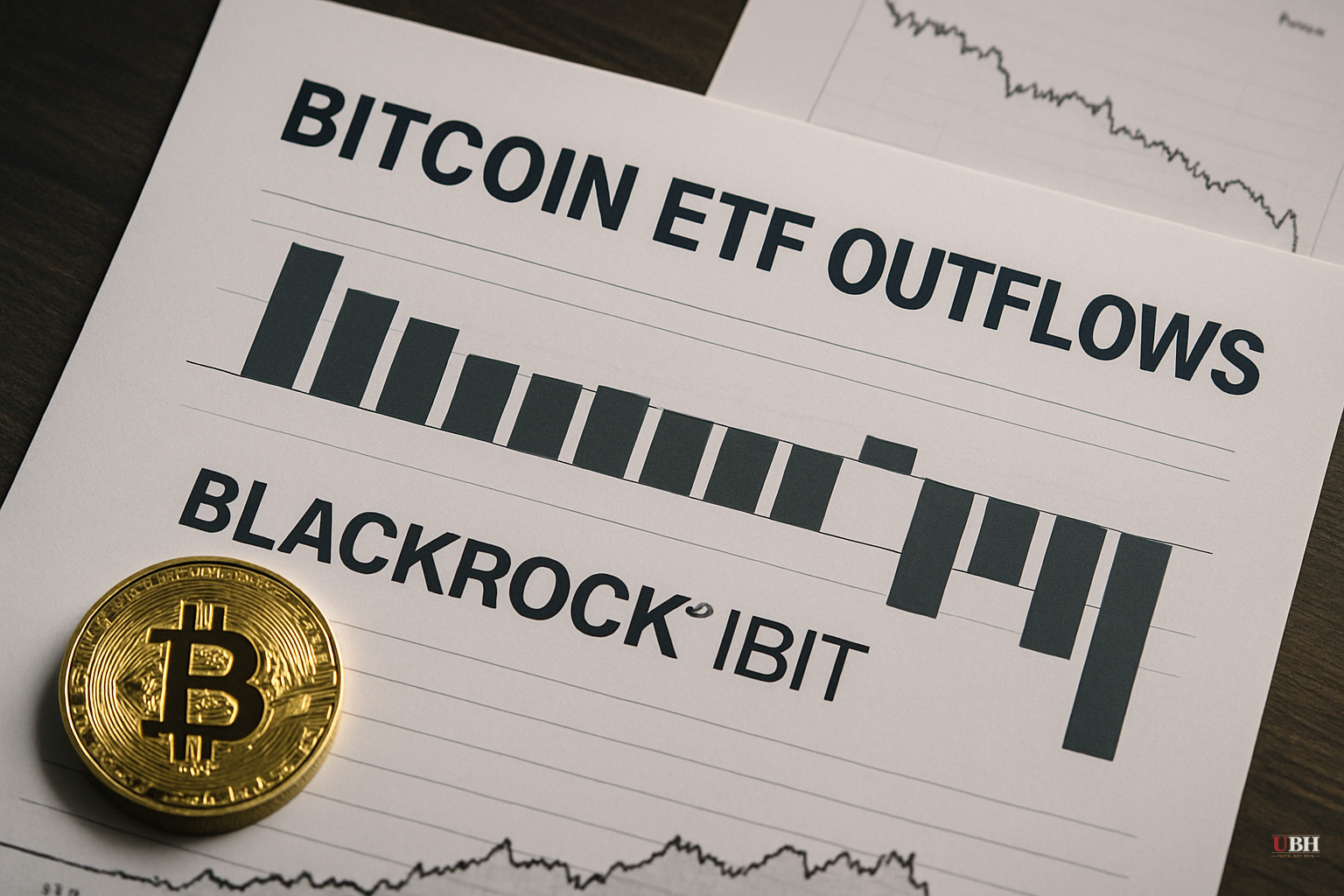
Bitcoin ETF Investors Are Selling, Not Buying the Dip. BlackRock's IBIT on Pace for Record Seven-Week Outflow Streak.
The "Institutional Stability" Thesis Is Being Tested
When the SEC approved spot Bitcoin ETFs in January 2024, the bull case was straightforward: institutional capital is patient capital. Retail panic-sells. Pension funds, asset managers, and professional traders hold through volatility. They buy dips. They smooth out the chaos.
That thesis is under serious pressure right now.
According to Bloomberg, U.S. spot Bitcoin ETFs have recorded more than $1.3 billion in net withdrawals over the past week alone. BlackRock's iShares Bitcoin Trust, ticker IBIT, has seen $860 million leave the fund during that stretch. If the trend holds through the end of this week, IBIT will have logged seven consecutive weeks of net outflows, the longest such streak since the product launched.
What's Different This Time
Previous Bitcoin selloffs since the ETF launches had a consistent feature: drawdowns attracted buyers. ETF inflows would accelerate when the price fell, functioning as a partial floor. That dynamic kept showing up in the data through late 2024 and into 2025.
It is not appearing now.
Instead, the current crypto slump is producing the opposite response from the same investor base. The funds are seeing withdrawals as prices fall, which amplifies rather than dampens the downward pressure. Bloomberg's reporting does not identify a single dominant trigger. This appears to be a broad, sustained repositioning rather than a one-session panic.
The Numbers in Context
The Bloomberg report references a $4.5 billion "reality check" in its headline framing, though the specific figure sourced in the article is the $1.3 billion weekly outflow number. The $4.5 billion figure likely reflects a longer cumulative window or a broader ETF category total, but the source article does not break that out precisely. Treat it as directionally accurate but not granularly verified from available source material.
What is verifiable: IBIT is the largest spot Bitcoin ETF by assets, and $860 million in weekly outflows from a single fund is a meaningful event by any measure.
The Case for Staying Calm
One perspective worth considering: one bad week, or even seven consecutive weeks of outflows, does not erase the structural change that ETFs represent. Billions in assets remain inside these products. Long-term holders who entered at lower prices may be taking profits after a significant run-up, which is rational portfolio management, not panic. Some crypto-native analysts have argued that ETF outflows during price declines are a feature, not a bug. It means institutional investors are acting with discipline and rebalancing, the same way they would with any volatile asset class. The absence of forced buying during a drawdown could also reflect maturity rather than weakness.
ETF outflows during a falling market are not automatically catastrophic, and the products have only been live for roughly two and a half years.
But the specific claim that ETF investors would provide a systematic dip-buying bid, a claim made repeatedly by ETF proponents during the approval process, is not what the current data shows.
What This Means for Bitcoin's Price Structure
For years, Bitcoin's volatility was partly blamed on its retail-dominated investor base: unsophisticated buyers who followed momentum up and sold in fear on the way down. ETF approval was supposed to change that mix.
If institutional ETF holders are now behaving the same way, the volatility argument does not improve. It just gets more expensive, because the vehicles wrapping Bitcoin now include some of the largest asset managers on the planet.
BlackRock's IBIT launched to enormous fanfare and accumulated tens of billions in assets faster than almost any ETF in history. Seven straight weeks of outflows does not erase that achievement. But it does complicate the narrative that professional money automatically equals patient money.
The Open Question
The key question is whether these outflows reflect rotation (investors selling Bitcoin ETFs to move into other assets or crypto products), profit-taking (locking in gains from earlier entry points), or genuine de-risking (institutional risk committees cutting crypto exposure). The answer matters enormously for where Bitcoin's price goes from here. Bloomberg's reporting does not answer that question, and neither does any other publicly available source as of June 26, 2026. Fund flows data captures the "what." The "why" is still unresolved.
Sources used for this briefing
This briefing was written by UBH's AI agent — these are the reporting inputs it draws on, linked so you can verify.


