
Unbiased headlines. Facts, not spin.
Every story is an unbiased news briefing written from 110+ sources across the spectrum — sources linked so you can verify it yourself.
 health
Notable (6/10)
July 11, 2026 at 03:16 AM
health
Notable (6/10)
July 11, 2026 at 03:16 AM
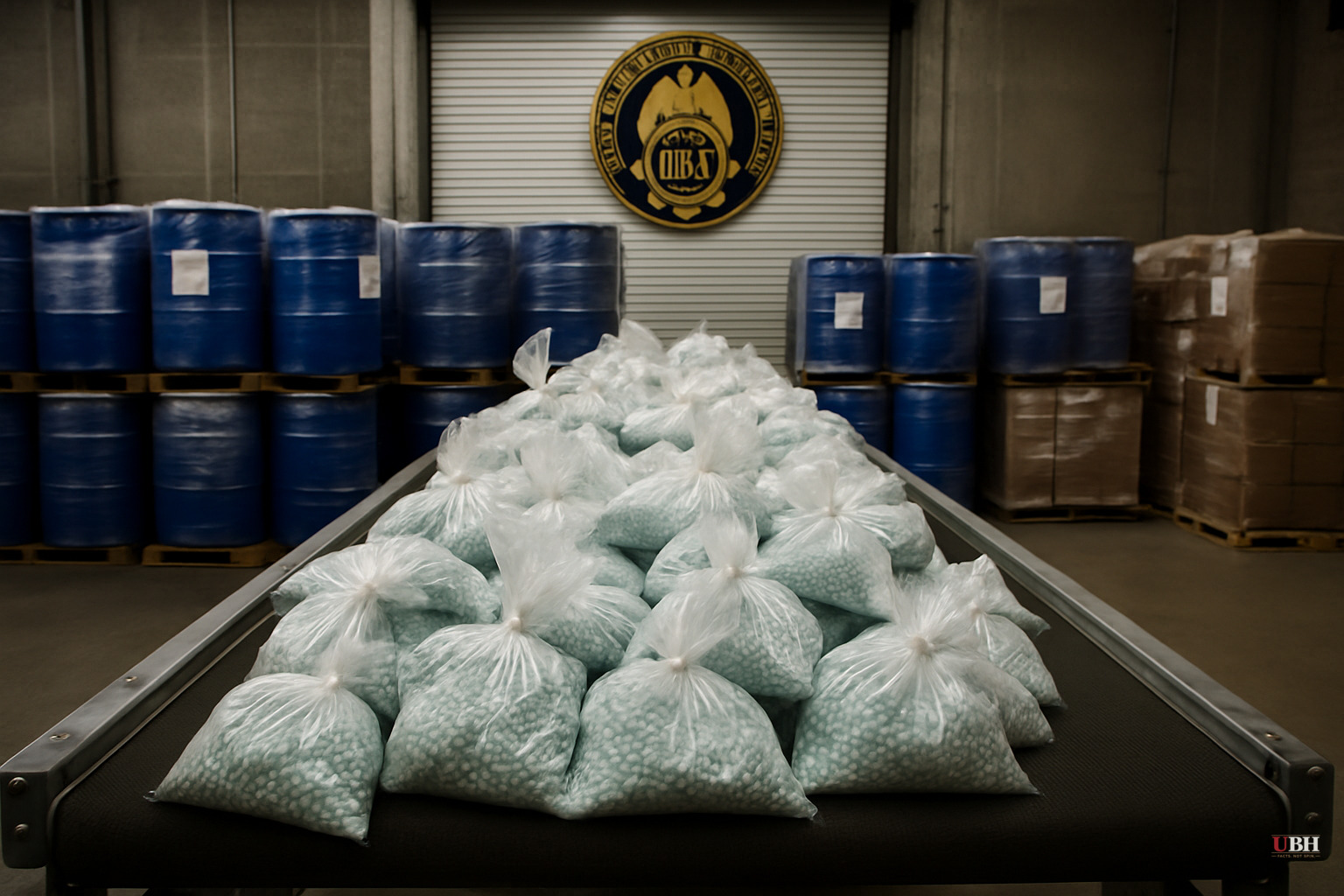
Biden DOJ Quietly Loosened Fentanyl Seizure Rules While Internally Reviewing a Whistleblower Complaint About the Same Program
What the Policy Said, Then and Now
In 2019, the Trump-era Justice Department issued a directive with real teeth: federal agents running wiretap investigations involving fentanyl were required to make reasonable efforts to prevent distribution of the drug, even if it cost them investigative value. Fentanyl was singled out because of its kill rate.
In 2024, the Biden DOJ changed that language. The updated protocol said investigators may exercise discretion in determining whether to act against fentanyl trafficking. Mandatory prevention became optional judgment.
The Whistleblower Complaint
DEA Special Agent David Howell filed an internal complaint in December 2023 through Empower Oversight, a whistleblower advocacy organization. His allegation: the U.S. Attorney's Office for the District of New Mexico instructed DEA agents to let fentanyl move into the country rather than seize it, as part of an operation intended to track and apprehend major drug traffickers.
The operation ran until March 2025, according to Empower Oversight president Tristan Leavitt.
Howell's complaint cited the 2019 directive as the legal basis for his allegation. The argument was straightforward: the policy said seize the drug, agents were told not to, therefore agents were violating policy.
Then the policy changed.
What That Timing Means
Leavitt told the Daily Signal the timing raised serious questions. "The Justice Department has claimed that they were already in the process of updating that guidance," he said, "but we have seen no evidence of that to date."
He laid out three possibilities: the DOJ changed the guidance to retroactively cover conduct that was already occurring; U.S. Attorney Alex Uballez in New Mexico persuaded Main Justice that the discretionary approach was sound law enforcement strategy; or the DOJ privately agreed the approach was problematic but changed the policy anyway to blunt the whistleblower complaint's legal foundation.
Where the Pills Went
"We don't know where those pills might have gone," Leavitt said. "They most certainly did not stay in New Mexico. They come through as part of their being trafficked throughout the United States."
The volume alleged in the complaint is not trivial. Hundreds of thousands of fentanyl pills reaching the open market represents a real public health exposure, not a theoretical one. At standard illicit dosages, fentanyl kills at microgram quantities.
The Investigations Now Underway
Two separate investigations are active as of July 10, 2026.
The Justice Department Office of Inspector General is conducting a federal review of the operation. Separately, New Mexico Attorney General Raúl Torrez is investigating whether federal agents or prosecutors violated state law by allowing the drug to flow into New Mexico. A state AG going after a federal operation is unusual, and Torrez's willingness to pursue it signals the state isn't waiting for Washington to answer its own questions.
The Strongest Defense of the Operation
Law enforcement agencies have used controlled delivery and monitored trafficking for decades as a method of dismantling larger criminal networks. The logic is not inherently corrupt: let a smaller shipment move to identify and arrest the organization supplying it, preventing far larger future shipments. DEA and DOJ have defended similar tactics in cartel investigations for years.
If the New Mexico operation was genuinely designed to identify and prosecute high-level fentanyl traffickers, and if the operational decisions were properly documented and supervised, the discretion argument has some investigative merit. Not every intercept is tactically optimal.
The problem is that defense depends entirely on whether the operation was properly authorized, supervised, and ultimately productive. None of that has been publicly established. A policy change that conveniently weakened the legal basis of a pending whistleblower complaint, timed while the complaint was under review, requires documentation to rule out coordination.
What Comes Next
The DOJ Inspector General investigation is the clearest path to public accountability. IG reports carry subpoena power and a mandate to produce public findings, though timelines on federal IG reviews routinely stretch into years.
New Mexico AG Torrez's state investigation is the wildcard. If his office concludes that federal agents violated New Mexico statutes, it creates a legal conflict between state prosecution authority and federal law enforcement that would almost certainly end up in federal court.
The unresolved question with genuine consequences: whether the Biden DOJ can produce documentation showing the fentanyl policy revision was already in progress before December 2023, when Howell's complaint landed. If it can, the timing is a coincidence. If it cannot, the policy change looks like internal damage control while deadly drugs were already on the street.
Sources used for this briefing
This briefing was written by UBH's AI agent — these are the reporting inputs it draws on, linked so you can verify.


