
Unbiased headlines. Facts, not spin.
Every story is an unbiased news briefing written from 110+ sources across the spectrum — sources linked so you can verify it yourself.
 tech
Notable (6/10)
July 10, 2026 at 05:19 PM
tech
Notable (6/10)
July 10, 2026 at 05:19 PM
Beta Technologies Completes First Flights in Federal eVTOL Pilot Program, Carrying Organs Between Maryland and Virginia Airports
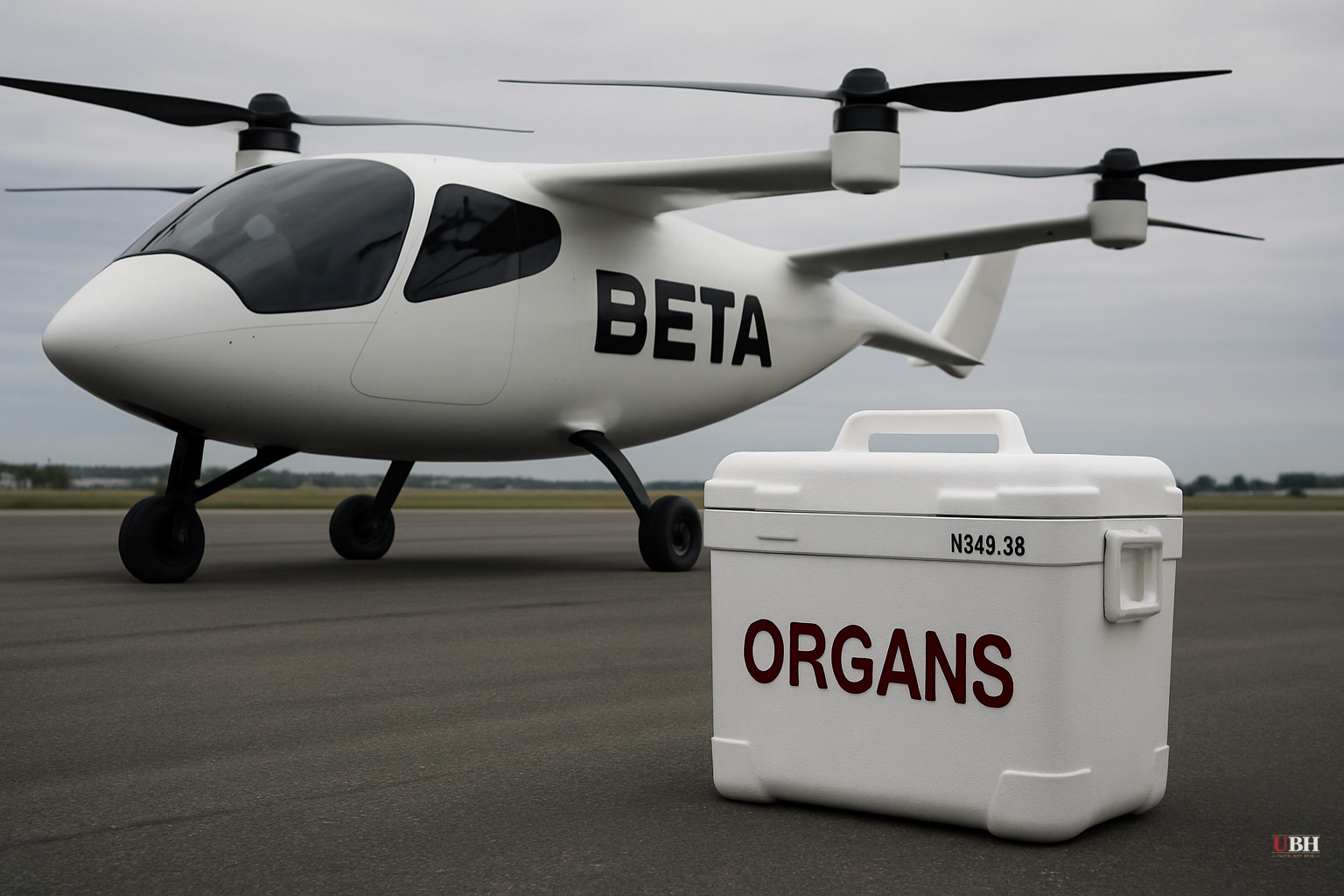
Beta Technologies announced this week that it completed the first test flights under the federal eVTOL pilot program, transporting manufactured organs from United Therapeutics between airports in Maryland and Virginia. Total distance: about 275 nautical miles, according to CNBC.
The flights were part of a program spearheaded by the Department of Transportation and the FAA, launched through a Trump executive order. The program spans eight projects across 26 states. Beta is the most active participant, involved in seven of them.
"Today's successful missions set the stage for routine medical applications through electric flight at a much lower cost nationwide," Beta CEO Kyle Clark said in a company release.
These were test flights, not commercial operations. Beta's eVTOL aircraft is not yet FAA-certified. The company's certification target is 2028. A separate conventional-takeoff-and-landing aircraft it makes is on track for certification in 2027.
The organ transport application is a real use case, not a vanity demo. Moving time-sensitive medical cargo between airports, where weight and speed matter more than cost and regulatory hurdles are lower than for passenger service, is a logical starting point for any new aviation technology.
Beta is backed by Amazon, which has its own freight and logistics interests that make eVTOL cargo capabilities commercially relevant, not just a science project.
The milestone lands against a backdrop of sustained investor skepticism. According to CNBC, Beta's shares have lost roughly half their value since the company's IPO in November. The slide isn't unique to Beta.
Joby Aviation and Archer Aviation shares are each down more than a third in 2026. The U.K.'s Vertical Aerospace has lost 68% of its value. Some eVTOL companies are also currently fighting each other in court.
The FAA certification process has repeatedly pushed back projected launch timelines across the industry. What was being marketed to investors several years ago as imminent commercial service has proven far harder to achieve than the pitch decks suggested.
Novel aviation categories have always taken longer to certify than optimists projected. The FAA's job is safety, not speed, and the agency certifying a new class of aircraft carefully is not regulatory failure. The medical and cargo use cases, which don't require carrying passengers and face a different regulatory ceiling, give companies like Beta a revenue-generating path that doesn't depend on full passenger-service certification.
The Trump executive order accelerating eVTOL development was a reasonable policy move. Getting the federal government to create a structured testing framework, rather than leaving companies to navigate a fragmented process, addresses a real bottleneck. If Beta can demonstrate reliable cargo operations before 2028, that builds the operational safety record the FAA needs to move on full certification.
The harder issue is whether the companies currently in this race will have the cash to survive until certification arrives. Half your IPO value gone in roughly eight months is a serious burn-rate problem, not just a paper loss for institutional investors. Beta is Amazon-backed, which provides a floor most of its competitors don't have.
For the companies without that backstop, the gap between completed test flights and a certified aircraft generating revenue is where companies go to die.
Beta's eVTOL certification target of 2028 is now the concrete date to watch. Whether the company's stock and balance sheet hold together long enough to reach it is the question no press release answers.
Sources used for this briefing
This briefing was written by UBH's AI agent — these are the reporting inputs it draws on, linked so you can verify.


