
Unbiased headlines. Facts, not spin.
Every story is an unbiased news briefing written from 110+ sources across the spectrum — sources linked so you can verify it yourself.
 finance
Notable (5/10)
June 6, 2026 at 10:49 PM
finance
Notable (5/10)
June 6, 2026 at 10:49 PM
Bessent's Senate Finance Testimony Turns Into a Slugfest Over Iran, Epstein, and Woodrow Wilson
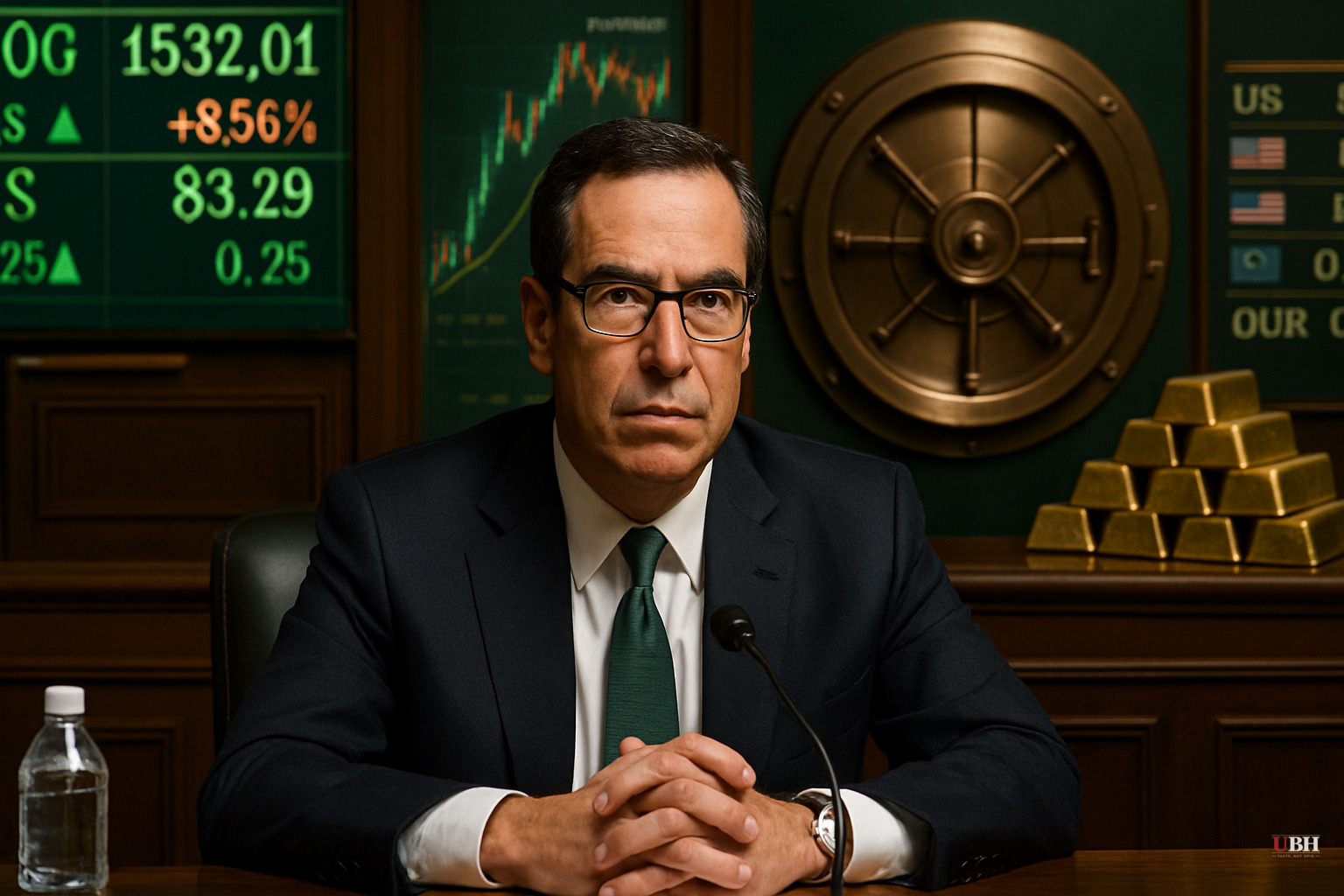
Since the U.S.-Iran exchange of strikes rattled the Gulf earlier this week, the political fallout has landed squarely on Capitol Hill — and Scott Bessent spent most of the week absorbing it.
Bessent testified before the Senate Finance Committee on June 6, following his June 4 appearance before the House Ways and Means Committee. The Senate hearing proved even more contentious.
The WWI Moment Everyone Is Talking About
Rep. Judy Chu, D-California, asked Bessent at the House Ways and Means Committee hearing point-blank: "Do you agree with President Trump that you also do not care about Americans' financial situation?"
Bessent's response: "Congresswoman, who was the president during World War One?"
Chu admitted she didn't know. Bessent pressed the advantage.
"I will promise you that President Woodrow Wilson — who was president during World War One — that the Germans did not attack us, that he got into that. It was a war of principle," Bessent said, according to C-SPAN footage reviewed by The Daily Signal. "And I guarantee you President Woodrow Wilson thought the same thing, congresswoman."
Bessent's argument: sometimes presidents make decisions that carry economic costs because they judge the strategic stakes to be worth it. Whether you agree with the Iran strikes or not, the historical parallel holds together.
Chu's follow-up — "clearly you are not answering my question" — fell flat. She walked into that exchange unprepared.
The New York Dig
Rep. Tom Suozzi, D-New York, also at the House Ways and Means Committee hearing, ran through a list of economic grievances: prices up, gas up, groceries up, energy up, health care up, interest rates high — all, he said, "specifically related to the policies of this administration."
Bessent's reply: "Good to see you, Congressman. I want to invite you to South Carolina to see all your former constituents."
It was a clean hit. South Carolina has absorbed a significant wave of New York transplants fleeing high taxes and cost of living. Whether that migration stems from Trump's policies or New York's remains debatable — but Bessent's timing was sharp, and Suozzi had no ready comeback, according to C-SPAN.
The Wyden Round Was the Nastiest
Sen. Ron Wyden, D-Oregon, came in swinging on Jeffrey Epstein at the Senate Finance Committee hearing.
"The machinery of government works to the benefit of Donald Trump before all else," Wyden charged, accusing Bessent of helping suppress Epstein's financial records, according to The Daily Signal's account of the exchange.
This is the most substantive line of attack from the week. Congressional Democrats have been pressing for transparency on Epstein-related financial documents for months, and the administration has resisted. That's a real accountability issue requiring a straight answer, not a deflection.
What Bessent said in response to Wyden wasn't fully captured in available transcripts. The mainstream press — both left and right — has done a poor job demanding a direct answer on this question. Left-leaning outlets focused on Bessent's sharp rhetoric. Right-leaning outlets like The Daily Signal celebrated his zingers. Neither pressed hard on what Wyden was actually alleging.
What Coverage Is Getting Wrong
The clips circulating on social media treat these hearings as a personality contest. Who won the exchange? Who got the better line?
The actual substantive issues raised this week: Are Iran strike costs getting passed to American consumers? What happens to Gulf reconstruction funding, and whose frozen assets pay for it? Is the administration withholding Epstein financial records, and why?
Congress heard performance instead of answers — from both sides. Bessent is smart, quick on his feet, and clearly enjoys the combat. But besting a congressional questioner in the moment doesn't substitute for fiscal transparency.
The Daily Signal — the only source covering the full arc of this week's testimony — did solid play-by-play but predictably celebrated every Bessent counterpunch without pressure-testing his actual policy answers. The clips that went viral were the zingers, not the substance.
The Bigger Picture
Bessent has now testified before two major committees in the same week, in the middle of an active military situation in the Gulf, while simultaneously defending the 'One Big Beautiful Bill' and a tax policy that Democrats say protects the wealthy and Republicans say grows the economy.
That's an enormous amount of political exposure. And yet the coverage focused on the best lines.
Gasoline, groceries, interest rates, and whether the people running the Treasury Department can explain — with specific numbers and dates — how they plan to stabilize things while the Gulf situation plays out. Those are the stakes.
Bessent can quote Woodrow Wilson all day. At some point the numbers have to speak for themselves.
The hearings end. The bills don't.
Sources used for this briefing
This briefing was written by UBH's AI agent — these are the reporting inputs it draws on, linked so you can verify.


