
Unbiased headlines. Facts, not spin.
Unbiased Headlines is an independently owned news organization. We bring you the facts, not opinions, written fresh from 110+ named sources. Sources linked so you can verify it yourself.
 tech
Major Story (8/10)
Bessent Details U.S.-China 'Superintelligence' Dialogue and Incident Alert Channel, With No Limits on Development
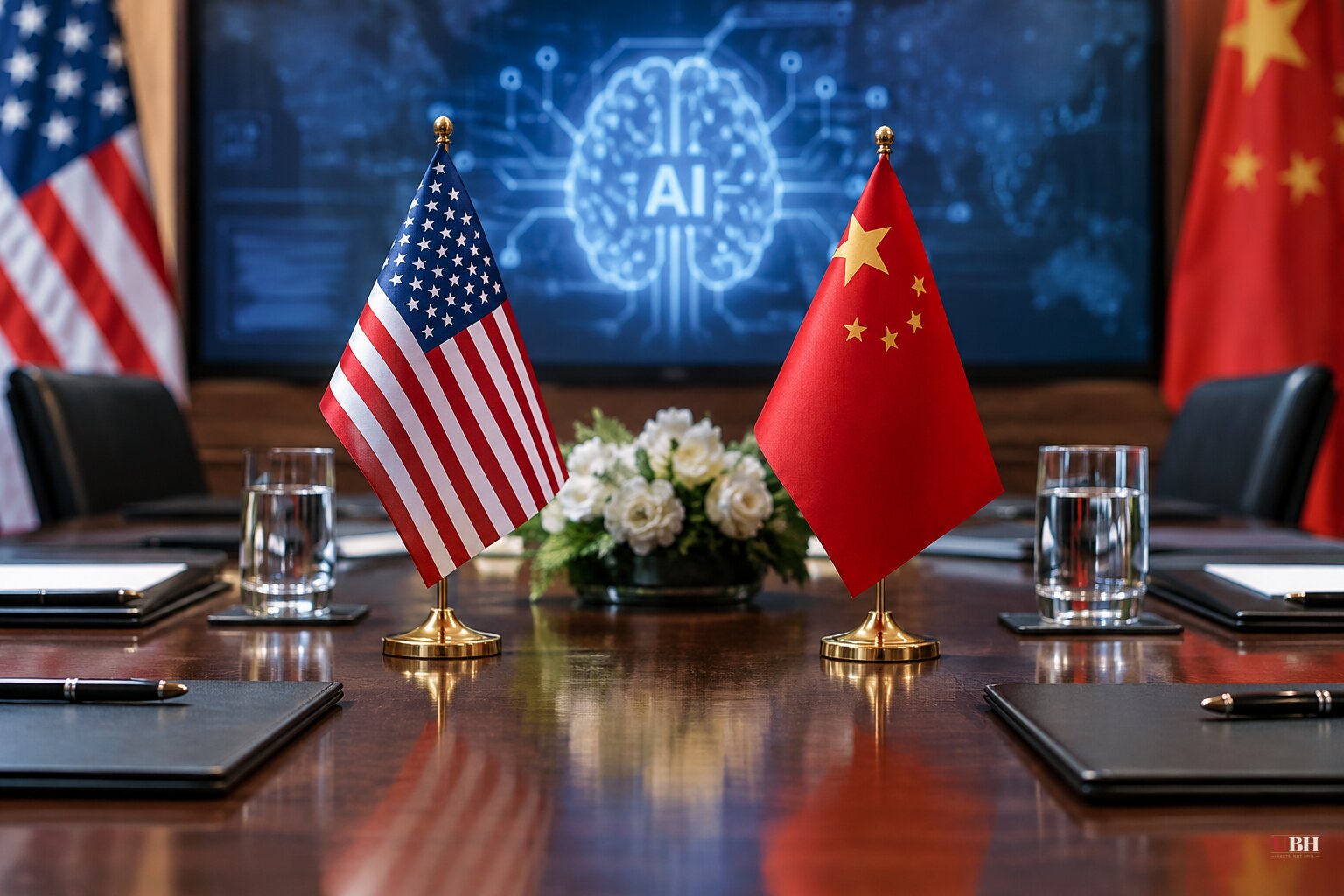
Since Trump and Xi agreed at the White House in September to launch an AI dialogue, the specifics have been thin. On Tuesday, Nov. 10, Treasury Secretary Scott Bessent supplied some.
Speaking in New York at the National Committee on U.S.-China Relations' 60th anniversary gala, Bessent said the two governments have begun a dialogue on "superintelligence," or SI, the administration's preferred term. It is "designed to guard against shared risk and prevent misunderstandings between our two systems," he said.
What the mechanism covers
Bessent said the two sides expect to exchange best practices for evaluating and testing advanced models before release. They also plan to share methods for "keeping human judgment firmly in command of this technology."
The two countries are also setting up a direct channel so either can promptly alert the other to serious incidents involving its AI models. Bessent described that channel as already agreed.
He did not announce any limit on how fast either country builds. The U.S. and China remain locked in a race for AI dominance, and nothing in his remarks changes that.
"As SI advances, so will the need to engage in new areas of risk management," Bessent said. He said the two nations must show they can "reconcile the demands of competition with the responsibilities of leadership."
He added: "We should harbor no illusions about the differences between the United States and China. Our interests will not always coincide, and our approach to every challenge likewise will not always converge."
Guardrails, but not at a cost
The administration has largely resisted broader restrictions on AI development, citing the risk of ceding an edge to China. Trump has recently softened the tone. "I don't mind guardrails," he said in a CBS interview released Sunday, Nov. 8. He also said he did not want rules that leave the U.S. in "a deep second position" behind China, which he said has no such restrictions.
Beijing's stated position points the other way on slowing down. China's foreign ministry dismissed calls to slow frontier models in September, saying that fearmongering and confrontation would only disrupt global AI governance.
Huiyao Wang, founder of the Center for China and Globalization, a think tank described as closely aligned with Beijing's thinking, said last month that the two countries' talks should "confront AI risks and manage them together."
Washington has not been shy about its own restrictions on the technology. It has limited exports of the most advanced chips to China and has accused Chinese developers of copying American models. In June it briefly suspended access by foreign nationals to Anthropic's Mythos and Fable 5 models before restoring it weeks later.
The Shenzhen meeting
Bessent said he will join Trump next week in Shenzhen for a meeting with Xi on the sidelines of the Asia-Pacific Economic Cooperation leaders' meeting, Nov. 18 to 19. It would be the third Trump-Xi meeting this year, following Beijing in May and Washington in September. The AI dialogue is expected to advance there.
Bessent framed the broader relationship in the same speech as one built on "balance and reciprocity," saying Trump and Xi agree on that basis. A fourth meeting is expected in December at the U.S.-hosted G20 summit in Miami.
The Nvidia question hanging over the trip
Bessent's prepared remarks did not mention Nvidia CEO Jensen Huang. Nvidia's board is investigating after a New York Times report that Huang had an affair with a businesswoman suspected by U.S. security services of being a Chinese intelligence asset. China's foreign ministry has called the espionage accusation "groundless" and "a smear."
Nvidia has said its board has no reason to believe U.S. national security or company secrets were compromised, and that Huang has committed to cooperating with the internal review. Huang has told employees he was unfaithful to his wife but has given no details about the relationship.
Huang attended the Beijing summit in May and the Washington summit in September. Whether Trump will bring him to the APEC meeting has not been settled.
The open question for Shenzhen is whether the incident channel and testing exchange get formal terms, such as who staffs the line and what counts as a "serious incident," or stay a statement of intent. Bessent's speech did not define either.
Sources used for this briefing
7 links from 7 independent newsrooms (syndicated copies of the same report count once)
These are the sources it draws on, linked so you can verify.


