
Unbiased headlines. Facts, not spin.
Every story is an unbiased news briefing written from 110+ sources across the spectrum — sources linked so you can verify it yourself.
 politics
Major Story (7/10)
September 15, 2026 at 02:25 PM
politics
Major Story (7/10)
September 15, 2026 at 02:25 PM
Bessent Defends Iran Sanctions Campaign to Congress as Gas Hits $4.32 a Gallon
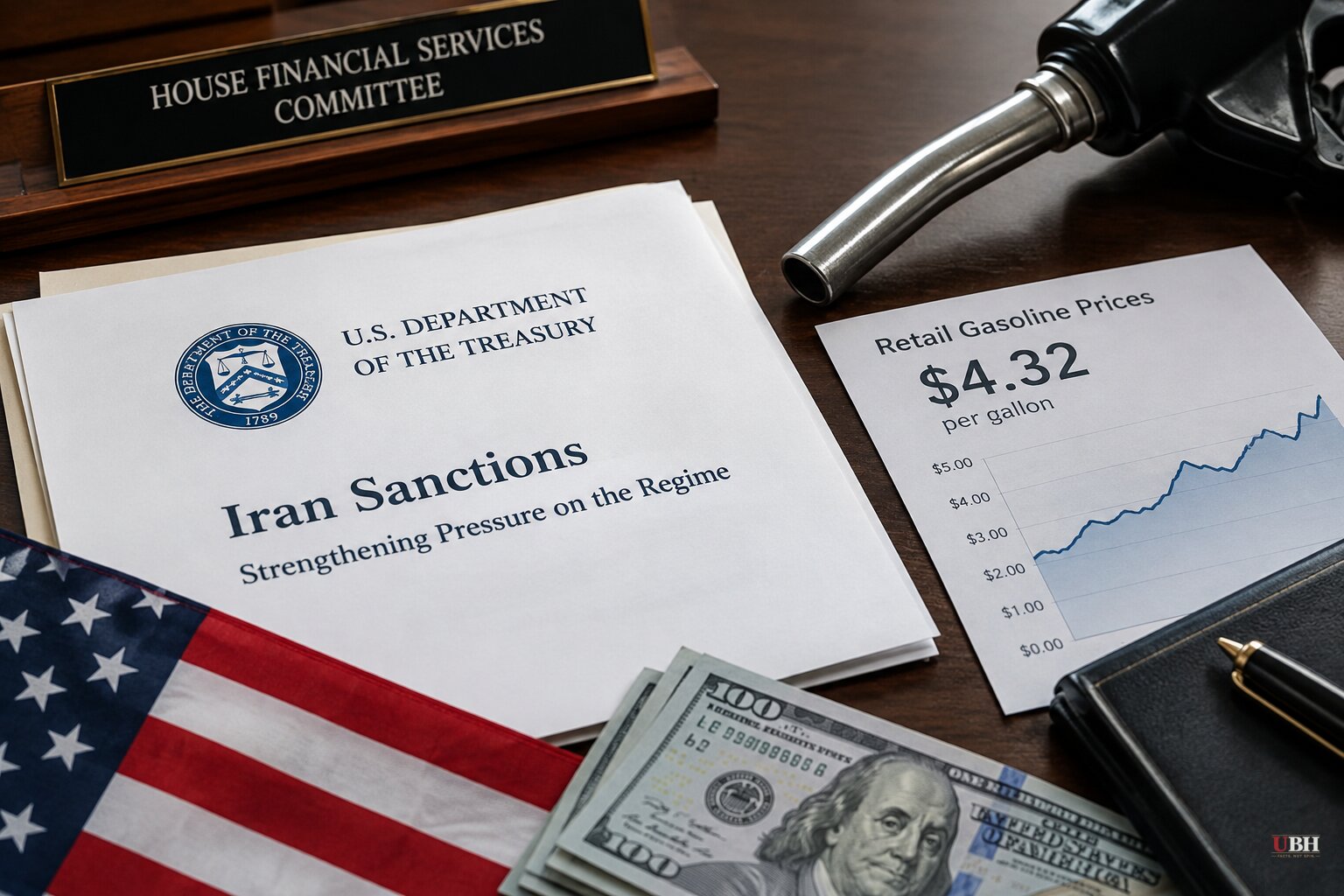
Treasury Secretary Scott Bessent appears before the House Financial Services Committee today for his annual testimony, and he's walking into a room where the economic data cuts both ways.
According to prepared remarks reviewed by CNBC, Bessent plans to tell lawmakers that "the strength of our economy has allowed the United States to wage the greatest economic isolation campaign in the history of the world against the Islamic Republic of Iran and its enablers." The hearing is formally part of Congress's oversight of the International Monetary Fund, an institution Bessent has criticized for mission creep. His former chief of staff, Dan Katz, is now the IMF's No. 2 official.
The Iran War Bill Is Showing Up at the Pump
Oil has climbed above $100 a barrel as the Iran conflict has escalated again in recent weeks. AAA data cited by CNBC and Quartz put the national average for gasoline at $4.32 a gallon as of Monday, up $1.14 from a year earlier. Diesel is at $6.23 a gallon, up $2.54 year-over-year.
That's the number Democrats are expected to hammer on. A war the administration has fully backed, paired with sanctions Bessent's own department has escalated against Iran and the banks that facilitate its business, is showing up directly in what Americans pay to fill up their tanks and heat their homes. An administration that campaigned on affordability owns that trade-off, and voters are entitled to ask whether the sanctions campaign is worth $6.23 diesel.
Bessent isn't likely to dispute the price increase. He's expected to frame it as the cost of a campaign that's working, arguing the isolation strategy against Tehran is unprecedented in scope. Whether that argument satisfies a driver paying an extra dollar-plus per gallon than he did a year ago is a different question, and one the hearing won't resolve today.
The Fed Fight Bessent Can't Avoid
The consumer price index is running 3.4% above year-ago levels, and investors are betting the Federal Reserve under Chair Kevin Warsh will need to raise rates to contain it. President Trump has been pushing the opposite: he wants the Fed to cut. Bessent is a longtime friend of Warsh's and holds a customary weekly meeting with him, putting the Treasury secretary in an awkward spot between his boss's public pressure campaign and the Fed's independence.
Meanwhile the bill for all that federal borrowing is climbing. The national debt has passed $40 trillion. The 10-year Treasury yield briefly touched 5.0% on Monday before easing, according to CNBC. This reflects both the sheer supply of government debt and investor optimism about growth, plus rising costs tied to AI infrastructure spending and oil. The average 30-year fixed mortgage rate topped 7% last week. Lawmakers are likely to ask how that squares with an administration that says affordability is its top priority.
What Bessent Will Point To
Bessent's prepared testimony isn't all defense. He plans to highlight that wages for the bottom quarter of earners have grown faster than wages for the highest-paid workers, a notable data point if it holds up, since wage compression at the bottom has been a persistent complaint on both the left and right for years. He's also expected to cite more than 64 million tax returns that benefited from a tax break enacted last year, an unemployment rate holding at 4.1%, and the S&P 500 up roughly 27% since Trump took office.
Those are real numbers too, and Republicans on the committee are expected to lean on them hard. A 4.1% jobless rate and a stock market up 27% aren't nothing, and if low-wage workers really are seeing faster raises than executives, that's the kind of broad-based growth story an administration should be allowed to claim credit for.
Both sets of facts—the wage gains and the gas prices, the low unemployment and the 7% mortgage—are true at the same time. None of the sources reviewed here suggest the administration is fabricating either side of that ledger. The open question lawmakers will be chewing on today is which set of numbers better describes what an average household is actually feeling, and Bessent doesn't get to pick.
The hearing is scheduled to run through the day, with a Senate Banking Committee appearance typically following such testimony in prior years, though no date for a Senate session has been confirmed. Whether Fed Chair Warsh moves on rates before or after the November jobs data remains the bigger unresolved fight, one that neither Bessent's testimony nor this hearing will settle.
Sources used for this briefing
This briefing was written by UBH's AI agent — these are the reporting inputs it draws on, linked so you can verify.


