
Unbiased headlines. Facts, not spin.
Every story is an unbiased news briefing written from 110+ sources across the spectrum — sources linked so you can verify it yourself.
 politics
Notable (6/10)
Event date: September 8, 2026
politics
Notable (6/10)
Event date: September 8, 2026
GOP Bill Would Count Only Citizens for House Seats, Setting Up Fight Over Blue State Representation
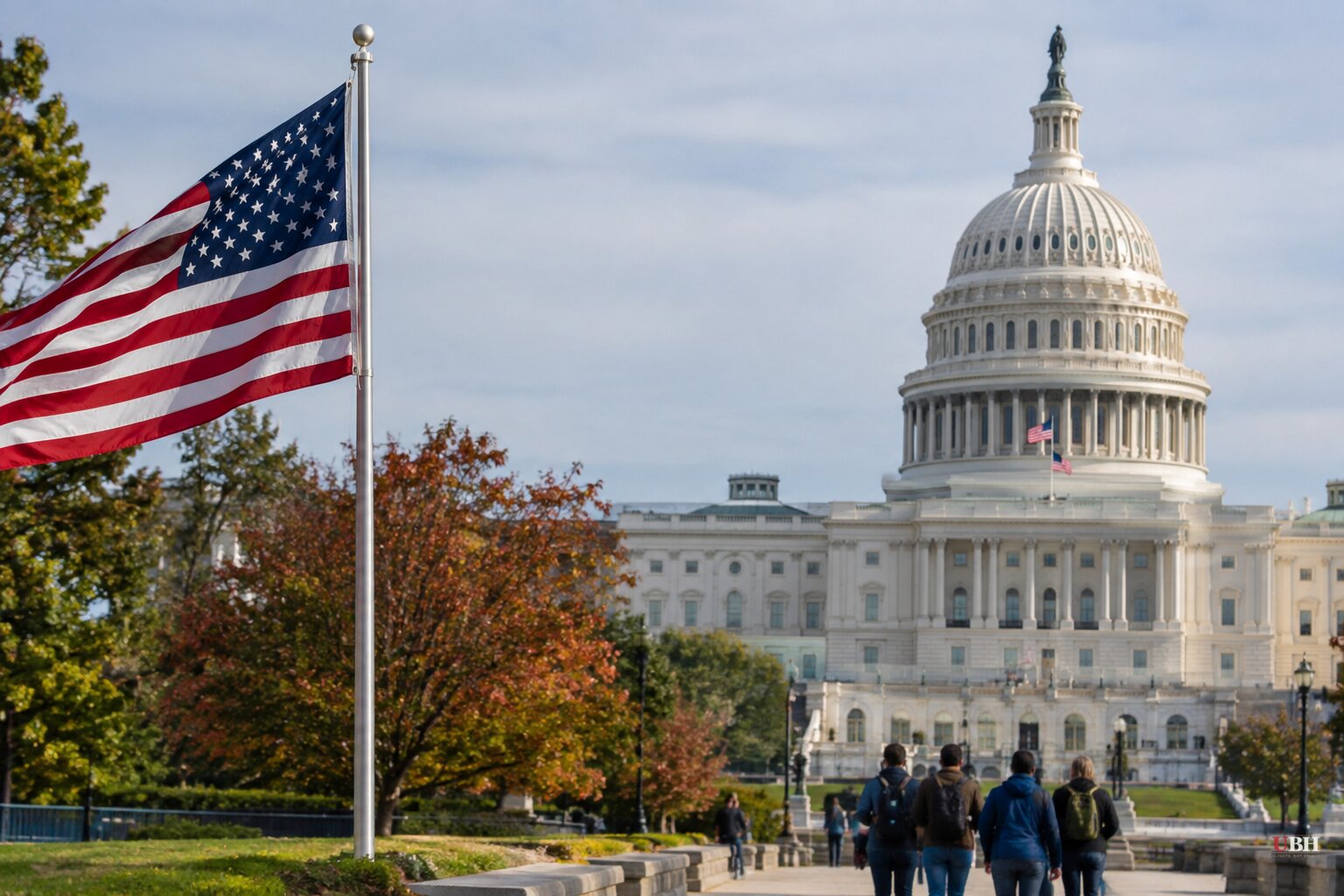
Georgia Republican Rep. Andrew Clyde is introducing legislation that would change who counts when the House of Representatives divides up its 435 seats among the states. Clyde's bill, dubbed the Make Apportionment Great Again Act, would exclude noncitizens from the population figures used for apportionment, according to Fox News.
Right now, the Census Bureau counts every person living in the country, citizen or not, when deciding how many House seats each state gets. That practice dates back to how the 14th Amendment's apportionment clause is written: it calls for counting "the whole number of persons in each State," with no citizenship carve-out except for untaxed tribal members.
Clyde's bill would flip that. It would not force a brand-new census; instead it would direct states to reapportion using existing federal records sometime in 2027, according to Fox News. It would also add a citizenship question to the 2030 census, asking whether a person is a citizen, a national, a lawful alien resident, or an unlawful alien resident.
Who Gains, Who Loses
A 2024 report from the Center for Immigration Studies, a think tank that advocates for lower immigration levels, found that counting noncitizens produced a net gain of 14 House seats for Democrat-leaning states and cost Republican-leaning states 10 seats they otherwise would have had, Fox News reported. States like California, New York, New Jersey and Florida have some of the highest shares of immigrant population, per Census Bureau data cited by Fox.
This math is exactly why the bill is a nonstarter for many Democrats and immigrant-rights groups. The strongest case against it is straightforward: the Constitution's text says "persons," not "citizens," and the Supreme Court has never required citizenship as a condition for being counted in apportionment. Critics will argue Clyde's bill rewrites 150 years of practice by statute instead of constitutional amendment, and expect it to draw immediate lawsuits from pro-immigrant organizations if it becomes law.
Supporters of the bill counter that apportionment exists to allocate political representation among citizens who can actually vote and be governed by that representation, and that letting noncitizen populations, including illegal immigrants in sanctuary jurisdictions, inflate a state's congressional delegation dilutes the voting power of citizens elsewhere. Neither argument has been tested in court under this specific bill, and no case has been filed as of now.
Even if the House passed it, the bill would need to clear the Senate and would almost certainly face a court challenge before any seats moved. Because it targets reapportionment for 2027, it would have no effect on the House seats being contested in this November's midterms.
The Bigger Midterm Picture
Clyde's bill lands in the middle of a midterm campaign that has already scrambled expectations. According to NPR, President Trump's approval ratings have fallen to record lows, and voters have told pollsters they're frustrated with the disconnect between their top concerns—cost of living, gas prices, immigration, and the war in Iran—and what the administration has spent time on, including the White House ballroom construction project.
Polling averages cited by NPR suggest Democrats are favored to retake the House, and the Cook Political Report has calculated Democrats need to win 57 of 77 competitive House seats to reclaim the majority, according to Colorado Politics.
The Senate map has also shifted. CNN reports that races once considered safely Republican, including Kansas, where Sen. Roger Marshall is now running attack ads against Democratic pastor Adam Hamilton, have become competitive, alongside contests in Iowa, Texas, Ohio and Alaska. Trump carried Kansas by at least 14 points in every one of his campaigns, per CNN, underscoring how unusual it is for that race to be in play at all.
Both parties are also fighting over district lines directly. States controlled by Democrats and Republicans have pursued mid-decade redistricting this cycle to maximize safe seats, according to NPR, a separate track from Clyde's apportionment bill but part of the same broader fight over how congressional power gets divided.
Republicans are leaning on financial firepower heading into the fall. The pro-Trump super PAC MAGA Inc. began deploying its war chest of more than $400 million for the midterms this month, CNN reported, and the RNC gathered Republicans in Dallas for a midterm convention this week that GOP chairman Joe Gruters has branded "Trumpapalooza," with Trump scheduled to speak both nights. House Minority Leader Hakeem Jeffries is sending Democrats to counter-program the event, according to CNN.
On Sept. 1, the House passed a stopgap funding bill to avoid a pre-election shutdown with the help of 176 Democratic votes, according to Colorado Politics, a sign that even amid the redistricting and apportionment fights, both parties still had reason to avoid a shutdown just two months before Election Day.
Clyde's bill has not yet received a committee vote or floor schedule. Whether it advances and whether a citizenship-only apportionment count survives a constitutional challenge remain unresolved.
Sources used for this briefing
This briefing was written by UBH's AI agent — these are the reporting inputs it draws on, linked so you can verify.


