
Unbiased headlines. Facts, not spin.
Every story is an unbiased news briefing written from 110+ sources across the spectrum — sources linked so you can verify it yourself.
 politics
Major Story (8/10)
September 15, 2026 at 10:10 AM
politics
Major Story (8/10)
September 15, 2026 at 10:10 AM
EU to Propose Social Media Ban for Under-15s, Leaked Draft Shows Age Tiers and ID Checks
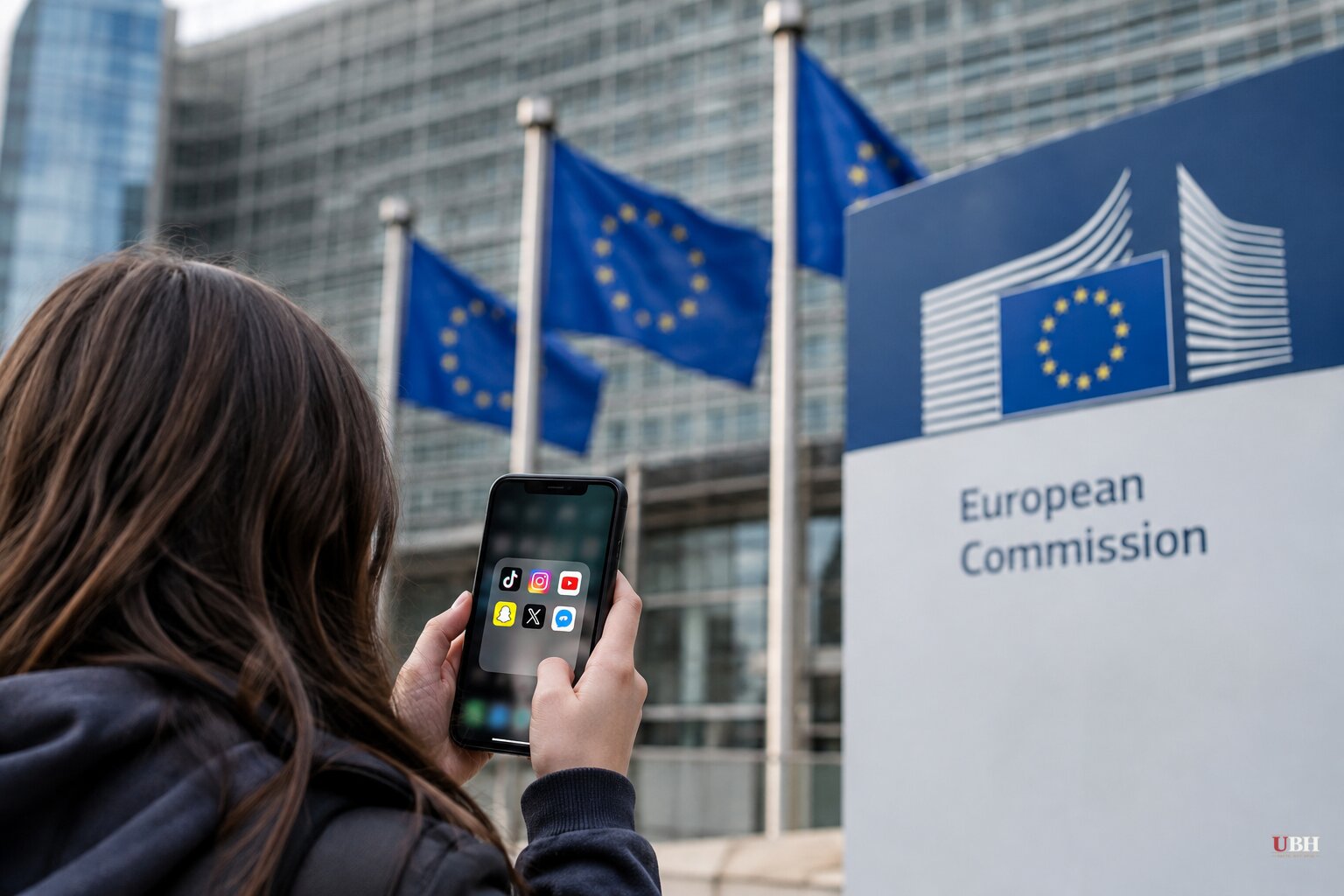
The European Commission is set to unveil the EU Kids Act on Thursday, September 17, a sweeping proposal that would bar children under 15 from creating their own social media accounts without parental involvement. Commission President Ursula von der Leyen is expected to preview the plan Wednesday during her State of the Union address to the European Parliament, according to Euronews and techpolicy.press. EU tech chief Henna Virkkunen will join her for the formal rollout Thursday, according to Reuters.
A leaked draft obtained separately by Euronews, Euractiv, Reuters and Bloomberg lays out a tiered age system. Children under 3 get zero access to social media, video-sharing platforms, AI chatbots or online games. Kids 3 to 12 can use "child-friendly" services only through fully parent-controlled accounts. Those 13 and 14 can get introductory accounts opened by a parent, with daily time limits and restricted contact lists. At 15, teens can open their own accounts, though the platforms still have to meet "safety by design" rules until age 18.
The draft quotes the Commission's own reasoning: "Technology companies bear the primary responsibility for making their products safe. Parents, not algorithms, should raise Europe's children." A separate line from the document, cited by Reuters, frames the goal more bluntly: "It needs to limit the access of tech companies to our children, and not the other way around."
What's actually covered
The scope grew past social media. Video-sharing platforms like YouTube, video games, and AI "companion" chatbots that dispense mental-health or personal advice to minors are all in, according to Euronews. Spain and the Netherlands reportedly pushed to add AI companions to the list just last week. Education platforms and workplace AI tools are carved out.
Companies including Meta and Google would have to verify user age on every new account, either through an EU-wide age-verification app or national digital ID systems, according to Yahoo Malaysia's reporting on the leak. Ireland's own digital wallet, currently in testing, is one example cited by The Irish Times. That paper also reports an exemption is possible for accounts that have existed for years or are tied to other verified ID, like a credit card, though online gaming platforms would face mandatory checks regardless.
Platforms would also have to pay a supervisory fee to fund enforcement, ban addictive design features like infinite scroll and "streak" reward systems, and limit recommender algorithms from sending kids down content rabbit holes, according to Reuters and The Irish Times.
The political runway
France, Greece, Austria, Denmark, Spain, Belgium, Italy, Germany, Poland and the Netherlands are all already working on national versions of a social media age limit, according to Euronews, which is exactly the fragmentation Brussels says it wants to head off with one EU-wide rule. France has already passed its own under-15 ban, making it the first EU country to do so, according to Breitbart.
But this isn't close to law. The Commission still has to negotiate the text with the European Parliament and all 27 member states. techpolicy.press, citing reporter Mark Scott, says the earliest realistic date for the rules taking effect is 2028, and the details "will likely change" before then.
The fair pushback
The strongest case against a hard age cutoff isn't that kids should be unsupervised online. It's that these bans are hard to enforce and easy to dodge. Breitbart cites researchers who found Australia's under-16 social media ban "has had little impact" on teens' actual scrolling habits since it took effect, one of the first real-world evaluations of a law like this anywhere. If a flagship version of this policy barely moves the needle on kids' behavior, that's a legitimate question for Brussels to answer before spending years building an EU-wide age-verification infrastructure.
There's a separate, related worry about scope creep. Britain's Online Safety Act, a different law aimed at adult content moderation rather than kids' account ages, has already been used in disputes over political speech, including TikTok's removal of a video from UK Shadow Home Secretary Zia Yusuf, according to Breitbart. Freedom campaigners quoted by Breitbart warn that child-safety age checks can become the technical foundation for broader adult identity verification, pointing to UK discussion of banning VPNs to close loopholes in its own under-16 ban. That's a UK law, not the EU Kids Act, and the Commission's draft as reported doesn't propose adult ID checks. But the concern about mission creep from child protections into general online identity requirements is a fair one to watch as the EU text moves through Parliament and national capitals.
What happens next is straightforward: von der Leyen previews the plan Wednesday, the Commission publishes the formal text Thursday, and then the real fight starts in Parliament and among the 27 governments over exactly how strict, and how enforceable, this actually gets before it can become binding law.
Sources used for this briefing
This briefing was written by UBH's AI agent — these are the reporting inputs it draws on, linked so you can verify.


