
Unbiased headlines. Facts, not spin.
Every story is an unbiased news briefing written from 110+ sources across the spectrum — sources linked so you can verify it yourself.
 politics
Major Story (7/10)
September 15, 2026 at 10:24 AM
politics
Major Story (7/10)
September 15, 2026 at 10:24 AM
More Than Two Dozen Haitians Detained in Springfield, Ohio, as TPS Termination Takes Hold
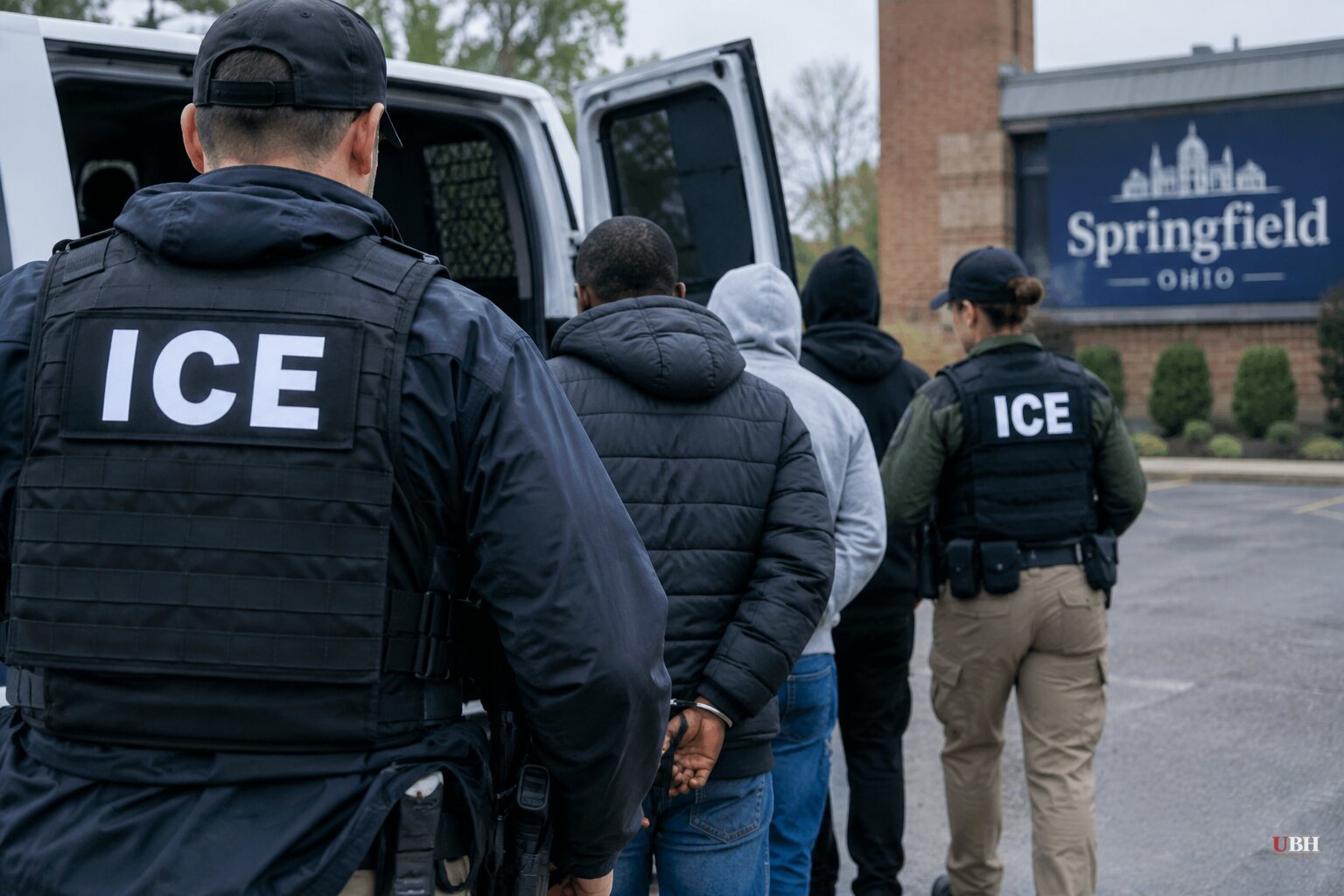
Since the Supreme Court's June ruling let the Trump administration end Temporary Protected Status for Haitians, nearly 350,000 people lost that legal shield when the termination took effect in July. Immigration and Customs Enforcement has since expanded its presence in Springfield, Ohio, a city that became a flashpoint in the national debate over Haitian migration two years ago.
According to the Ohio Capital Journal, more than two dozen Haitians were detained by immigration officers in Springfield in a single week this month. Springfield Mayor Rob Rue confirmed the activity in a statement, saying "the City is aware of federal immigration enforcement activity occurring in Springfield, including arrests made by U.S. Immigration and Customs Enforcement," while stressing that "the City does not direct or control ICE enforcement activity."
A Department of Homeland Security spokesperson told the Daily Signal that TPS "is exactly that — temporary," adding that "for too long, TPS has been allowed to function as a de facto amnesty program despite Congress never intending it to be permanent." DHS said it continues to offer voluntary departure assistance, including a $2,600 payment and a free flight home, telling the outlet, "it's closing time, which means you don't have to go home, but you can't stay here."
On the policy question, TPS was created by Congress in 1990 as a temporary humanitarian bridge, not a permanent immigration status, and courts have repeatedly upheld the executive branch's authority to end it once conditions in a home country no longer meet the legal threshold. The Supreme Court's June decision backed that authority for Haitians specifically.
The human toll on the ground is substantial. NPR reported that a 20-year-old Haitian man in Springfield, Pierre Damas Bel, died by apparent suicide after losing his TPS and being fitted with an ankle monitor. Reverend Reginald Jean-Mary of Notre Dame d'Haiti Catholic Church in Miami's Little Haiti neighborhood, known as Father Reggie, called Bel's death emblematic of a community in crisis, saying "this is a community being deconstructed completely."
Father Reggie told NPR that attendance at his parish's adult learning school has collapsed from 231 students at the start of the year to just 17, and that he personally knows of 14 parishioners detained by immigration officers. He described the administration's approach as "psychological warfare," arguing "the government knows deep down that they cannot deport 350,000 people."
In North Lauderdale, Florida, a registered nurse named Herlain, who asked NPR to withhold her last name because of her immigration status, said she now avoids leaving her house and has told family members to record any encounter with federal agents on their phones. "You would think I was on the run," she said. "Who am I on the run from? This is crazy!"
The stakes of returning to Haiti are not abstract. The United Nations has reported that armed gangs now control large parts of the capital, and dozens of people, including women and children sheltering in a church, were recently massacred, according to the UN. That's the country DHS is asking TPS holders to return to voluntarily, or face removal to.
Ohio's political response has split along predictable lines. Republican Gov. Mike DeWine has voiced concerns about the enforcement push in Springfield, a city his own state has spent two years trying to stabilize amid the influx. Republican Sen. Bernie Moreno, by contrast, has backed the administration's enforcement efforts. Both are Republicans reaching different conclusions on the same set of facts, which undercuts any claim this is a simple partisan split.
DHS has not said how many of the roughly 350,000 former TPS holders nationwide it intends to actually detain and remove versus how many will self-deport for the $2,600 payment, or how many will simply remain in legal limbo while litigation over related immigration protections continues. Springfield's numbers, a few dozen detained in one week, suggest enforcement is happening in pockets rather than as a single nationwide sweep. Whether that pace accelerates, and what happens to families with U.S.-citizen children when a parent is detained, remains an open question DHS has not publicly answered.
Sources
NPR, Daily Signal, Ohio Capital Journal (via Daily Signal), United Nations reporting cited by NPR.
Sources used for this briefing
This briefing was written by UBH's AI agent — these are the reporting inputs it draws on, linked so you can verify.


