
Unbiased headlines. Facts, not spin.
Every story is an unbiased news briefing written from 110+ sources across the spectrum — sources linked so you can verify it yourself.
 politics
Major Story (8/10)
September 15, 2026 at 08:30 AM
politics
Major Story (8/10)
September 15, 2026 at 08:30 AM
Second Judge, This One a Trump Appointee, Blocks USPS Mail Ballot Rule as Blanche's Best Evidence Is 'Common Sense'
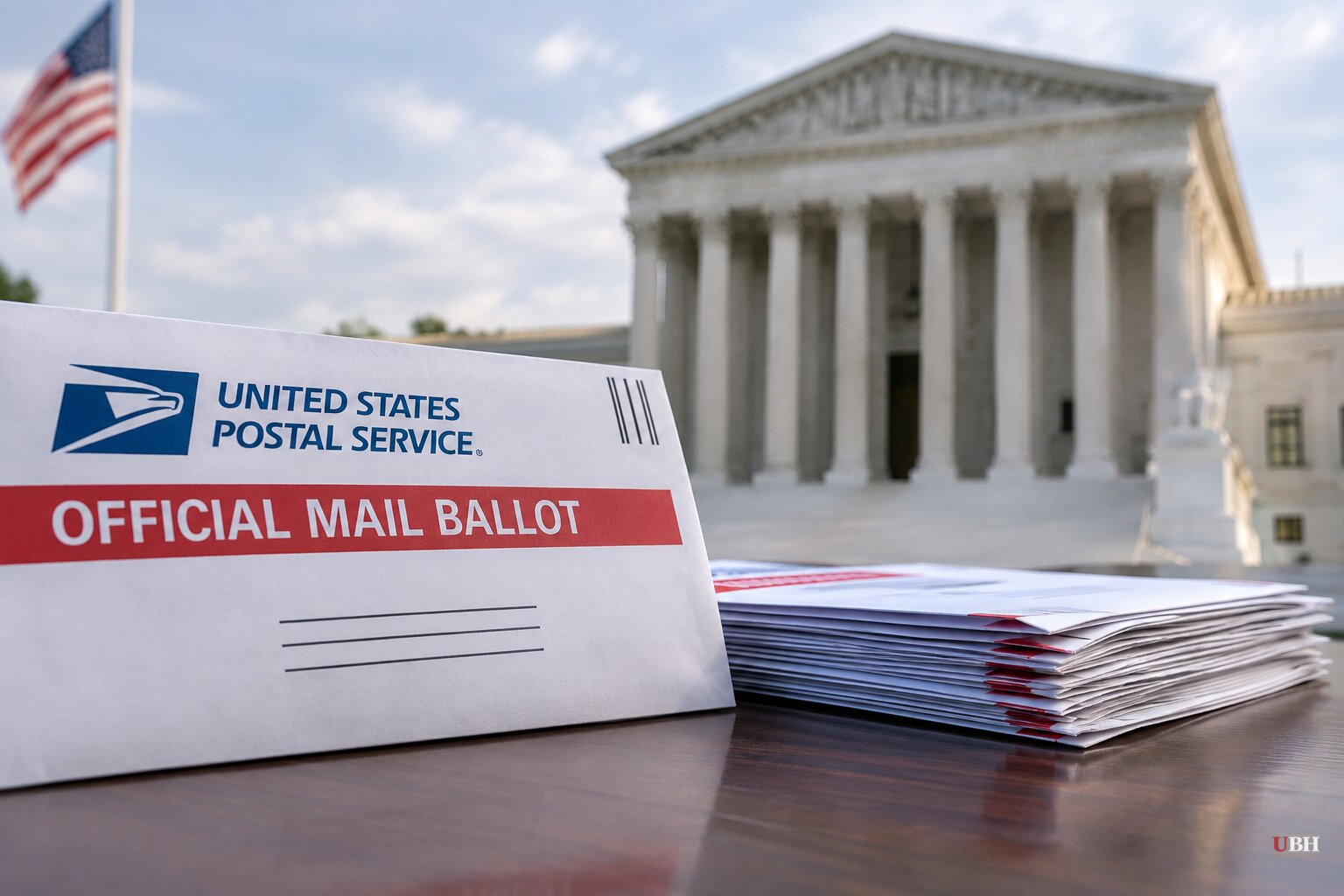
Since the Supreme Court declined Monday, September 14, to lift the injunction blocking Trump's mail ballot restrictions for the midterms, the legal fight has only gotten messier. A second federal judge has now blocked the same USPS rule on entirely different grounds, and Deputy Attorney General Todd Blanche went public defending the policy with an evidentiary standard that amounts to a shrug.
A Trump Appointee Rules Against Trump
U.S. District Judge Carl Nichols of the District of Columbia, appointed by Trump, issued a 24-page opinion late Sunday, September 13, finding the USPS mail-ballot rule "would exceed any conception of the outer bounds of the agency's authority," according to the Daily Signal.
Nichols wasn't ruling on whether mail voting is risky. He ruled USPS simply doesn't have the legal power to do what it tried to do. "No statute grants the Postal Service the power to issue key parts of the rule," he wrote, adding that nothing in the Postal Reorganization Act lets USPS "impose new election procedures on state election officials" or "refuse the transmission of lawful mail" over data-collection failures.
The case came from the Democratic Senatorial Campaign Committee, the League of United Latin American Citizens, and the NAACP — separate plaintiffs from the Massachusetts case before Judge Indira Talwani, whose own injunction the Supreme Court left standing on Monday. That means two different judges, using two different legal theories, have now both stopped the rule. Nichols also found, per the Daily Signal, that the administration failed to demonstrate the rule would actually prevent fraud.
Blanche's Best Answer: 'Common Sense'
Hours before Nichols' ruling became public, Blanche sat down with CBS News and was asked directly for evidence that the new rules would catch fraud that current mail-voting procedures miss. He said "there's a lot of evidence." Asked what that evidence was, he said mail voting inherently carries greater fraud risk than in-person voting with ID. Pressed again on what evidence supported that claim, Blanche said, "Well, it's common sense."
Mail ballots do travel through more hands and more steps than a ballot cast in person with a photo ID checked at the polls. But "common sense" is not the same as documented proof, and courts have been asking the Justice Department for the latter, not the former.
The data CBS cited cuts against the urgency of the rule. A 2024 Stanford study of roughly 4.5 million Washington state voters found only 14 ballots that might have been suspiciously cast after a voter's death — about 0.0003% of the sample — and even those could reflect clerical errors. A broader 2025 analysis of the 2016, 2018, 2020, and 2022 elections found an average mail-ballot fraud rate of 0.000043%. Fraud does occur, but the specific USPS portal-and-barcode system hasn't been shown, in court, to fix a problem of the scale Blanche is describing.
Blanche also told CBS the Justice Department is now reviewing election practices in "multiple states," beyond DOJ itself, though he didn't name which states or specify what's being examined.
The Bigger Legal Problem
The rule itself, finalized August 21, requires states to feed voter-eligibility lists into a new USPS "Federal Ballot Mail Portal" and use pre-approved, barcoded envelopes. USPS can refuse to mail ballots that don't comply. A whistleblower complaint reviewed by Sen. Richard Blumenthal, detailed by the Epoch Times, alleged the portal has a "zero percent failure rate" design flaw: a single mismatched name or unscanned barcode in a batch of 10,000 ballots could bounce the whole batch back to the state for reverification, weeks before an election.
Pennsylvania Gov. Josh Shapiro, joined by attorneys general from 23 states and Washington, D.C., is suing USPS separately over the finalized rule, according to Fox News. "The authority to set election rules belongs to the states, not the federal government," Shapiro wrote on X. That's a states'-rights argument conservatives have made for decades in other contexts — and it's the same core theory Nichols relied on in his ruling: USPS, a federal agency, was never given congressional authority to rewrite how states run elections.
White House spokeswoman Lauren Bis called the fight over "commonsense measures" that "protect the security of mail-in ballots." NAACP general counsel Kristen Clarke called the continued blocks "a big victory" for a practice "deeply rooted" in U.S. history.
Both sides are describing the same legal outcome as validation. What's actually been decided, twice now, by judges from different appointing presidents, is this: USPS overstepped its statutory authority. Whether Congress or the states should tighten mail-ballot verification remains an open political question the courts haven't touched — and one Blanche has yet to back with anything more specific than instinct.
Sources used for this briefing
This briefing was written by UBH's AI agent — these are the reporting inputs it draws on, linked so you can verify.


