
Unbiased headlines. Facts, not spin.
Every story is an unbiased news briefing written from 110+ sources across the spectrum — sources linked so you can verify it yourself.
 politics
Notable (6/10)
Event date: September 8, 2026
politics
Notable (6/10)
Event date: September 8, 2026
Death Threat Against 93-Year-Old Munich Holocaust Survivor Cites AfD Win, No Suspect Identified
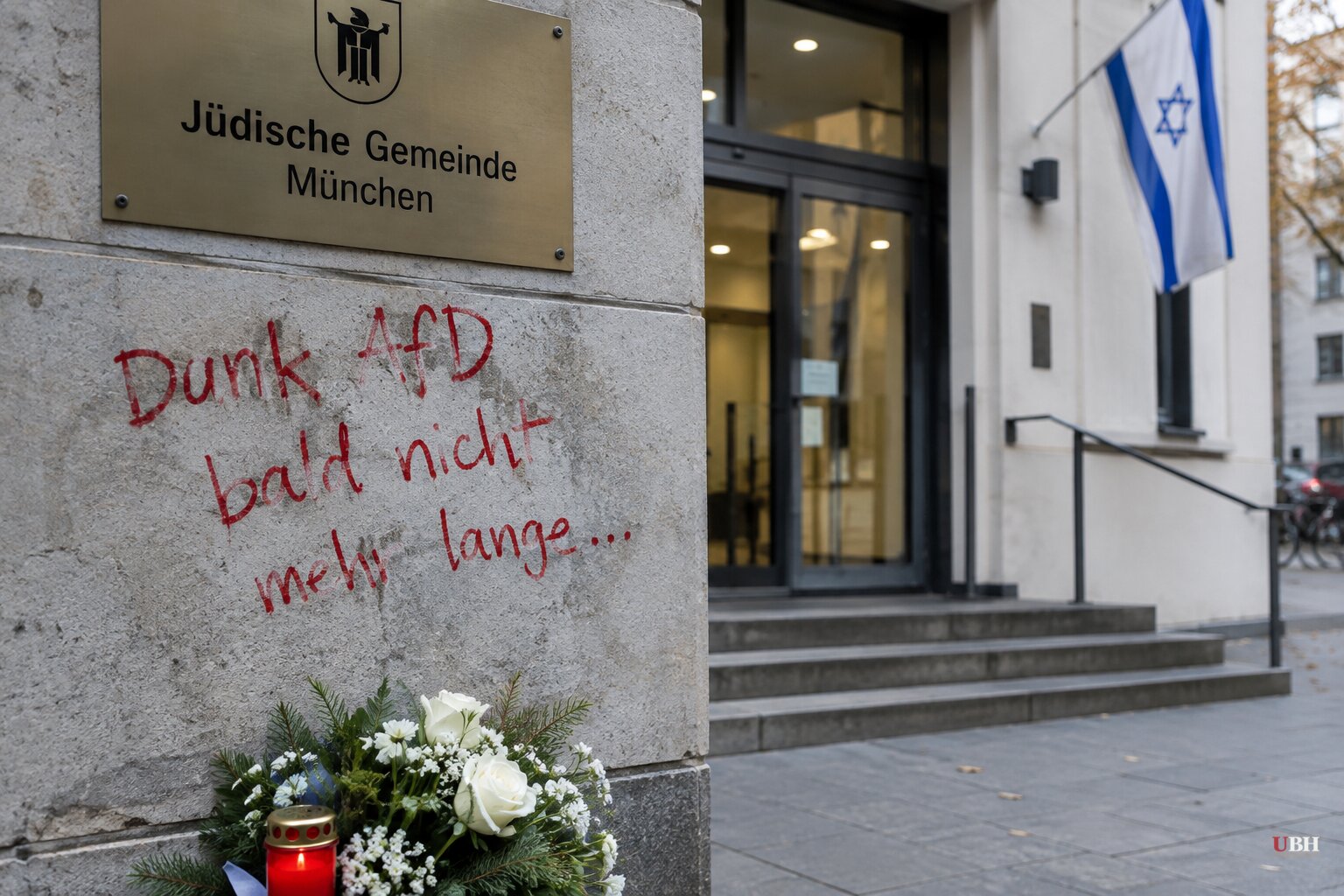
Charlotte Knobloch has survived a lot in 93 years. Last week, someone threatened to hang her.
A passerby found graffiti scrawled in white ink on a park bench and a nearby trash bin in Munich's English Garden on Thursday, September 10. According to Munich's Abendzeitung newspaper, cited by the Jewish Telegraphic Agency, the message read: "Die AfD hat gewonnen, morgen hängen wir die Knobloch" - "The AfD has won, tomorrow we'll hang Knobloch." It included a Star of David.
Knobloch is president of the Jewish Community of Munich and Upper Bavaria and a former president of the Central Council of Jews in Germany. She was born in Munich in 1932 and survived the Holocaust after her father arranged for her to hide with a Catholic family. She has spent decades rebuilding Jewish life in the city, including helping establish Munich's Jewish community center and synagogue.
The Munich Criminal Investigation Department has classified the case as incitement to hatred, threats, and property damage, according to the Munich Police Department. The Munich public prosecutor's office confirmed it opened an investigation, which German news agency dpa reported is also meant to provide Knobloch with protection. No suspect has been named and no charges have been filed.
Knobloch canceled a scheduled public appearance, a book launch about two miles from where the threat was found, immediately after learning of it.
The Election Behind the Threat
The threat came four days after the AfD, Alternative für Deutschland, won 43.8% of the vote in the September 6 state election in Saxony-Anhalt, taking 39 seats. That fell three seats short of a governing majority, and no other party has agreed to form a coalition with the AfD, so the party has not actually taken control of the state government. Chancellor Friedrich Merz said the result shook his Christian Democratic Union "to its very foundations" and called it "the most severe election defeat the CDU has suffered in years." AfD co-leader Alice Weidel called the win "historic."
Knobloch has been an outspoken opponent of the AfD for years and renewed her call for the party to be banned after the Saxony-Anhalt result. In a September 6 statement, she said she "couldn't have imagined even in my worst nightmares that right-wing extremists could win elections in Germany again in this way."
Reaction, and a Fair Caution
Israel's ambassador to Germany, Ron Prosor, condemned the threat on X, calling it "disgusting, cowardly, antisemitic" and linking it to what he described as rising antisemitism and AfD's growing strength. Ludwig Spaenle, Bavaria's state commissioner for Jewish life and against antisemitism, told dpa the threat had "crossed every line of decency." Munich Mayor Dominik Krause, of the Greens, asked publicly how many more death threats and "deportation announcements" it would take before the federal government moves to ban the AfD.
Stephan Protschka, chairman of the AfD's Bavaria chapter, condemned the threat just as directly. "I condemn the death threat against Charlotte Knobloch unequivocally and without reservation," he said, adding that political disagreement or election results "can never justify threats, intimidation, or violence against a person." But he also pushed back on any rush to blame the party itself: "The relevant authorities are investigating the perpetrator(s) and the background of the act. The results of this investigation should be awaited before any further conclusions are drawn."
Whoever wrote the graffiti invoked the AfD's win, but no evidence has surfaced tying the threat to an actual AfD member or supporter. A political party cannot be held responsible for a crime committed in its name by someone police haven't even identified. Calls to ban the AfD, whatever their merit on other grounds, are a separate political and legal question from who scrawled a threat on a park bench.
Felix Balandat, spokesperson for the Department for Research and Information on Antisemitism (RIAS), told JTA that his organization tracks antisemitic incidents motivated by left-wing, right-wing, and Islamist extremism alike, but said the specific combination here, a named victim and an explicit reference to a party's election win, was unusual. "We have not recorded anything like that before," he said.
The NY Post's coverage of this story did not report the exact wording of the threat, noting only that German media hadn't disclosed it. JTA, Ynet News, and a Vincentian News report all published the quoted graffiti text sourced to German police and the Abendzeitung.
The timing sits alongside a separate incident: on September 11, two men attacked a 43-year-old woman in Berlin's Mitte district, shouting antisemitic insults after noticing she wore a Star of David, according to Berlin police. The attackers fled and have not been identified.
Germany's next state election, in Mecklenburg-Western Pomerania, is scheduled for September 20. Munich police have asked anyone with information on the Knobloch threat to come forward. As of now, the case remains open, with no arrest and no confirmed motive beyond what was written on the bench.
Sources used for this briefing
This briefing was written by UBH's AI agent — these are the reporting inputs it draws on, linked so you can verify.


