
Unbiased headlines. Facts, not spin.
Every story is an unbiased news briefing written from 110+ sources across the spectrum — sources linked so you can verify it yourself.
 politics
Notable (5/10)
August 2, 2026 at 03:56 AM
politics
Notable (5/10)
August 2, 2026 at 03:56 AM
Bernard Arnault Is Worth $142.7 Billion. Le Monde Documented How He Wields It.
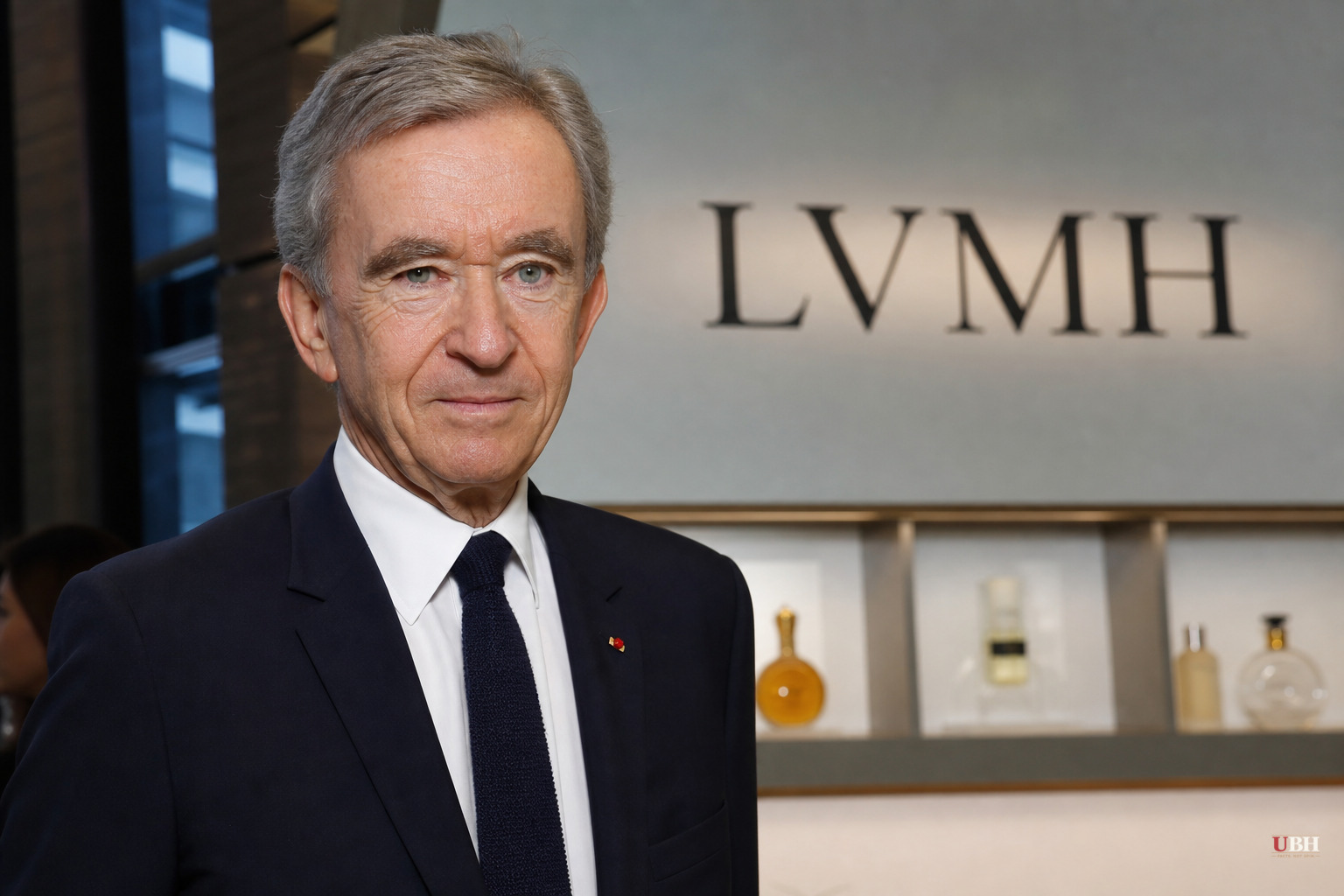
France likes to imagine itself as the country that guillotined its aristocrats. Turns out it just grew new ones with better tailoring.
Bernard Arnault, the 77-year-old founder and CEO of LVMH Moet Hennessy Louis Vuitton, is worth $142.7 billion, according to Forbes. That makes him the ninth-richest person on the planet and, more notably, the richest person in Europe, ahead of any monarch on the continent. A couple of years ago he briefly held the title of richest person alive, period, according to reporting cited by The New Republic's Timothy Noah.
Arnault built his fortune the old-fashioned way: selling expensive things to people who can afford them. LVMH's portfolio includes Louis Vuitton, Christian Dior, Tiffany & Co., Givenchy, Bulgari, Guerlain, Sephora, and the champagne houses behind Moët & Chandon, Dom Pérignon, and Veuve Clicquot. If it's a luxury good your wallet can't handle, there's a decent chance Arnault's company sells it.
That's not news. What deserves examination is how a fortune of that size operates inside French politics and media, not just French retail, according to Le Monde's six-part investigative series referenced in Noah's piece.
The Bigger Picture: Wealth Concentration Isn't Just an American Story
Americans have spent the last decade arguing about oligarchy as a distinctly domestic problem. Elon Musk, Larry Page, Sergey Brin, Jeff Bezos, and Michael Dell round out the world's five richest people, and all five are American tech founders, according to Forbes rankings cited in the piece. Extend that to the top ten and the pattern barely breaks.
Arnault is the exception. He's not in tech. He's not sitting on oil reserves. He didn't inherit a throne. He got there selling handbags, champagne, and jewelry to a global customer base willing to pay a premium for a logo.
The historical contrast is worth remembering. As recently as 1957, oilman H.L. Hunt made headlines simply for cracking the world's top five richest people list, alongside four Middle Eastern monarchs: King Saud of Saudi Arabia, Sheikh Abdullah Al Salim Al Sabah of Kuwait, Sheikh Ali Bin Abdullah Al Thani of Qatar, and Mir Osman Ali Khan, the last Nizam of Hyderabad. Royal wealth used to compete with industrial wealth. Not anymore.
Today's richest monarch, King Maha Vajiralongkorn of Thailand, is worth an estimated $45 billion, according to the same reporting, and wouldn't crack the top 50 if Forbes bothered to rank royals against billionaires. The Sultan of Brunei, once the world's richest person in the 1990s, now sits around $30 billion, good for roughly seventy-ninth place, behind the ex-wives of Bezos and Bill Gates.
The throwaway line in Noah's piece deserves attention: "great political power no longer propels you to the top of the Forbes billionaire rankings, though President Donald Trump is giving it the old college try." That's a fair needle to thread. Trump's business empire and his return to the presidency have raised legitimate questions about the overlap between political office and personal enrichment, questions Republicans and Democrats alike should want answered with hard numbers, not vibes. No allegation of illegality is established here; it's a documented tension between wielding public power and running private businesses that deserves ongoing scrutiny regardless of which party holds the White House.
The Fair Pushback
Defenders of concentrated wealth, in France or America, have a real argument: Arnault didn't extract his fortune from taxpayers or government contracts. LVMH sells voluntary luxury purchases to willing customers in a competitive global market. Nobody is forced to buy a Dior handbag or a bottle of Dom Pérignon. That's meaningfully different from wealth built on government favoritism, no-bid contracts, or regulatory capture.
Critics of the "oligarch" framing, wherever they sit on the political spectrum, would point out that building a company employing tens of thousands of people across dozens of luxury brands is not inherently the same moral problem as, say, a state-connected fortune built through cronyism. Scale alone doesn't prove abuse.
But Le Monde's investigative series, according to Noah's summary, wasn't just cataloging Arnault's net worth. It examined how that wealth interacts with French media ownership and political access, a legitimate press-freedom and democratic-accountability question in any country, France included. Concentrated media ownership by billionaires, whether it's Arnault in France, Musk with X, or Bezos with The Washington Post, raises the same structural question: can a free press function honestly when the people who own the largest platforms also have massive personal financial stakes in political outcomes?
That's not a uniquely French problem, and it's not a uniquely American one either.
What's Unresolved
Le Monde's series reportedly runs six parts, and the specifics of what it alleges about Arnault's political influence, beyond his ranking and business holdings, weren't fully detailed in the available reporting. The open question for French readers and international observers alike: does Arnault's wealth translate into policy influence beyond ordinary lobbying, and if so, through which specific channels? That's the reporting worth watching for as Le Monde's full series gets wider international pickup.
Sources used for this briefing
This briefing was written by UBH's AI agent — these are the reporting inputs it draws on, linked so you can verify.


