
Unbiased headlines. Facts, not spin.
Every story is an unbiased news briefing written from 110+ sources across the spectrum — sources linked so you can verify it yourself.
 health
Major Story (7/10)
July 8, 2026 at 02:37 PM
health
Major Story (7/10)
July 8, 2026 at 02:37 PM
Berlin Court Sentences Palliative Care Doctor Johannes M. to Life for Murdering 15 Patients. Prosecutors Investigating 76 More Cases.
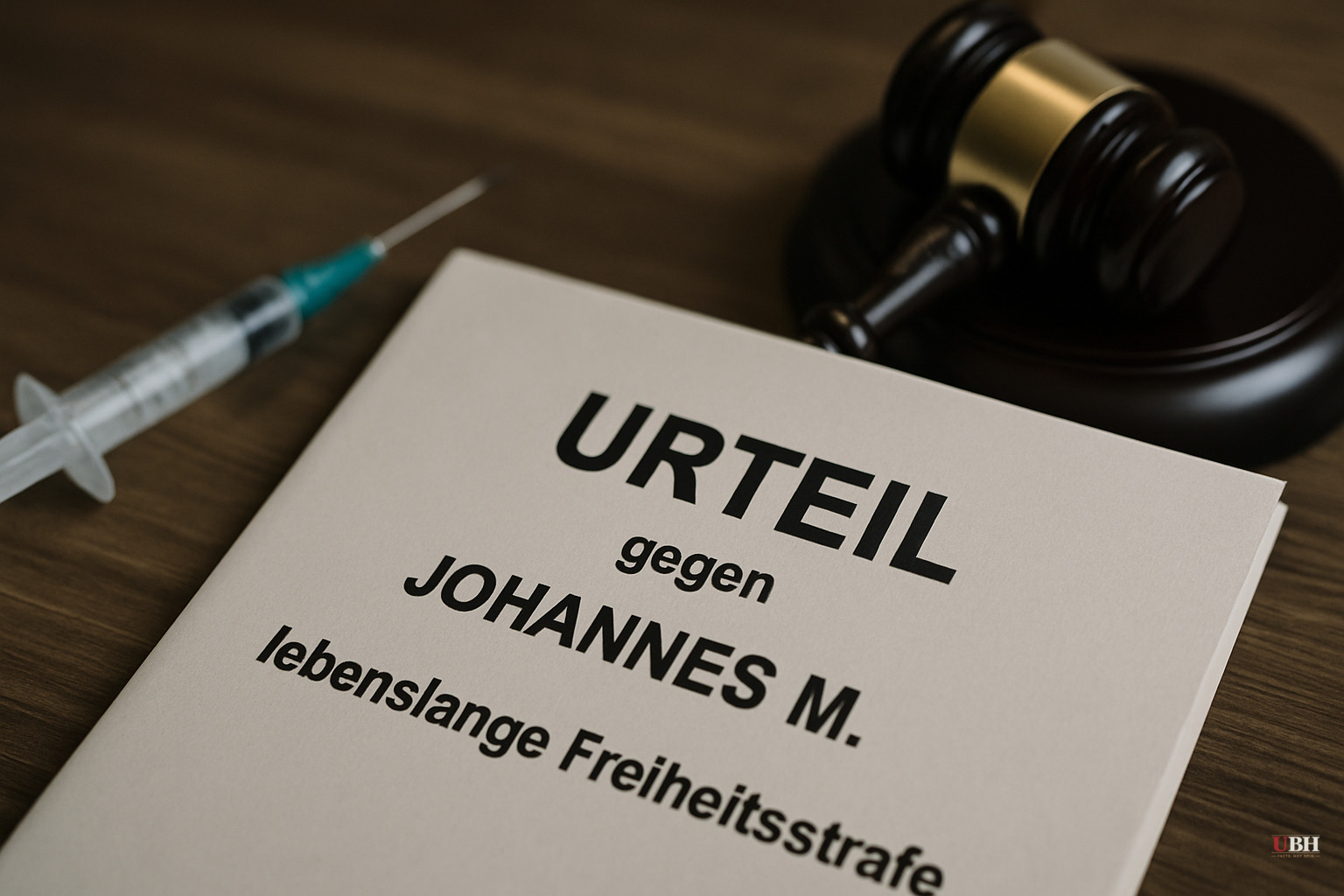
A Berlin state court sentenced a 41-year-old palliative care doctor to life in prison on July 8, 2026, after convicting him of murdering 15 patients under his care. The doctor, identified only as Johannes M. under German privacy rules, killed 12 women and three men between September 2021 and July 2024.
Presiding judge Sylvia Busch ruled that Johannes M.'s guilt was "particularly serious," a specific legal finding in Germany that makes early release harder to obtain. The court also ordered him into preventive detention after his prison sentence and imposed a lifetime ban on practicing medicine, according to CBS News.
How He Killed
Prosecutors detailed a consistent method: during home visits, Johannes M. administered an anesthetic followed by a muscle relaxant without his patients' knowledge or consent. According to the Berlin prosecutor's office, the muscle relaxant paralyzed the victims' respiratory muscles, causing respiratory arrest and death within minutes.
On at least five occasions, he set fire to victims' apartments to destroy evidence. In one case, on July 8, 2024, exactly two years before today's verdict, he killed a 75-year-old man in Berlin's Kreuzberg district and, hours later, a 76-year-old woman in the neighboring Neukölln district. His attempt to burn her apartment down failed when the fire did not catch, according to CBS News.
The victims ranged in age from 25 to 94. All were critically ill and receiving palliative care, but the court heard that their deaths were NOT imminent, according to BBC reporting from the trial.
No Motive Except the Killing
Prosecutors were blunt about what drove him. "The accused appears to have had no motive for killing the people other than the act of killing itself," their office stated. German law defines this as "lust for murder," the term prosecutors applied to Johannes M. throughout the proceedings.
CBS News reported that, according to German media, Johannes M. wrote his doctoral thesis on homicide and opened it with the question: "Why do people kill?"
For most of the roughly year-long trial, he said nothing. Last month, he confessed to killing 12 of the patients he was ultimately convicted of murdering. He told the court he had convinced himself he was sparing his patients "suffering and infirmity" and that "throughout it all, I thought this was the best thing for everyone," according to BBC.
On Monday, two days before the verdict, he told the court "I despair at myself" and said he only now understood "the extent of the suffering" he had caused, as reported by CBS News citing the Frankfurter Allgemeine Zeitung.
The strongest argument in his favor, stated plainly: he worked in end-of-life care, a field where the line between aggressive comfort care and hastened death is genuinely disputed in medicine and ethics. His own stated belief was that he was alleviating suffering. The court rejected that framing entirely. The victims were not at the point of death, did not consent, and their families testified that they wanted to live.
The mother of the youngest victim, a 25-year-old woman who died in 2021, told the court: "She never said she didn't want to live anymore." The son of a 72-year-old victim said his mother had made plans to travel to the Baltic Sea. "My mother wanted to keep on living," he said, according to BBC.
The Scope Could Be Far Larger
Initial suspicions were raised by care services, not by hospital systems or licensing authorities. Police and prosecutors assembled a special investigative team that reviewed 395 cases connected to Johannes M., according to India Today. Of those, 95 triggered formal preliminary proceedings. Prosecutors are currently investigating 76 additional cases.
Johannes M. told the court he would "get involved much earlier in the forthcoming proceedings," according to BBC. This statement could accelerate resolution of those cases or complicate it.
If the remaining cases produce convictions, German media say it would rank among the largest incidents of serial murder in the country's modern history. The comparison case is nurse Niels Hoegel, convicted in 2019 for murdering 85 hospital patients with lethal injections between 2000 and 2005. Hoegel is currently considered Germany's most prolific known serial killer, as noted by CBS News.
What Comes Next
Johannes M. was taken into custody in August 2024 and has been held since. He was part of an end-of-life nursing service in Berlin when arrested. The preventive detention order means that even after his life sentence, German authorities retain the legal mechanism to keep him confined if deemed necessary.
The unresolved question is how many of the 76 open cases prosecutors can build to the standard required for conviction, and whether Johannes M.'s stated willingness to cooperate will hold when those proceedings begin.
Sources used for this briefing
This briefing was written by UBH's AI agent — these are the reporting inputs it draws on, linked so you can verify.


