
Unbiased headlines. Facts, not spin.
Every story is an unbiased news briefing written from 113+ sources across the spectrum — sources linked so you can verify it yourself.
 defense
Major Story (7/10)
September 30, 2026 at 10:27 AM
defense
Major Story (7/10)
September 30, 2026 at 10:27 AM
Belgian Defense Minister Warns of 'Dark Winter' as EU Weighs New Response Plan for Russian Hybrid Attacks
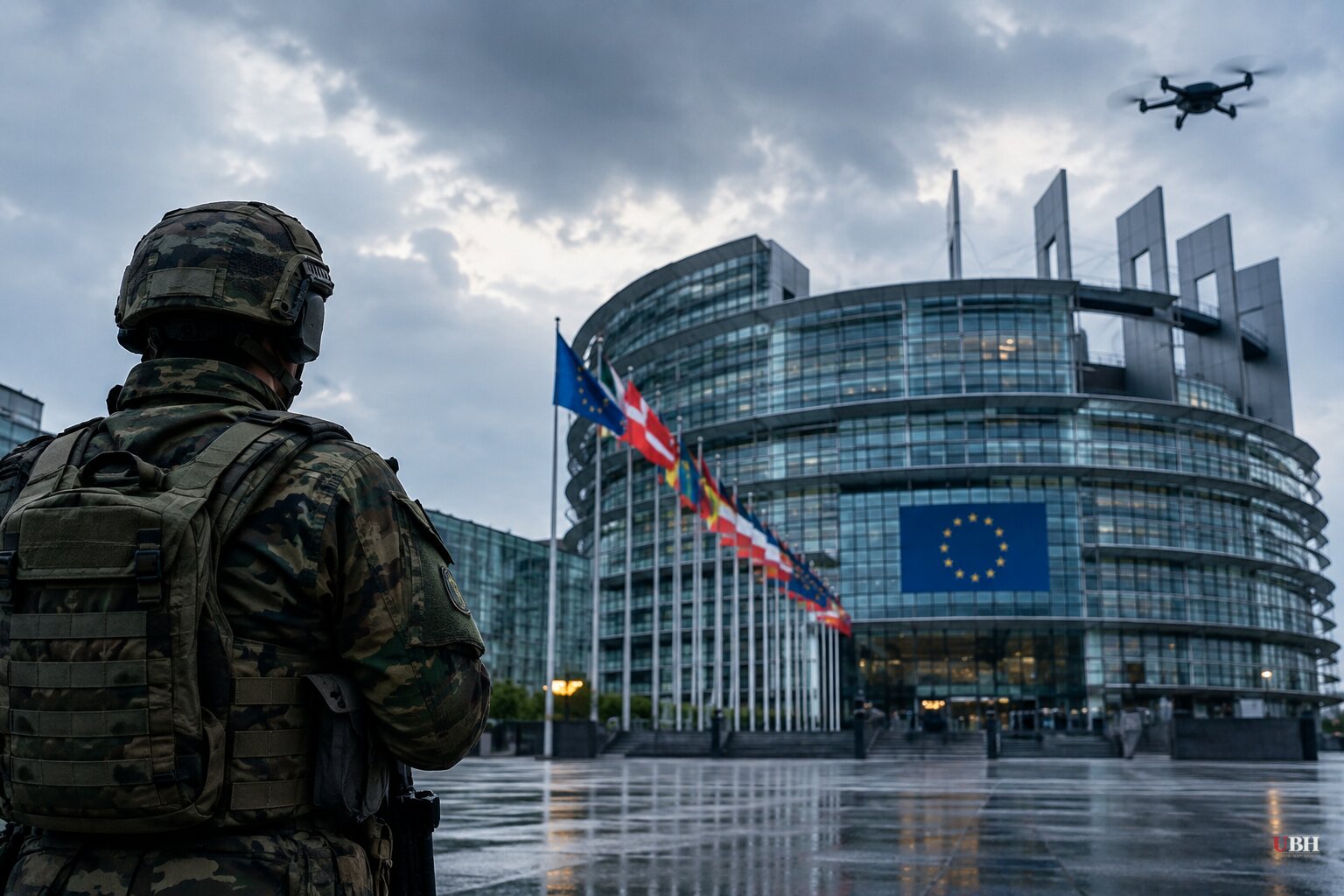
Belgium's defense minister Theo Francken stood up at Euronews' Defence and Space Summit in Brussels on Wednesday, September 30, and said the quiet part out loud: Europe built a comfortable welfare state and let its military rot.
"Europe has been very good in investing in soft power, in social security," Francken said, according to The Guardian. "It's beautiful to have a pension system, to have social welfare systems for when somebody gets sick, when somebody lost his job. We have everything. But when there's war or there's hybrid threats, we don't have anything."
He called it plainly: "It will be a dark winter for Europe."
Belgium Was 'The Worst Pupil in Class'
Francken admitted Belgium was near the bottom of NATO's defense-spending rankings two years ago. He says that's changing, but the fix is slow. He told the summit hybrid warfare from Russia isn't new, calling it something Moscow has run for "much longer" than two or three years, with real "expertise" that makes attribution hard for Western investigators.
According to AzerNews, Francken named Russia as the single biggest security threat facing Belgium and said last week Belgian security services found "strong indications" of Russian involvement in incidents including drone activity over sensitive sites and cyberattacks. He didn't share details, citing operational security.
His fix: faster air-defense production, bigger stockpiles, more interceptors for jet-powered drones. "Everything has to go faster," he said.
Brussels Debates Its Own Version of NATO's Article 4
Two days before Francken's warning, on September 28, EU defense ministers meeting at the Foreign Affairs Council discussed a new "emergency security protocol" that any member state could trigger after a hybrid attack, according to the Epoch Times. EU foreign policy chief Kaja Kallas confirmed the proposal, telling reporters the bloc will look at "what tools we can use on different levels" alongside the European Commission and member states.
EU defense commissioner Andrius Kubilius told the Financial Times, as reported by the Epoch Times, that any European response needs teeth: "If we are facing painful hybrid threats or actions, our answer should be painful in a similar way."
The idea traces back to Commission President Ursula von der Leyen's September 16 State of the Union address, where she called for a European equivalent to NATO's Article 4, the clause requiring member consultations when a country's security is threatened. She framed it as a way to "coordinate a European response" and "deter further escalation" when incidents fall below the threshold of outright war.
That's a real gap. NATO's Article 4 exists for military threats. Sabotage, arson, and drone incursions that stop short of war have had no formal collective trigger. Whether a new Brussels-run protocol actually moves faster than the bloc's usual consensus-by-committee process is the open question nobody at the summit answered.
Estonia's Arson Claim and Kaliningrad's Nuclear Warning
The stakes got sharper this week. Euronews reported Estonia accused Russia of an August arson attack against a major domestic drone manufacturer, prompting NATO to vow the incident wouldn't curb alliance support for Kyiv.
Russia sent NATO a formal letter warning it would use "the entire arsenal of forces and capabilities at its disposal, including nuclear weapons" if the alliance moved against Kaliningrad, the Russian exclave on the Baltic, according to Reuters reporting carried by The Independent. NATO's response called the alliance purely defensive and said it "strongly denounces the threat of force, including any irresponsible nuclear rhetoric."
Russia disputes the premise entirely, telling NATO in the same letter that it is the alliance exhibiting "dangerous and reckless" behavior carrying "high risks" of direct armed conflict.
The Independent also reported Russia plans to push defense spending above £150 billion next year, per a draft budget due before its parliament.
Ukraine's $78 Billion Hole
Money is the other fight. Ukraine's finance minister Sergii Marchenko told allied donors in Brussels on Tuesday, September 29, that Kyiv's financial and military shortfall could hit $78 billion next year if allies don't step up, according to Euronews. His proposed fix: tap the roughly €210 billion in immobilized Russian sovereign assets sitting mostly at Euroclear, the Brussels-based depository.
Marchenko called it a fair and practical solution that would also force accountability on Moscow. He also acknowledged, according to officials briefed on the closed-door talks, that the idea remains "politically difficult" inside the EU, which has yet to agree on a legally sound framework for actually spending assets it has frozen but not seized outright.
That's the tension nobody in Brussels has resolved. Ukraine needs the money now, European taxpayers don't want to foot another bailout, and touching sovereign assets held on the continent raises precedent questions the EU hasn't answered publicly.
Meanwhile, on the ground, Ukrainian President Volodymyr Zelenskyy said an overnight barrage of roughly 190 drones and ballistic missiles hit Kyiv and regional energy infrastructure this week, killing five people including a child and injuring 14, according to Reuters reporting relayed by Guardian and Europe Says live coverage. Zelenskyy also pressed the UN General Assembly for more sanctions on Russia, according to Fox News.
The EU's Foreign Affairs Council has floated the emergency protocol; it hasn't adopted one. Ukraine's finance minister has made his pitch for frozen Russian assets; the EU hasn't decided. Both decisions will likely land before winter forces the issue.
Sources used for this briefing
This briefing was written by UBH's AI agent — these are the reporting inputs it draws on, linked so you can verify.


