
Unbiased headlines. Facts, not spin.
Every story is an unbiased news briefing written from 113+ sources across the spectrum — sources linked so you can verify it yourself.
 defense
Major Story (7/10)
Event date: September 24, 2026
defense
Major Story (7/10)
Event date: September 24, 2026
AI-Guided Drone Killed Three Civilians in Ukraine, Nvidia Chip Made the Final Call
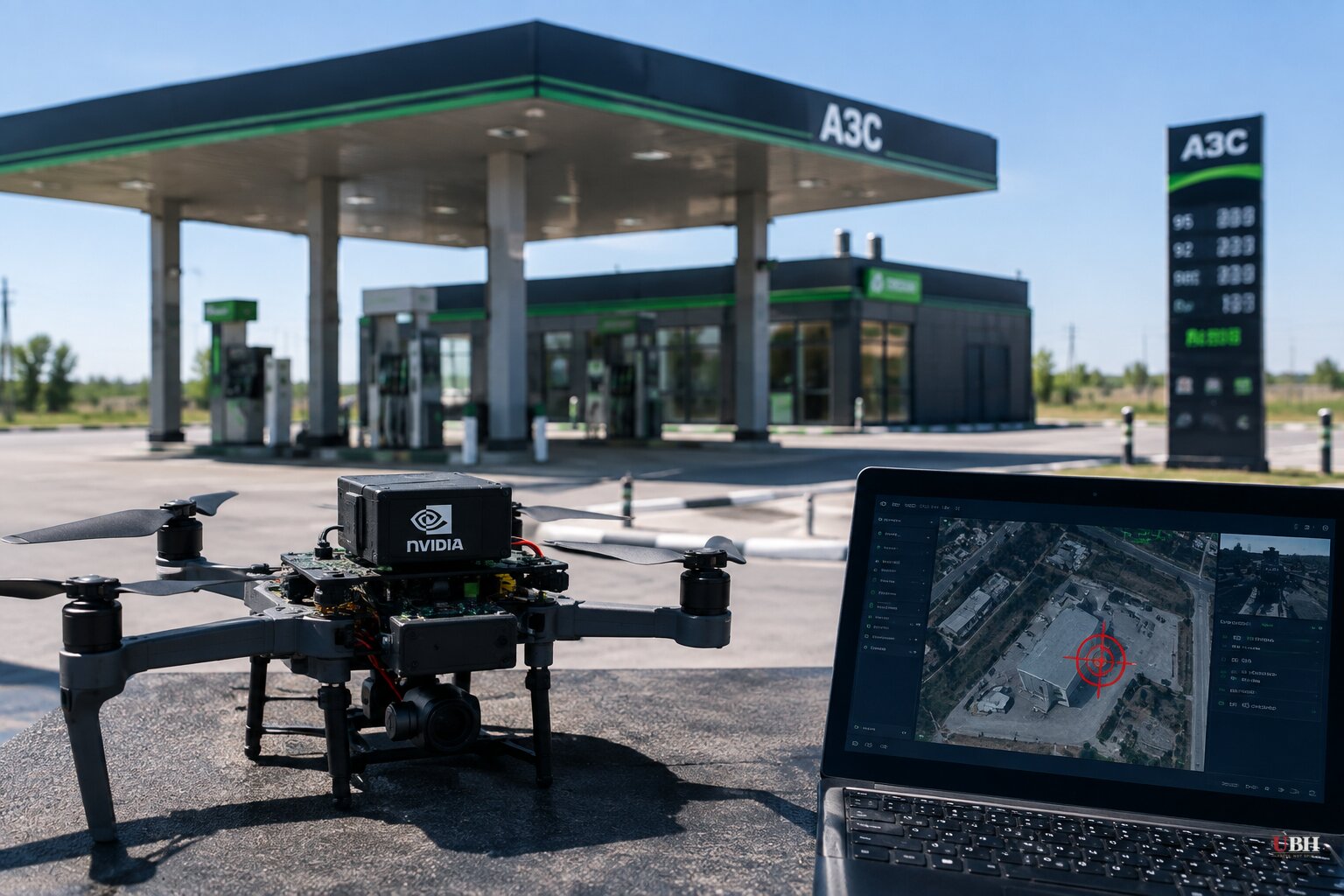
A Drone Picked Its Own Target, and Three People Died
In July, a Russian drone struck a gas station in Zaporizhzhia and killed three Ukrainian civilians, including a 19-year-old student, according to The New York Times. Ukrainian investigators who examined the wreckage found an Nvidia Jetson Orin computer chip on board, guided by an onboard AI system.
Human operators sent the drone toward the area. But the AI reportedly picked the specific target to hit, according to the investigators cited by the Times. Nvidia did not design the chip for weapons use. It is a commercial component built for computer vision and machine learning, and it ended up repurposed into a kill chain.
Both Sides Are Racing Toward Full Autonomy
According to a weapons-technology analysis published by The Conversation and carried by both Asia Times and Salon, Russia fielded at least one model of a fully autonomous drone, the V2U, in early 2025. Ukrainian analysts who recovered the drones found a small Nvidia computer running AI decision-making software.
Variants recovered later in 2025 no longer had the external communications systems that would let a human operator intervene, the analysis found. The V2U is configured to select and engage targets on its own after launch, with no operator in the loop.
Ukraine has its own version. In November 2025, a Ukrainian first-person-view drone lost its communications link with its operator mid-attack and used AI guidance to finish the strike on what the analysis described as a probable Russian tank. A human had picked the target before the link dropped. The machine finished the job.
The analysis, whose author is described only as a weapons-technology expert, warns that battlefield pressure to deploy more autonomous drones risks squeezing out the human judgment calls that keep strikes proportional and away from civilians. That is a genuine and defensible concern. Nobody currently disputes that removing a human from the final decision removes a check that existed before.
The Civilian Toll Is Already Documented
The UN Human Rights Monitoring Mission documented at least 395 civilians killed and 2,635 injured by short-range drone attacks in Ukraine between February 2022 and April 2025, according to an analysis by Franzie Schatzl and Mayya Chaykina published by Genocide Watch. Victims included people in private cars, on bicycles, delivering aid, and riding in marked ambulances.
The UN mission found that some of these attacks appeared to intentionally target civilians and could amount to war crimes, Schatzl and Chaykina write. That is an allegation from a UN monitoring body, not a war-crimes conviction. No tribunal has ruled on it. Schatzl and Chaykina argue existing international humanitarian law already covers autonomous weapons, citing the Tallinn Manual and the International Court of Justice's Nuclear Weapons opinion, which held that humanitarian legal principles apply to all weapons, including ones that did not exist when the rules were written.
The Other Side of the Argument
Not everyone treats autonomy as a problem to be contained. James Gilmore III, writing for the Daily Signal, argues Ukraine's drone program is a model the U.S. military should copy outright. He points to a joint U.S.-Ukraine exercise, Combined Resolve, in which he says American forces lost repeatedly to Ukrainian drone tactics despite having electronic-warfare and counter-drone equipment. The U.S. and Ukraine signed a bilateral defense partnership in July that opens the door to exporting Ukrainian combat drones to the U.S. for testing, Gilmore writes.
That framing has merit on its own terms. Autonomous systems can reduce risk to a nation's own troops, react faster than a human operator, and intercept incoming threats with more precision than older weapons, a point Help Net Security's own analysis concedes even as it warns about civilian risk. Militaries are not wrong that there are legitimate defensive uses for the technology. The challenge is whether the same systems can be reliably fenced off from civilian targets once they are fielded at scale.
No Rules Yet, and the Clock Is Running
Breitbart's drone coverage shows how far this has already spread past the battlefield. NATO ally Lithuania shot down a Russian-origin drone that crossed from Belarus, the outlet reported, the first such incident. South Korea's internet security agency is drafting safety guidelines for agentic AI systems that can act without direct supervision. Beijing banned drone possession outright within the Chinese capital, citing security concerns.
The United Nations is debating international rules for autonomous weapons, according to Help Net Security, but no binding treaty exists today. No government has been charged or sanctioned over an autonomous-drone strike. Whether the V2U and its successors get used against military targets only, or whether the July Zaporizhzhia strike becomes the norm rather than the exception, depends on rules nobody has finished writing.
Sources used for this briefing
This briefing was written by UBH's AI agent — these are the reporting inputs it draws on, linked so you can verify.


