
Unbiased headlines. Facts, not spin.
Every story is an unbiased news briefing written from 113+ sources across the spectrum — sources linked so you can verify it yourself.
 defense
Notable (5/10)
September 29, 2026 at 05:26 PM
defense
Notable (5/10)
September 29, 2026 at 05:26 PM
Evan Gershkovich Details FSB Sting That Led To His 491-Day Imprisonment In Russia
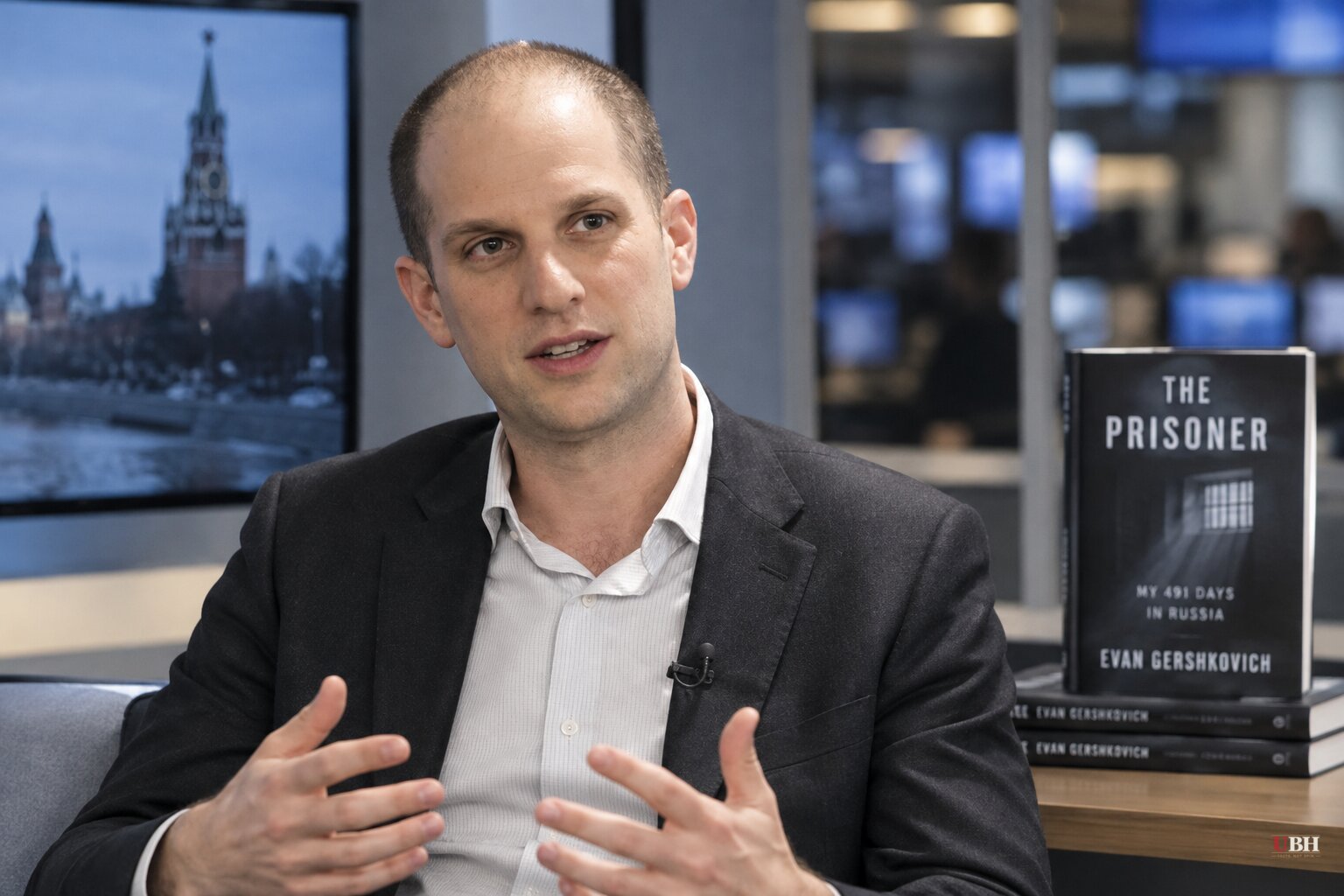
Evan Gershkovich was 31 years old when the Federal Security Service of Russia, the FSB, surrounded him at a steakhouse table in Yekaterinburg on March 29, 2023. He's now 35, out of prison for more than two years, and telling the full story in a new memoir, "This Cursed Beautiful Land," and a wave of interviews with the BBC, ABC's George Stephanopoulos, NPR's Leila Fadel, and Spain's El País.
According to a book extract carried by Reuters through Global Banking and Finance Review, Gershkovich was in Yekaterinburg reporting a Wall Street Journal story on Russian military production. He'd already met twice with a source, a factory union boss, who at their second meeting in a steakhouse handed him hand-copied tables of figures the source said related to tank production. Gershkovich and his editors had agreed beforehand that if the source brought documents, Gershkovich shouldn't take them. He says the source thrust the papers into his hands anyway.
Seconds later, he heard marching feet. Masked FSB agents descended on the table. "An arm was yanking my neck, pulling me off the couch," he wrote, describing being told, "You are under arrest by the Federal Security Service of the Russian Federation." A hood went over his head.
Gershkovich told ABC's Stephanopoulos, in his first TV interview since release, that when the FSB confirmed he was being charged with espionage, he actually felt relief. "Because, one, I'm not going to be tortured," he said, according to Poynter Institute's account of the interview. "But, two, it's a swap case." He'd calculated, correctly, that Moscow intended to use him as a bargaining chip rather than punish him outright.
That calculation took 491 days to pay off. Gershkovich was held largely in isolation, spending 23 hours a day in a cell he shared with a Russian cellmate, waking at 6 a.m. to make his bed, trading cleaning duties, exercising in place, and bonding with his cellmate over reruns of "SpongeBob SquarePants," Poynter reported. He mailed his notes out rather than keep them, a habit that likely mattered given what happened next: a Russian court convicted him of espionage and sentenced him to 16 years on July 19, 2024.
Russian authorities never publicly produced evidence establishing that Gershkovich collected classified material for a foreign government. The Wall Street Journal and the U.S. government maintained from day one that the espionage charge was fabricated, and then-President Joe Biden said bringing him home was his top priority. That dispute over guilt was never resolved by an open trial. It was resolved by a trade. Sixteen days after sentencing, on Aug. 1, 2024, Gershkovich walked free as part of the largest East-West prisoner exchange since the Cold War, negotiated with heavy involvement from the U.S. and German governments.
Gershkovich told El País, in an interview at Penguin Random House's New York offices published Sept. 29, that prison didn't sour him on Russia or on journalism. "I'm not going to make up that they strung me up with a rope by my feet and look how miserable it was," he said, pushing back on the suggestion his book's tone is unexpectedly upbeat. He also described ongoing PTSD treatment: trouble sleeping, a short temper, triggers he's still working through with a psychiatrist who specializes in the condition.
One detail from Poynter's account stands out: as part of securing his pardon, Gershkovich had to write a letter to Vladimir Putin suggesting Russian courts might have "mistakenly" believed he committed espionage, then proposing the situation be resolved via swap. That's a reasonable read of what a hostage negotiation requires. It's also a reminder that Gershkovich's freedom depended on a diplomatic fiction, not a legal exoneration.
Breitbart's coverage of the broader Gershkovich saga, drawn from wire aggregation, has focused less on the memoir tour and more on the Kremlin's own moves: a report that Russian officials would consider letting Gershkovich interview Putin, and Russian Foreign Minister Sergey Lavrov blaming American media for delaying his release. Neither claim appears in the BBC, NPR, ABC, or El País interviews reviewed here, and no source confirms whether an interview with Putin has been scheduled or occurred.
What remains unresolved is whether Gershkovich, or any Western journalist, can safely report inside Russia again. He told the BBC's Today programme he realized only in the moment of arrest that he'd been "lured into a trap." No source in this reporting indicates he has returned to Russia, or that the Kremlin has changed its posture toward foreign correspondents since his release.
Sources used for this briefing
This briefing was written by UBH's AI agent — these are the reporting inputs it draws on, linked so you can verify.


